

“Over the course of my life, mostly from white people back in the States, I’ve been told I look like a number of black people, from Eddie Murphy to Martin Luther King, so I was aware that other races’ perception of my appearance had a tendency to be warped. Often the people making these observations were unaware they were picking at the scabs of festering wounds of dehumanisation. Nor did they seem aware that their ideas could veer into stereotyping very easily. So, at least for me, this “name-calling” became a sort of indicator of a person’s ignorance or insensitivity level..”
Here is a thoughtful article by American journalist Baye McNeil, on racism he experiences as a Black American man in the USA and in Japan.
He discusses incidents of everyday racism, where non-Black people compare his appearance to other random Black celebrities, even though they look nothing alike.
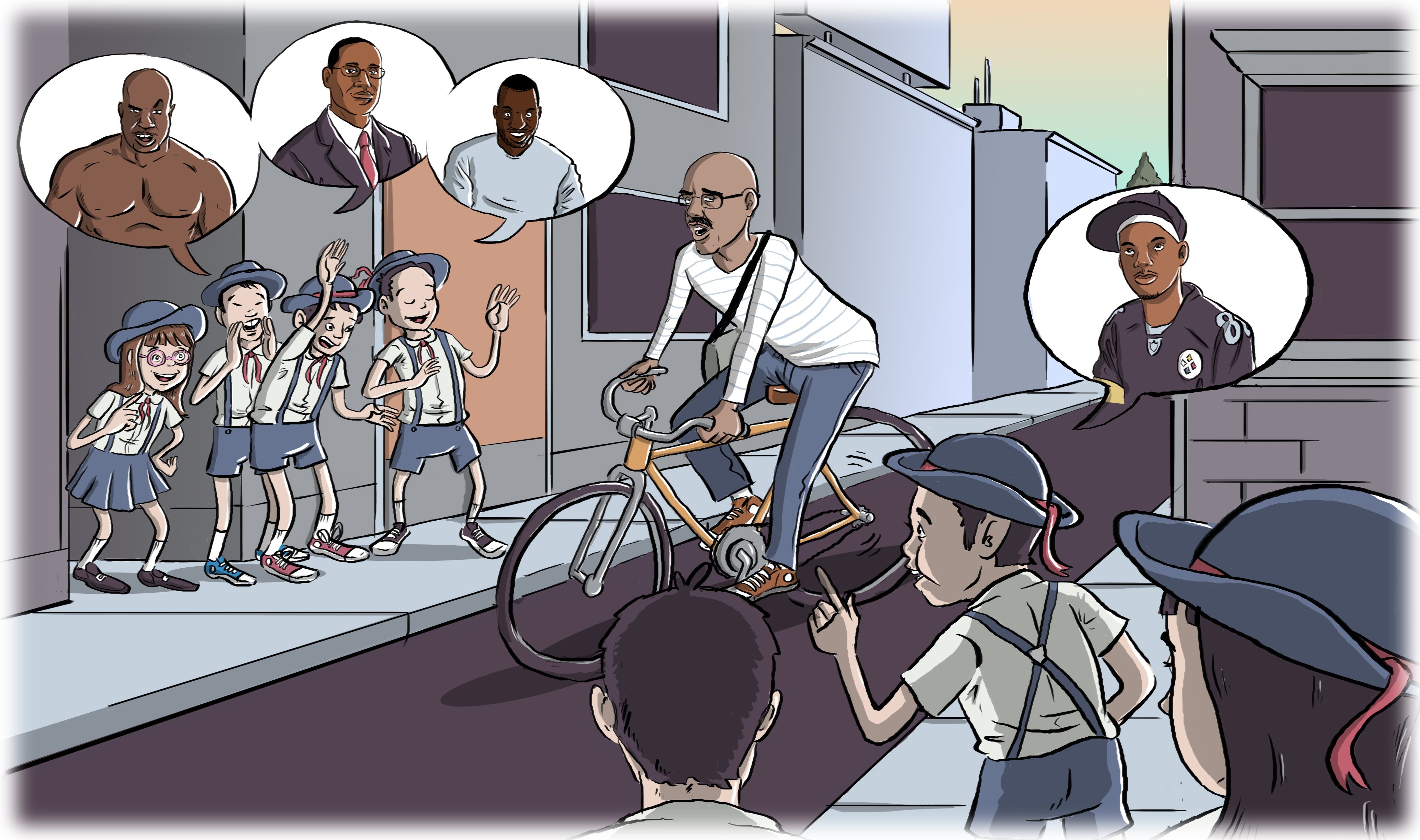
McNeil feels he has to refrain from getting angry with strangers. He sometimes engages in Socratic method. For example, asking “Do I really look like him? How so?” He sometimes explains why these comments are inappropriate, but this takes a lot of energy.
McNeil’s discussion evokes Arlie Hochschild’s sociological concept of emotion work. That is, how we manage our emotions and the high effort it takes to communicate our responses in socially “appropriate” manner, even when facing inequality. This includes the feeling rules (social norms) that govern emotional interactions, and the framing rules (the social context in which this happens).
Other than the racist comparisons, the Japanese experience has an additional cultural layer, as McNeil is often compared unfavourably to other Americans, or forced to contend with negative cultural stereotypes of Americans in general, such as perceived gluttony, low intelligence, and excess.
McNeil explains how he learned to manage these interactions, by unpacking the notion of koto, the Japanese word for immaterial things, like ideas and feelings. He began to understand his complicated love for America as both a Black American man and a foreigner in Japan.
In sociological terms, this is known as W.E.B. Du Bois’ concept of double consciousness:
“It is a peculiar sensation, this double-consciousness, this sense of always looking at one’s self through the eyes of others, of measuring one’s soul by the tape of a world that looks on in amused contempt and pity.”
Discover more from The Other Sociologist
Subscribe to get the latest posts sent to your email.


