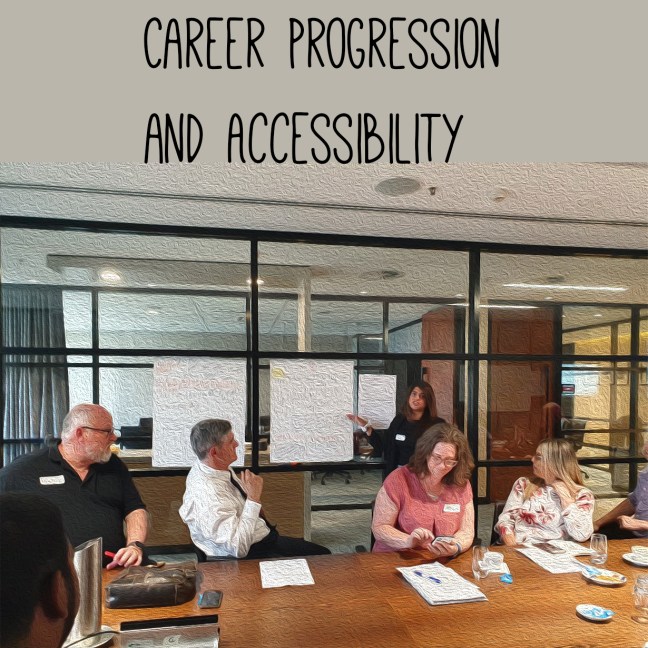
Cross-posting research I’ve lead on increasing the promotion and retention of people with disability* within the New South Wales (NSW) public service. We undertook fieldwork to understand the behavioural barriers and solutions. We find that administrative hurdles and inadequate support are negatively impacting the career progression of people with disability. We can improve these outcomes by: 1) Using a feedback loop to increase professional development opportunities for staff with disability; 2) making it easier to implement workplace adjustments; and 3) providing managers with improved resources and training on disability inclusion.
On Thursday 23 May 2019, I attended at the Sydney University Law School Beyond Punishment Seminar Series: Aboriginal Women in the Criminal Justice Network. The speakers discussed data on Aboriginal and Torres Strait Islander women in prison, and programs to support them in the state of New South Wales (NSW). ‘Aboriginal’ women in the context of the talks and the discussion below also encompasses Torres Strait Islander women.*
Before I tell you more about the talks, I’ll set the scene, looking solely at the adult prison context affecting Aboriginal women being targeted by the criminal justice system.
Over-incarceration is an issue best examined through a lens of intersectionality, a term originally exploring the limitations of dominant definitions of discrimination under industrial law (Crenshaw 1989: 150). Legal outcomes of Aboriginal women are simultaneously impacted by race, gender, class and other systemic inequalities. Lack of legal resources available to Aboriginal women to navigate the legal system is born of concurrent racial justice and gender inequalities. Economic disadvantage, poor access to therapeutic and other health services, and housing insecurity are preconditions of offending; these are class and racial justice issues. Sexual violence and poverty of Aboriginal mothers are typical of imprisoned women’s backgrounds at a rate that is much higher than male prisoners (Stathopoulos and Quadara 2014). Again, these are both racial and gendered issues, which are interconnected with colonial violence and intergenerational trauma.
I am writing on 26 May; National Sorry Day. This day commemorates the truth-telling of the Bringing Them Home report, the documentation of the Stolen Generations. Around 100,000 Aboriginal and Torres Strait Islander children were forcibly taken from their families under our racist social policy. The first institution built to ‘civilise’ Aboriginal children through the use of violence was in Parramatta, New South Wales (Marlow 2016). From 1910 to 1970, across the nation, Aboriginal children were forced to forget their culture, language and spirituality. They were placed into neglect by Christian-run missions and into White foster care (AHRC 1997). Today, the state continues to forcibly remove Aboriginal children from their families at four times the rate as non-Indigenous kids (Zevallos 2017). New forced adoption laws in New South Wales mean children placed in care will be forcibly adopted (Zevallos 2019). For Aboriginal women in prison, this will almost certainly mean losing legal rights to see their children. Fracturing families through the imprisonment of mothers is another way in which colonial violence continues in the present-day.
Forced removal of Aboriginal children leads to cultural disconnection, exposure to child abuse, an increased likelihood of entering the criminal justice system, and trauma for mothers. These are gender, race and class dynamics unique to Aboriginal women, their families and communities. Continue reading Racial and Gender Justice for Aboriginal Women in Prison
Today marks the 11th anniversary of former Prime Minister Kevin Rudd’s Apology to the Stolen Generations. From 1910 to 1970, up to one third of all Aboriginal and Torres Strait Islander children (100,000 children) were forcibly removed from their families and sent away from their communities. They were classified according to their skin colour and put into Christian missionaries where they suffered abuse and neglect, or they were placed with White foster families who did not understand their needs. These children were forced to forget their language, culture and spirituality, and in many cases they were not told of their Indigenous heritage.
The Bringing Them Home report of 1997 gathered evidence of the impact this cultural genocide had on Indigenous Australians, showing that it led to intergenerational trauma, poor health, and socio-economic issues. The report made 54 important recommendations to end the cycle of violence against Indigenous Australians.
Twenty years later, Indigenous children are being removed from their families up to four times the rate.
Reducing reoffending is a state priority in New South Wales. New sentencing reforms will increase referrals to behaviour change programs or other support services for people who are at high-risk of reoffending. Yet non-mandatory programs can often have low participation rates, particularly when programs are new.
We set out to better understand the social context affecting voluntary participation in programs for people at-risk of reoffending. Here’s how we used behavioural science to promote better service delivery for this vulnerable cohort.
Flood-related fatalities have been an ongoing problem in Australia since the early 1900s. Deaths during floods rank second only to heat waves in natural disaster fatalities. Approximately 159 people died from flooding in Australia during the last 15 years, with half (53%) due to driving through floodwater. NSW, together with QLD, represent 74% of flood fatalities. Rural and regional areas in NSW are especially at-risk.
Driving through flood water is a pressing issue, and has been a persistent problem behaviour that has been tough to shift.
The following reflects how the Behavioural Insights Unit (BIU) worked through this behavioural issue, and brainstormed problems, during a recent masterclass with NSW State Emergency Service (NSW SES).
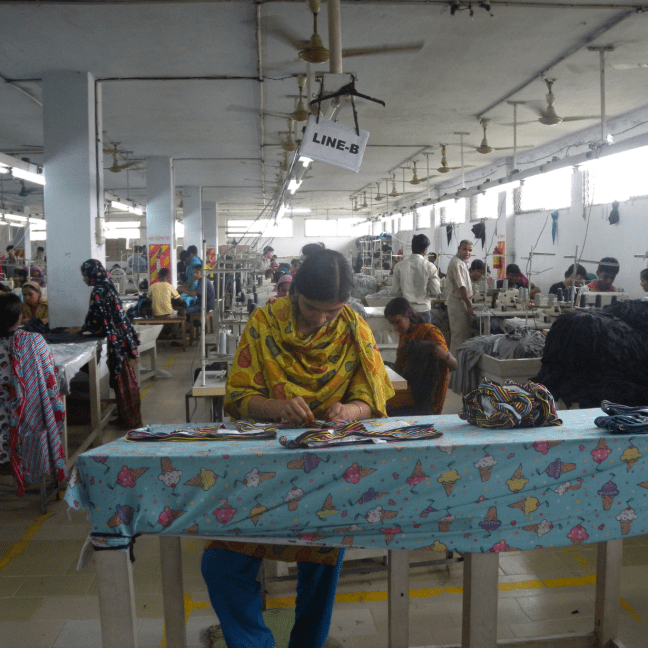
In Bangladesh, four million people work in textile factories. Their work accounts for 80% of their country’s annual exports. Yet they work in extremely dangerous conditions. It’s been a year since 1,100 workers died in two incidents of fire and structural collapse in April 2013. My post explores this tragedy through a sociological lens, looking at empirical studies of the local working conditions and social reality in which garment workers live. These tragedies are an ugly reminder of the unequal economic relations that sustain globalisation. One of the visceral Western response to these tragedies may be to cry for a boycott of these companies. Sociological research shows that the resolution is much less tidy. The story behind this is not simply about corporate greed. It is a tale about gender inequality and the social costs of economic mobility. Let’s start by remembering the 2013 tragedy.
In honour of Nelson Mandela’s life, let’s take a critical look at the sociology of Mandela’s leadership. This is as an opportunity to better understand how Mandela’s social experiences inspired his search for social justice.
Davide Morsellia and Stefano Passini draw on social psychology and sociology in order to compare the social and political influences on three world leaders of civil rights movements in three different societies: Nelson Mandela in South Africa, Mahatma Gandhi in India and Martin Luther King Jr in America. The researchers argue that these three world leaders engaged in “prosocial moral disobedience.” That is, they actively went against authority despite the personal persecution that followed. They did so not simply due to personal qualities, but as a direct result of their socialisation. This post will show that Mandela’s moral development and personal attitudes were affected by his social context.
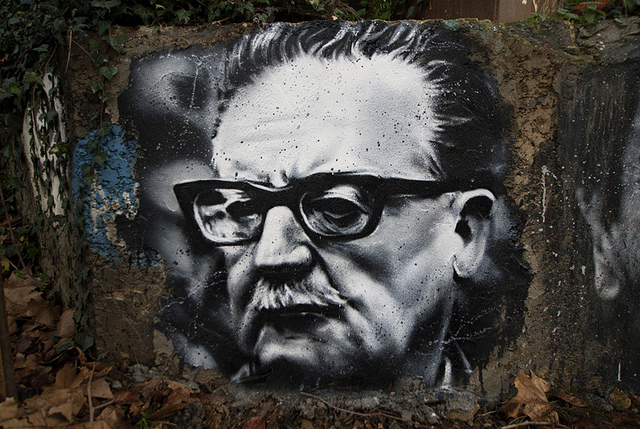
Today is the “Other September 11.” On this day in Chile, 1973, President Salvador Allende was killed in a coup by Augusto Pinochet. My blog post explores the ongoing impact of this event on Chileans living in Australia.
In his historic speech, Allende’s final address to the nation, he talks of his sacrifice against imperial forces and his vision for the future. SBS News has a great website commemorating this event, including the role that the Australian Government played in feeding intelligence to the USA, which eventually led to the rise of the Pinochet regime. When the Australian Labor government came to power in 1972, Prime Minister Gough Whitlam is said to have been appalled about Australia’s involvement in the coup and removed his Government’s political support.
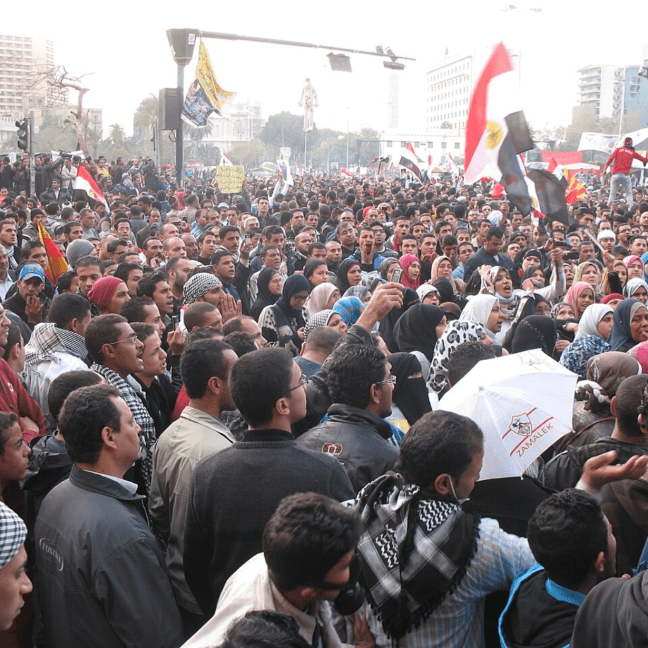
Julia Elyachar and Jessica Winegar have published a special edition of Cultural Anthropology on the Egyptian Revolution. Highlights include reflections on how the Revolution has impacted ethnography and anthropological writing and an exploration of the notion of martyrdom in the context of counter-revolution. My favourite piece is Mona Abaza’s critique of Western ‘academic tourists‘.
Abaza reports that she and her colleagues have been inundated with requests for research expertise, but without serious consideration of the ‘international division of labour’. That is, the resources, time, commitments and personal costs of lending knowledge and data to researchers from Britain and the USA who work in the safety of well-funded universities. Egyptians are hired as research assistants or translators, but their labour and subjective perspectives serve a Western reading of revolution. As a result, Abaza sees that Western academics have a tendency to discuss the Arab Spring through a lens of Orientalism.
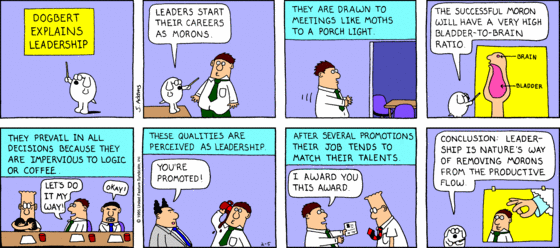
Ever heard someone complaining about how people in management roles do not work as hard as those in less senior roles? Years ago, a friend told me that people are promoted to the highest level of their incompetence. This is otherwise known as the Peter Principle, Laurence Peter and Raymond Hull’s satirical view of organisations, as laid out in their 1969 book of the same name. Or as this comic explains, The Dilbert Principle, works just as well.
This 1969 Time Magazine review describes the Peter Principle through the theory of hierarchiology, which is the ‘the study of hierarchies in modern organisations’. The last tenet is: ‘Final Placement Syndrome… [or] what the ordinary sociologist calls “success”‘. Funny stuff.
The Peter Principle (PP) has longevity. The video below explains how this humorous principle has more serious applications for American governance. The PP is apparently relevant to the modern day business world and in management. It’s been used to critique the Former USA Federal Emergency Management Agency director Michael Brown’s handling of Hurricane Katrina. Physicists have created computational models to study the PP.
Though it was conceived as a satirical application of social scientific analysis over four decades ago, the Peter Principle continues to have useful resonance to serious critiques of organisational hierarchies. The PP simplifies bureaucracy, organisational structures and status in a way that Karl Marx, Max Weber, Talcott Parsons, Peter Blau and most other social stratification and organisational sociologists may object. Nevertheless, the PP offers an engaging starting point from which to begin unravelling public dissatisfaction – and misunderstanding – of organisational structures.
My opening anecdote was about my friend being frustrated over what they perceive is an unfair, non-merit-based system of promotions in their workplace. This frustration stems from a subjective perception about what knowledge, skills, experience and leadership traits should be rewarded. Subjective perceptions about what is fair, what makes a good leader, and what types of professional competencies are necessary in middle and upper management are going to vary from one organisation to the next, from one society to another, and in different points in time.
Satire and Sociology
The examples I provided about the PP being applied to governance, businesses, natural disaster responses and even computational models by physicists show that the PP provides a way to frame critical analyses of organisational hierarchies. In an earlier post, I reflected on Duncan Watts‘ point that sociologists need to show society our disciplinary strengths – one of which is that we are trained to go beyond ‘common sense’ understandings of the world. My argument was that sociologists still have a long way to go in showing the utility of sociology to wider publics. In the case of the PP, I’m all for starting off with satire and drilling in deeper.
I see that applied sociology is about making sociological insights useful in achieving practical outcomes for particular groups in society. I also believe that we need to do this in easy to understand language rather than relying on sociological jargon. Using comedy, satire and examples that people can relate to are all useful tools to this end. So I say: viva la PP!