
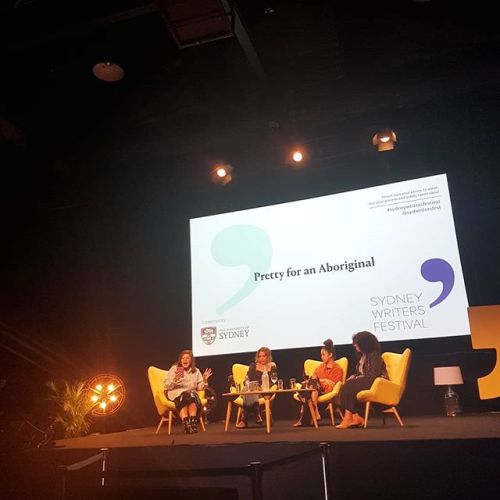
The Sydney Writers Festival had wonderful speakers all round.
I attended as a podcast recording for Pretty For an Aboriginal, with host Nakkiah Lui (her co-host Miranda Tapsell was in Darwin starring in a new film!). Guests were novellist Zinzi Clemmons, poet Cleo Wade and editor and author Glory Edim.
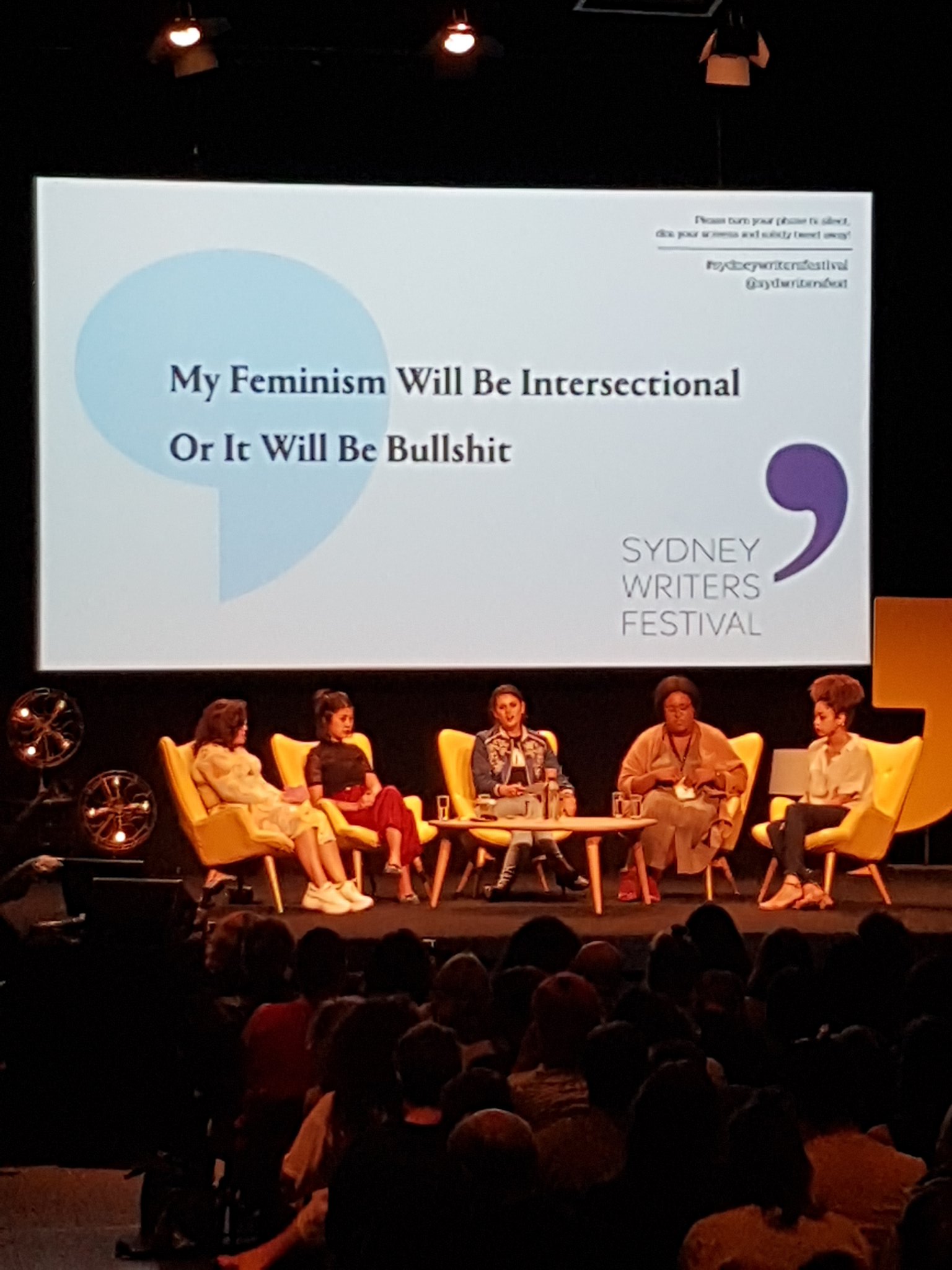
I also attended the, My Feminism Will Be Intersectional Or It Will Be Bullshit.
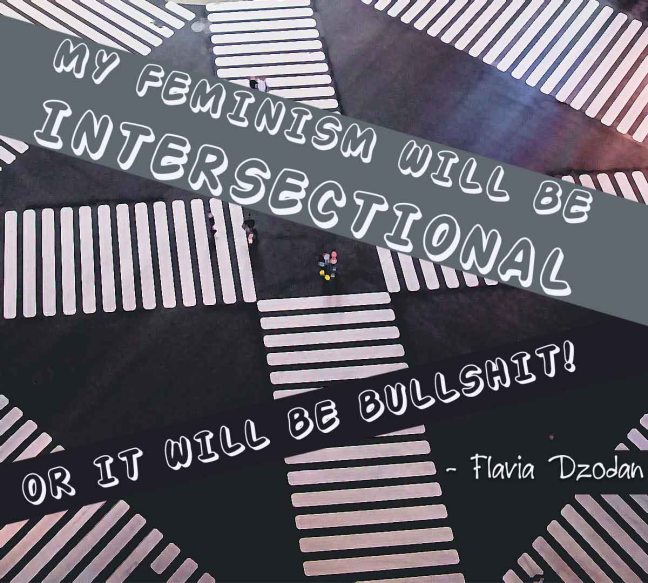
Sow acknowledged Flavia Dzodan, whose work inspired the title and discussion of the panel. She says the work of women of colour often goes viral, but those same women are always left behind.
Clemmons discussed the background on intersectionality theory and practice, conceptualised by Professor Kimberlé Crenshaw. This theory recognises race and gender, originally theorised in context of Black American women industrial relations law dispute.
When asked what has made her most angry about White feminists, Lui talked of being at an event when the Uluru Statement was rejected by Prime Minister Turnbull (this is a document outlining a path to recognition of Aboriginal and Torres Strait Islander people and national healing over our colonial history of violence). No one else mentioned this significant and damaging event. Lui said other feminists see the Uluru Statement as a “Black issue.” But it’s more; it is also a women’s issue. Aboriginal women experience the greatest inequity and health gap in Australia. The Uluru Statement can save Aboriginal women’s lives, therefore, she argues, this is a feminist issue.
Zhang said white feminists who want to claim intersectionality as an identity (“I’m an intersectional feminist”) should step back and reflect before wanting to dominate this term (and use it incorrectly). She argues that, when done right, self reflection might mean white women never get to adopt this term.
All panellists discussed why “intersectional feminist” is a nonsense term removed from its original meaning. Intersectionality is about inclusive feminist practice. “Intersectional feminist” is virtue signalling. It is deployed as an identity marker by white women wanting to be seen as “not racist,” even when they are not doing the work
Zhang also discussed how intersectionality is about labour. Asian women, and other Brown and Black women, are employed in exploitative conditions so white women “can have it all.” They are hired to carry out emotional labour and childcare, yet seldom get to see their own children.
Panellists were asked about practical steps that white women can take to action intersectionality. Ask yourself these questions, and more:
- Who do you pay for their expertise?
- Who do you listen to?
- Who do you have lunch with daily?
- Who don’t you notice?
Additional tips:
- Hire Black women.
- Pay women of colour for their labour and expertise.
The panel ended with two reflections on privilege.
- What White women want for themselves (respect, livelihood, success), they should want for women of colour, and then help us get this.
- Zhang said that where women of colour have power (e.g. East Asian woman seen as “safe” in corporate spaces), they should help others, especially Black people.
Discover more from The Other Sociologist
Subscribe to get the latest posts sent to your email.

 The Other Sociologist