Artificial Intelligence at Work

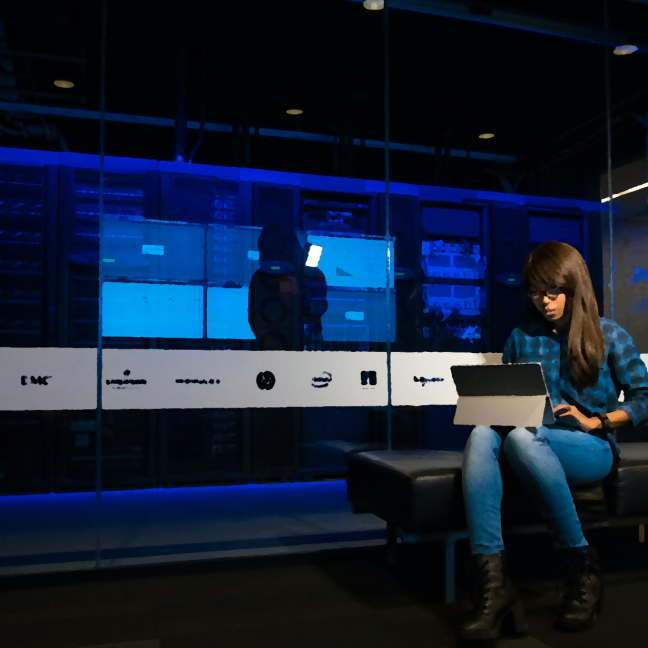
A woman of colour sits in a darkened computer lab, working on her laptop

Despite dire predictions, researchers forecast that few industries will lose a substantial number of jobs due to artificial intelligence (AI). Instead, AI is more likely to alter the way humans work. The AI industry may also create new roles, but this may amplify inequality. In this third post in my Sociology of AI series, I explore the perceived impact of AI on jobs, and the stratification that may follow increased automation of the labour market. I analyse evolving policy directions, including a new report by Jobs and Skills Australia, on AI-related job losses. I then review sociological understandings of AI and work, and recent examples of job redundancies. I analyse a much-publicised study by Microsoft, which claims AI can replace 40 professions, including translators, historians, artists, and customer service workers. This case study shows that AI companies distort evidence to overstate the functions, utility, and accuracy of AI technology. I argue that AI discourse hinges on eliminating competition from human professionals. Sociology uncovers the ways in which scientific models and customer data are used to make unethical and spurious claims.

Continue reading Artificial Intelligence at Work

Artificial Intelligence and the Economy

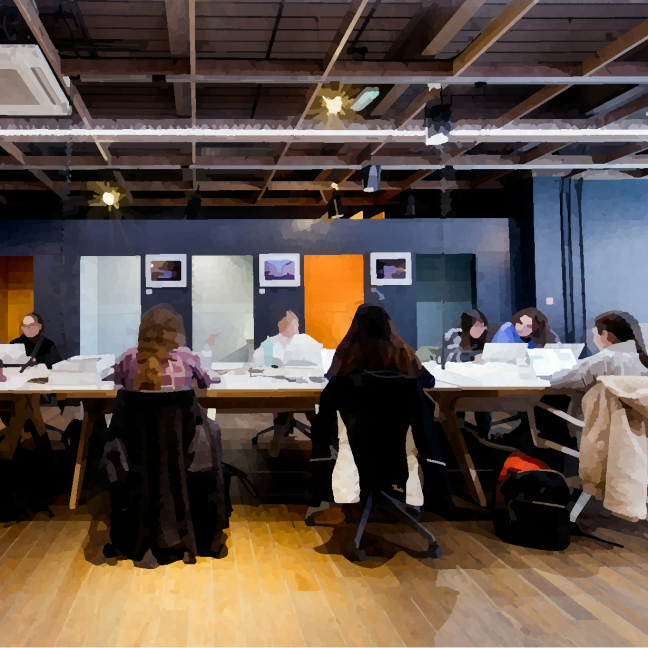
Drawing of a group of women working on laptops in an open plan office

In this second post in my Sociology of AI series, I show that AI companies position automation as being superior to human labour. I review the Australian Government’s recent announcement that is considering changing the law to allow AI to mine copyrighted works. I will show that the economic model used to justify this decision lacks robust testing. I analyse the ways in which AI discourse is ‘manufacturing consent’ to control the labour market. I argue that AI discourse establishes economic power by marketing technological supremacy, using science selectively, eliminating competition, and suppressing issues that undermine AI domination.

Continue reading Artificial Intelligence and the Economy

Increasing Women’s Participation in Trades

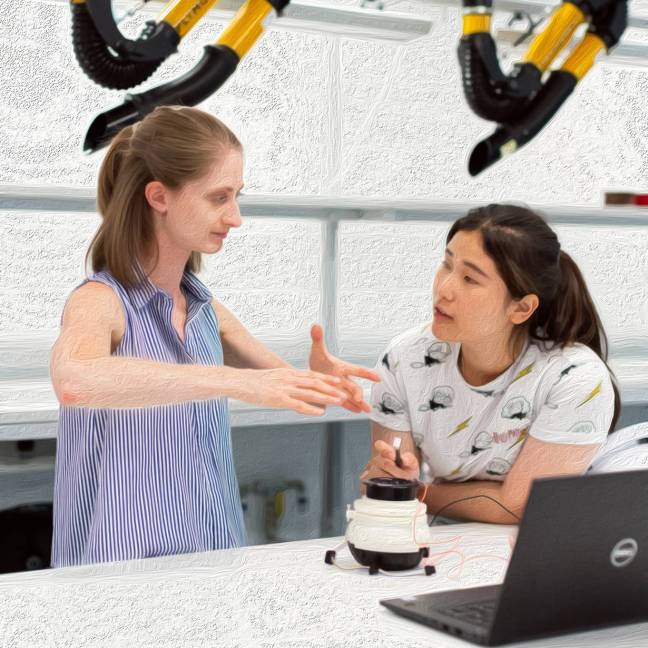
A white woman is gesturing with her hands while an Asian woman listens. They are in an engineering lab with a white machine and laptop in front of them

I lead the Women in Trades project. Our team investigates the behavioural barriers and solutions to women’s recruitment in traditionally male-dominated trades, such as construction, engineering and electrotechnology. In the state of New South Wales, women make up only 9% of all apprentices, and 2% of qualified tradespeople in these industries. Our first research report has been published by our partners. The Women in Trades Promising Practice Review presents an overview of best practice in vocational training and employment in Australia and internationally.

Continue reading Increasing Women’s Participation in Trades

Policing Public Health

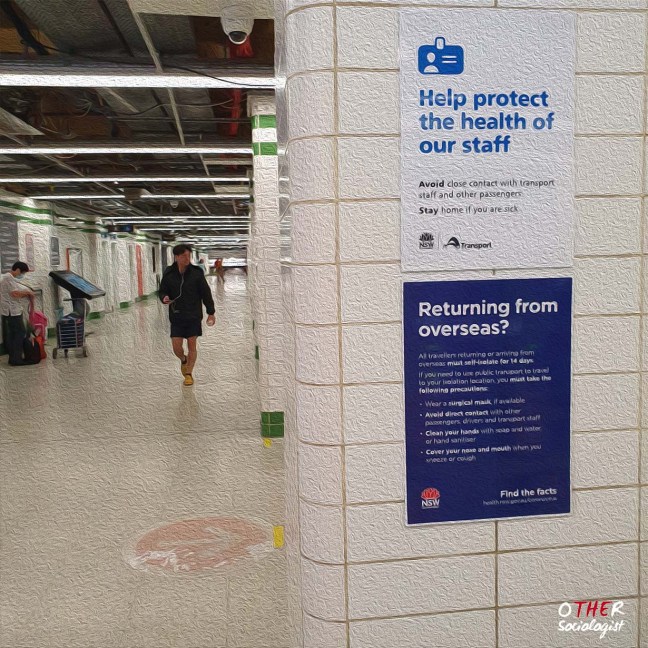
A person walks in the distance inside Central Station in Sydney. Two COVID posters say: 1 "help protect staff," and 2) "returning from overseas?"

This analysis discusses policing responses to public health during the COVID-19 pandemic, specifically impacting communities with high rates of migrants, refugees, and First Nations people. First, I reflect on some of the lessons from the COVID-19 “hard lockdown” of social housing towers in Melbourne in 2020. I then discuss health inequalities in multicultural suburbs of Sydney, which are now being placed into a strict lockdown. I explore how racist ableism operates in these settings, and what an alternative, cultural safety approach would look like.

Continue reading Policing Public Health

The Economics and Social Costs of COVID-19

Aerial view of Sydney Customs House, a large Building at Circular Quay, Sydney

In Episode Seven of our Race in Society series—the final episode of season 1 on “Race and COVID-19″—Associate Professor Alana Lentin and I are joined by two guests to discuss The Economics and Social Costs of COVID-19. We examine the impact of the COVID-19 crisis on undocumented migrant workers, whose labour is being exploited.

The economy depends upon the work of racialised people, exposing them to higher risk due to casualised frontline services, which have kept the health system and other businesses going throughout lockdown. At the same time, racialised people are provided inadequate protections against infection, including poor personal protective equipment.

Our first guest, Sanmati Verma, is an Accredited Specialist in Immigration Law. She discusses the legal issues faced by temporary visa holders and migrants, as they lack access to economic security. Our other guest is Professor Sujatha Fernandes, who is Professor of Political Economy and Sociology at the University of Sydney. Her research explores the uses and misuses of storytelling to shape understandings of the political activism of racialised people. She discusses how “curated storytelling” narrows the public’s engagement with economic rights during the pandemic.

Continue reading The Economics and Social Costs of COVID-19

Japan’s Disposable Workforce: Alienation, Suicide and Social Responsibility

By Zuleyka Zevallos

Shiho Fukada’s Pulitzer Centre project on Japan’s “disposable workers” focuses on people who are precariously employed in casual and “dead end” jobs. They are underpaid, working long hours but without any of the benefits or sense of stability of full time employment. This affects people who are homeless as well as white collar workers who are driven to suicide due to mental and physical exhaustion. I see that Fukada’s photo essay offers an insightful visual critique of economic progress and the rapid increase of an “underclass” in one of the world’s most advanced societies. I argue that Fukada’s work might be understood through the sociological concept of anomie, a term that describes the social alienation that follows a society’s shift in morals and values. In this case, I explore how a cultural change in attitude means that workers are less valued in Japan, leading to socio-economic and mental health problems. I draw a comparison between the Japanese and the Australian workforce. I conclude by showing how sociologists seek to help governments, employers, developers and community organisations work together to better support a sustainable and ethical economic future.

Shiho Fukada via Pulitzer Centre

Continue reading Japan’s Disposable Workforce: Alienation, Suicide and Social Responsibility