Invasion Day 2018

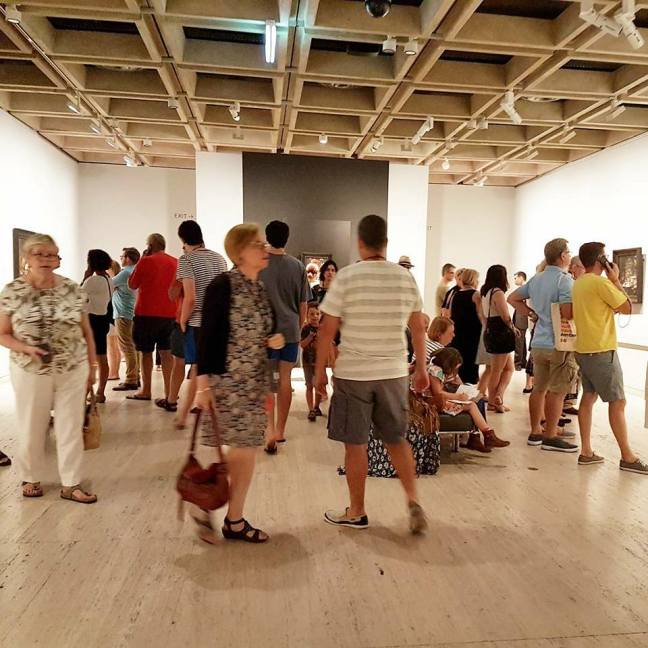
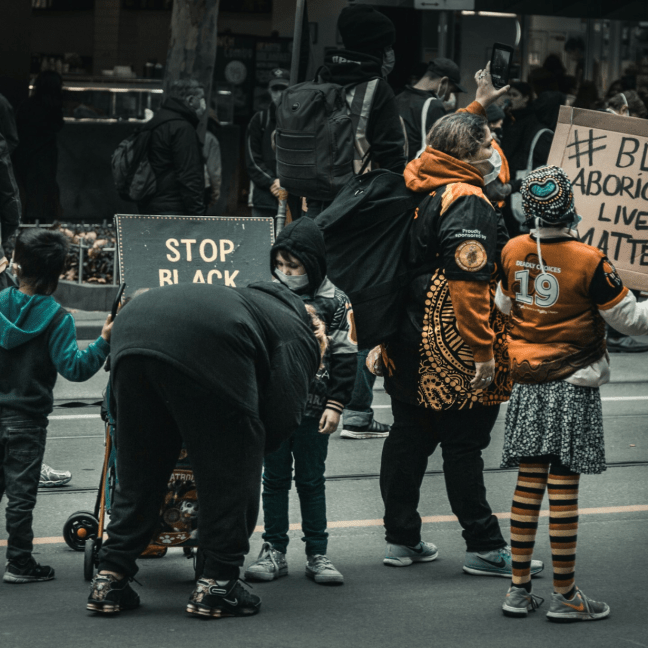
The 26 January is a public holiday nationally known as Australia Day, however, for decades, Aboriginal and Torres Strait Islander people have protested against this day, as it commemorates genocide and dispossession. Last year’s Invasion Day rallies were attended by over 61,000 people around Australia. This year’s rally had around 80,000 people marching across all capital cities, including 60,000 people in Naarm (Melbourne) and between 15,000 to 20,000 people in Gadigal (Sydney).

A child holds a sign showing the ongoing significance of the Day of Mourning

This year marks 230 years since the British invaded Australia, leading to the decimation of Aboriginal and Torres Strait Islander people, with inequities continuing to this day. It is also the 80 year anniversary of the Day of Mourning protests, organised by the Australian Aboriginal Progressive League.

Today’s post reflects on the protests on the lands of the Gadigal people of the Eora Nation (Gadigal is the city now known as Sydney). I then provide a visual sociology of the culmination of the protest march, which ended at the Yabun Festival.

https://twitter.com/OtherSociology/status/956670694586073089
Continue reading Invasion Day 2018

Racist Moral Panic

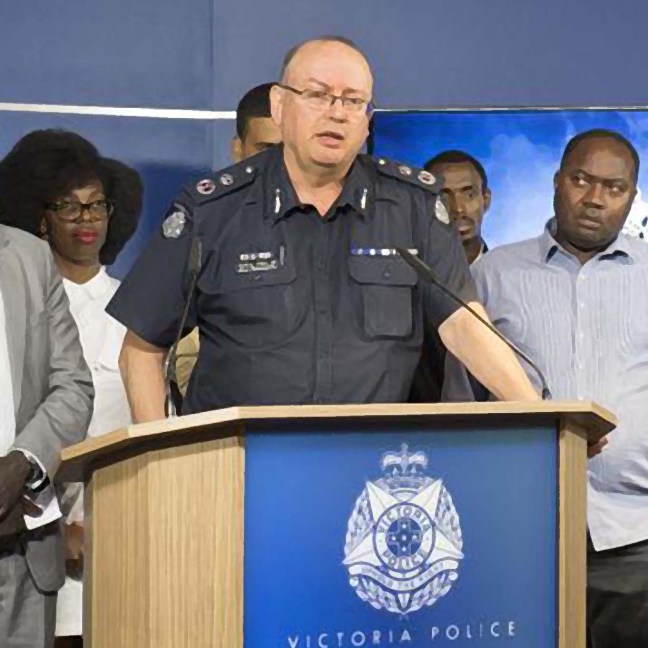
A news story about the newly established African-Australian community taskforce contributes to scaremongering. There’s increased policing of South Sudanese-Australian groups not because there’s a specific problem – data show that the majority of youth crime is committed by White youth.

Many South Sudanese Australians are positioned as a “threat,” meaning their achievements, knowledge and hard work is subsumed by political rhetoric and media hyperbole.

The motivation to criminalise African-Australians coincides with the election year. 

There are many videos, accounts and police reports of people from various African backgrounds being attacked by White people for simply being Black, emboldened by politicians and the moral panic. Where’s the white crime taskforce? Continue reading Racist Moral Panic

Ethnocentrism of Baby Names

An Asian woman and Black man play with two Asian babies

The popular culture website, Popsugar, published an article calling non-Anglo names “quirky.” This is one example among many where Anglo-Saxon languages and Western cultures are seen as the universal norm used to judge all other cultures (in sociology, this is known as “ethnocentrism”).

Continue reading Ethnocentrism of Baby Names

Anti-Indigenous Racism by Other People of Colour

People at a protest hold signs that that #BLM Aboriginal Lives Matter

In July 2017, a young family tried to get a taxi after they marched for NAIDOC Week, a week of events recognising the cultures, languages and achievements of Aboriginal and Torres Strait Islander people, in Naarm (Melbourne). Five cab drivers refused to take them, making up the same excuse that they had just dropped someone off, or that they were waiting for another passenger, only to drive off alone. It is illegal to refuse a fare. The two drivers in the video shared below are non-Indigenous people of colour.

Continue reading Anti-Indigenous Racism by Other People of Colour

Indigenous Sociology for Social Impact

The history of Aboriginal and Torres Strait Islander social justice activism to destabilise and overcome colonial practices in Australia began with the British invasion in 1788 and has continued to the present-day. These acts of social and political organisation have strong sociological resonance that should centrally inform sociological inquiry in Australia. Yet Indigenous knowledges are peripheral to the discipline of sociology. This post is the first in a series exploring ways to decolonise sociology, through the leadership of Associate Professor Kathleen Butler, sociologist and Aboriginal woman belonging to the Bundjalung and Worimi peoples of coastal New South Wales.

To redress the problematic racial dynamics of sociological theory and practice, Associate Professor Butler convened the first Indigenous Sociology for Social Impact Workshop at the University of Newcastle, Ourimbah campus, on Darkinjung land. Held on 27-28 October 2016, Professor Butler invited Indigenous and non-Indigenous sociologists from different parts of Australia to consider gaps and opportunities in addressing the ongoing impact of colonialism in our theories, methods and practice.

Today’s post places the workshop in historic context and summarises the discussion. I also include reflections by Associate Professor Butler about the outcomes from the workshop. I end with a set of questions that emerged from the workshop that we should now face as a discipline in order to centre Indigenous knowledges and methods in sociology.

https://twitter.com/OtherSociology/status/791441601570627585

Continue reading Indigenous Sociology for Social Impact

Woodpeckers

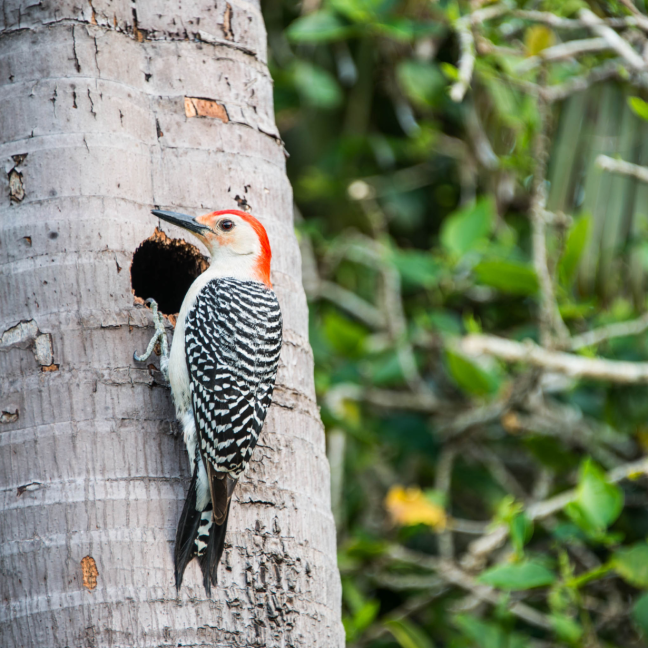
A woodpecker on a tree hangs from a perfect hole. It has a red head, white breast, and black and white body

Another Cine Latino film: Woodpeckers (Carpinteros). Unsettling but excellent Dominican film entirely focused on Afro-Latino characters. Julián (Jean Jean) is awaiting sentencing when he’s put into one of the “less hellish” prisons in Najayo. That is to say, an overcrowded, filthy and violent place where many prisoners sleep on the concrete floor. Julián is second generation Haitian-Dominican. In a terse exchange with his brother, we learn he is an entrepreneurial “low level” criminal who doesn’t want to be locked into a low-paid menial job.

Continue reading Woodpeckers

You’re Killing Me Susana

A man's fingers holds a block with a person icon. The blocks are arranged around a wooden love heart

At CineLatino, the Latin American film festival, I watched, You’re Killing Me Susana, starring Gael Garcia Bernal. As always, his performance is charming and the movie has an abundance of affable comedy. But his character and the story is not endearing. He is an unfaithful and selfish husband who does not take any interest in his wife and her writing. He is disparaging of her teaching, which supplements her writing aspirations. He has repeatedly talked his wife out of going away on writing trips because he is suspicious and jealous.

Continue reading You’re Killing Me Susana