Above are the Sakura Kids Cheerleading, at the ‘Mini-Matsuri’ Japanese Festival in Chatswood, Cammeraygal Country.
Below, is the Cherry Blossom Festival in Auburn, Darug Country.
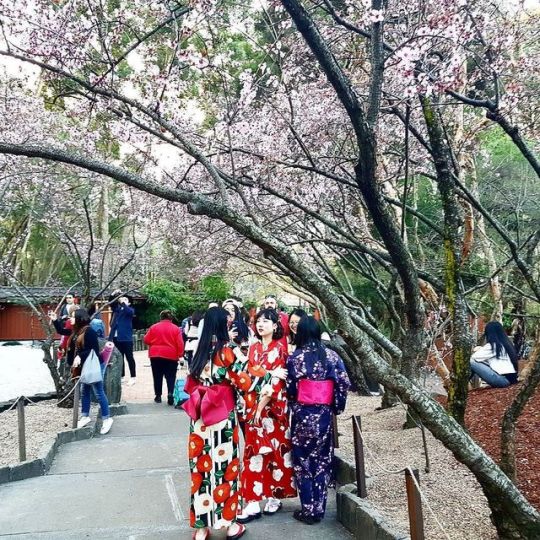

Above are the Sakura Kids Cheerleading, at the ‘Mini-Matsuri’ Japanese Festival in Chatswood, Cammeraygal Country.
Below, is the Cherry Blossom Festival in Auburn, Darug Country.
The Love Is… Australian Wedding Fashion exhibition at the Powerhouse Museum was very interesting. I enjoyed it immensely, and would recommend it. Today’s post reflects on its representation of race and nationhood.
Continue reading Love Is… Australian Wedding Fashion
Racial microaggressions are the brief and subtle daily insults that denigrate people of colour. This term was first conceptualised in 1977 by Chester Pierce and colleagues in a study of racism in television commercials.
“These are the subtle, stunning, often automatic, and non-verbal exchanges which are ‘put downs’ of Blacks by offenders. The offensive mechanisms used against Blacks often are innocuous. The cumulative weight of their never-ending burden is the major ingredient in Black-White interactions.”
Microaggression is a term that Dr Derald Wing Sue and colleagues reinvigorated in 2007, to describe racist dynamics between White therapists and their clients who are people of colour. They note that microaggressions occur because White people lack awareness of how race affects their biases, stereotypes, behaviour and attitudes, and also because they lack an understanding of the experiences of people of colour.

Microaggressions can be delivered as an insult or an appeal for validation about White person’s beliefs. These may be verbal signs (words or tone) or physical cues (snubs, or dismissive looks, gestures). Racial microaggressions can also build up not by targeting a specific individual but through atmosphere, such as a hostile workplace, where a minority woman is excluded from social events.
Continue reading “Where Are You From?” Racial Microaggressions
Excuse me while I migrate various content to a central place on my blog! This post was first published on 11 July 2017.
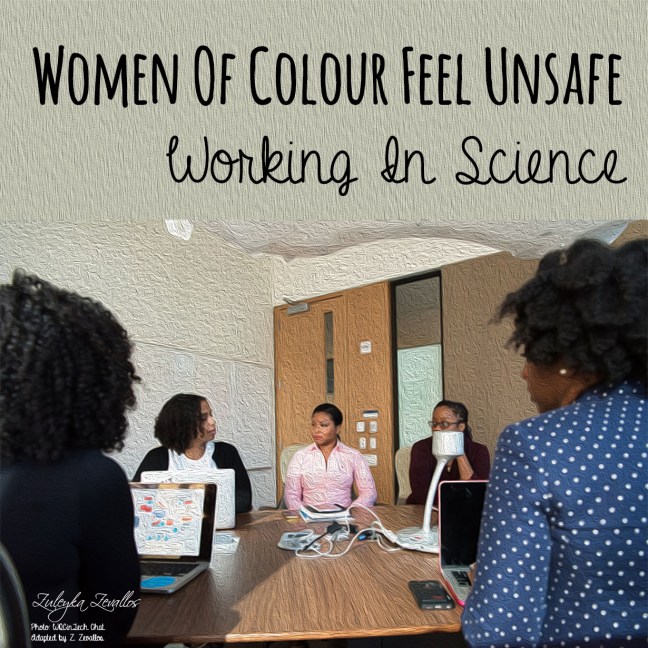
I was interviewed by Buzzfeed, about a new study by Professor Kate Clancy and colleagues, showing women of colour scientists are more likely to experience race and gender harassment. Women of colour scientists are also excessively critiqued for being either too feminine or masculine enough, they have their physical abilities questioned, and they are more likely to miss professional opportunities like conferences, fieldwork, classes and meetings because their workplaces are unsafe. My comments from the interview:
“The study really reinforces a lot of what the literature already tells us — that women of colour are more likely to experience multiple forms of harassment and feel more acutely the impact of a hostile work environment in the sciences,” Zuleyka Zevallos, a sociologist at Swinburne University in Australia, told BuzzFeed News.
Although this isn’t the first study to show evidence of the “double bind” of racial- and gender-based harassment, some critics continue to deny that the effect is real.
“A lot of the pushback that we see in the individual scientific communities —astronomy or any other science — is that scientists want data,” Zevallos said. “And even though there’s a plethora of data, it’s like they need to see more data for themselves.”
In their study, Clancy and colleagues surveyed women and men from various racial backgrounds, focusing on academics working in the field of astronomy and planetary science. The study finds that 88% of their respondents heard negative language from peers at their current job, 52% from supervisors, and 88% from other people at work. Thirty-nine percent report experiencing verbal harassment at their current position and a further 9% experienced physical harassment. Around a third of the overall sample feel unsafe at their current role (27%), however, women of colour were the most likely group to feel unsafe in their place of work due to their race, gender, and religion (although the latter was not statistically significant).
Breaking this figure down by race, 40% women of colour and 27% of White women, feel unsafe in their current role due to gender. Further, 28% of women of colour feel unsafe due to race.
Clancy and colleagues note a meta-analysis of 343 studies has established that people are less likely to participate in counterproductive workplace research. This suggests that, despite their stark findings, people are likely to underreport negative experiences for fear of professional repercussions. So experiences may be far worse in reality.
The study concludes that astronomy creates an hostile environment with profound impact on junior scholars, White women, and the greatest problems for women of colour.
The study proposes four solutions to workplace inequity.
Moreover the study concludes that better support networks for women of colour are needed.
Both in the academic literature and in my professional equity and diversity work, experts see a reticence in equity programs to deal with racism alongside gender imbalance. As I’ve detailed elsewhere, the astronomy community, along with other disciplines, deals with sexual harassment and gender inequity in haphazard ways, but still ignores racism. The present study by Clancy and colleagues might be used to better shape policy and programs. Bias awareness training is the bare minimum needed; to make positive changes to attract, retain and promote women of colour, structural reform is necessary.
Too many scientific societies feel that tackling gender equity is “a good start” but still see diversity and inclusion of people of colour and other underrepresented minorities is the “next step.” Some leaders perceive that diversity work undermines gender equity programs. This study, and many others before it, show that intersectionality is pivotal in making lasting change. Intersectionality describes how gender inequality is impacted by racial inequality and other forms of disadvantage like sexuality, disability, class and beyond. We cannot address gender inequity separate from racial inequity as both issues impact one another, as well as increase other problems for minority groups.
Read about the study and comments by lead author Professor Clancy on Buzzfeed.
Photo credit: WOCinTech Chat, CC 2.0 via Flickr. Adapated by Z. Zevallos.
There have been an increased number of public attacks on underrepresented academics for their education and activism on social media. The term “activist academic” describes the longstanding tradition across nations where intellectuals engage in conscious protest in support of social justice and dissent against the status quo. Activism by academics asserts that the university has a social function beyond the provision of education and scholarly critique. Activist academics see that their role serves a social purpose to provide independent social criticism through volunteering, program interventions, public engagement outside academia, protests, and beyond. In some circles, the profile of activist academics has declined, particularly amongst White academics from majority groups. This led to the misperception that recent international protests by scientists were novel. This is misguided, as minority academics are often inextricably activist in their pedagogy, not-for-profit service work, and activities.
Sociology is centrally concerned with activism, especially in applied contexts. Our social justice focus is misconceived as bias or as an attack to those not used to having history, culture and politics viewed through a critical lens. Sociology is centrally concerned with social transformation. We do not merely observe the world; we aim to challenge existing power structures and to reduce inequity. Having said that, women academics in general are penalised for their work, and the outcomes are even worse for minority sociologists as they seek senior roles. The stakes for minority activist academics is therefore higher, as I will show below.

Continue reading Protecting Activist Academics Against Public Harassment
Mervyn Bishop, a Murray man, was the first Aboriginal person to work at a major metro daily newspaper, joining the Sydney Morning Herald in 1962. In 1971 he was named Australian Press Photographer of the Year. He would go on to cover major events, including the anti-war protests of the 1960s, the Bicentennial in 1988, and Aboriginal community life in remote regions of Australia. Continue reading Mervyn Bishop

When White people try to dismiss Indigenous and other people of colour’s discussion of colonialism and its present-day impact by focusing on “tone,” that’s racism. Consider this exchange. I shared an article by Teila Watson , Birri Gubba Wiri and Kungalu/Gungalu Murri woman artist, who wrote about the impact of colonialism on Australia’s past, present and future. Originally published in The Guardian, Watson was unimpressed that the editors changed the title from White “Australia” Has a Black Future, to “Indigenous knowledge systems can help solve the problems of climate change.” So she chose to self-publish the longer version of her article with the original title on Medium.
A white woman reshared my tweet of this article, adding that she refuses to read the article due to the title, which she sees is “uncivil.”

A new study shows women with “Muslim” names have to send 1.4 times as many job applications as women with Anglo-sounding names to be considered by employers, and women in hijab need to send 4.5 times as many applications.
Continue reading Muslim Job Candidates Face Discrimination
I was interviewed by Mendeley about my work in equity and diversity in research environments. It is the first of a two-part interview. The original article was published on 16 May 2017. The following is an excerpt.
Continue reading Interview: Sociology at Work
This article was first published on The Humanist on 15 May 2017. Below is an excerpt.
In his latest podcast episode titled “Forbidden Knowledge,” atheist author Sam Harris guides political scientist Charles Murray through an extensive defence of Murray’s widely debunked body of work, focusing mostly on The Bell Curve. Co-authored with psychologist Richard Herrnstein (who died around the time it was published in 1994), the book was universally critiqued as an example of modern-day scientific racism. Continue reading Publication: Ring a Bell? Charles Murray and the Resurgence of Scientific Racism

