Sociology of Government-led Climate Change Denial
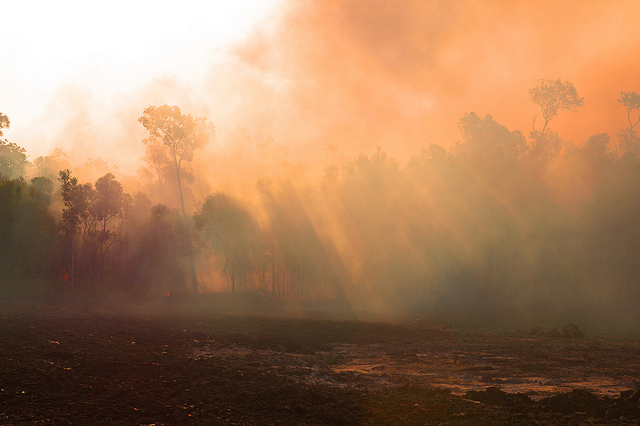
A wilderness landscape coverd in an orange haze of fire

The Abbott Government in Australia has previously stated it does not believe in climate change and it has significantly withdrawn funding for this line of research in its latest Budget (along with funding for most non-medical scientific research). A recent change on the Department of Environment’s website has removed a reference to the link between extreme weather conditions and climate change. The Department says this change reflects the findings of the Intergovernmental Panel on Climate Change (IPCC), which is incorrect. I discuss the Abbott Government’s historical and current position on climate change. I focus on the public discourse by Abbott and his Ministers. They discuss climate change science as both something that is open to interpretation and something that can be fought with selective use of science.

Continue reading Sociology of Government-led Climate Change Denial

Paternalism, Colonialism and Indigenous Education

Photo by Mark Roy via Flickr

By Zuleyka Zevallos, PhD

WARNING: Aboriginal and Torres Strait Islander readers are warned that the content on this page may contain images and references to deceased persons. (Why this warning?)

The Council of Australian Governments has conducted a national review of Indigenous socio-economic outcomes. Its recent report finds that while some measures are improving, there is still a large gap between Indigenous and non-Indigenous Australians. This post provides a snapshot of the findings with a focus on education and responses by the state. One of the solutions being offered to improve educational outcomes amongst Indigenous youth is to send them to boarding schools. I discuss this in relation to Australia’s colonial history and the Government’s paternalistic views on Indigenous welfare.

I review other approaches to Indigenous education, which focus on working to students’ strengths in order to improve outcomes. This means making curriculum more focused on applied skills, vocational training within remote communities, and ensuring knowledge is culturally relevant. At the same time, educational efforts must avoid “pigeon holing” Indigenous students and teachers. Instead, education needs to make leadership and career pathways more accessible, and ensure that Indigenous insights are being fed back into the education system.

Finally, my post explores how sociological teaching and activism needs to change in reflection of the history of Indigenous educational practices.

Continue reading Paternalism, Colonialism and Indigenous Education