How to Improve COVID-19 Mass Vaccination Experience

Infographic on COVID-19 Mass Vaccinaton Behavioural process. On the left, what it is currently: 2 month wait, routine sms, long delays, routine follow-up. On the right what could be improved: timely access, behavioural prompt, enhanced service

I present a visual ethnography of a mass vaccination site in Sydney, which took place from late-July to mid-August 2021. Ethnography is the study of people’s behaviour and organisations in their everyday setting. The aim of this analysis is to provide behavioural insights on how the mass vaccination process might be improved. Behavioural insights is the application of social and behavioural sciences to improve delivery of policy, programs, and services. I discuss some of the behavioural barriers in the mass vaccination process, especially things that could potentially contribute to people delaying coming back for their second dose. I also discuss how improved behavioural cues and messages could enhance the vaccination experience.

Continue reading How to Improve COVID-19 Mass Vaccination Experience

Sociology of Spiders

A tiny spider on a centre of an orange wall, in a halo of light

A diminutive spider accompanied by its tiny shadow had me captivated as I pondered the sociology of spiders and fear.

Spiders inspire irrational fright, despite the fact that most spiders can’t harm humans. The small percentage that can are not usually found in our homes and they don’t specifically seek us out for attack. Yet even I overreact at the sight of a spider at home (or in my swag during a recent camping trip!).

Our collective fear of spiders in urban areas is culturally determined, and it far outweighs the risk posed. Spiders feature as focus and metaphor for different types of fears in Western societies. Even amongst educated people, spiders are a source of disgust and anxiety. Why might that be the case?

Continue reading Sociology of Spiders

Invasion Day 2019

This past weekend was the Australia Day long weekend. The holiday marks the genocide and dispossession of Aboriginal and Torres Strait Islander people. This day will never be inclusive or live up to ideals of multiculturalism, as it is a Day of Mourning for First Nations people. We need to not just change the date but also #ChangeTheNation. This is time for truth-telling of our national history, a Voice to Parliament and Makarrata (treaty), as outlined in the Uluru Statement From the Heart.

On 26 January, beginning at 11am, we marched at the Invasion Day rally from Hyde Park South to the Yabun Festival. The rally starts with speeches, smoking ceremony and dance commentating survival. Remembering the Waterloo Creek massacre.

Continue reading Invasion Day 2019

Sociology of Indian-Australians and the Diwali Festival

I’ve been away for work for awhile now, and hope to bring you more on this soon. For now, I thought I’d share with you a post I had planned to  publish weeks ago, but haven’t been able to finish until now. Let’s talk about the sociology of Indian people in Australia, with a case study of the Hindu festival of Diwali in Melbourne.

Indian migration to Australia has a long history, dating back to the 19th Century,  with early records showing the British brought Indian servants (noting this may have included forced servitude). At the time of colonial Australia’s first Census, there were 1,800 Indian people in Australia. Today, Indian-Australians represent our fourth largest migrant group and they are also the biggest growing migrant group next to China, with their population doubling in the past decade, according to the Australian Bureau of Statistics.

In the most recent Census of 2016, over 455,000 Australians were born in India, corresponding to 1.9% of our population, though this does not include the second-generation (their children born in Australia).  Together with Nepalese-Australians, Indian people make up 76% of the Hindu population in Australia (noting that Hindu people make up only 1.9% of our national population).

Indian families gather at Diwali: Indian Festival of Light Oct 2014. Federation Square, Melbourne, Australia
Diwali: Indian Festival of Light, Federation Square

Continue reading Sociology of Indian-Australians and the Diwali Festival

Parallel Reality

Sun Xun’s exhibition drawing on mixed media to depict a parallel reality of propaganda figures, mythical creatures, cities, ancient townships and our relationship to time.

‘Maniac Universe,’ Sun Xun (2018), made with mineral pigment on bark paper with UV-A lights. The artist, born and lives in China, drew inspiration from Australia’s Southern Lights (Aurora Australia). ‘With the extreme natural spectacle of Aurora, you have a feeling of something impossible to capture or to comprehend in its entirety, much like the animal kingdom in Australia.’

Finally, ‘Triple Tangle,’ the new mural at the Museum of Contemporary Art, by Sydney artist, Gemma Smith.

Thelma

Young white woman wearing glasses hides behind a bucket of popcorn

Let me tell you about Thelma, screening at the Scandinavian Film Festival. A young woman, the titular Thelma, has led a sheltered and conservative Christian upbringing in the country. She rocks up to university having never really partied, including no alcohol or drugs, and without experience with dating. While she has a strong bond with her parents, especially her dad – with whom she shares all her deepest thoughts – she is very lonely in her new environment. That is until she meets the vivacious Anja.

Continue reading Thelma

Dark Emu by Bangarra Dance Theatre

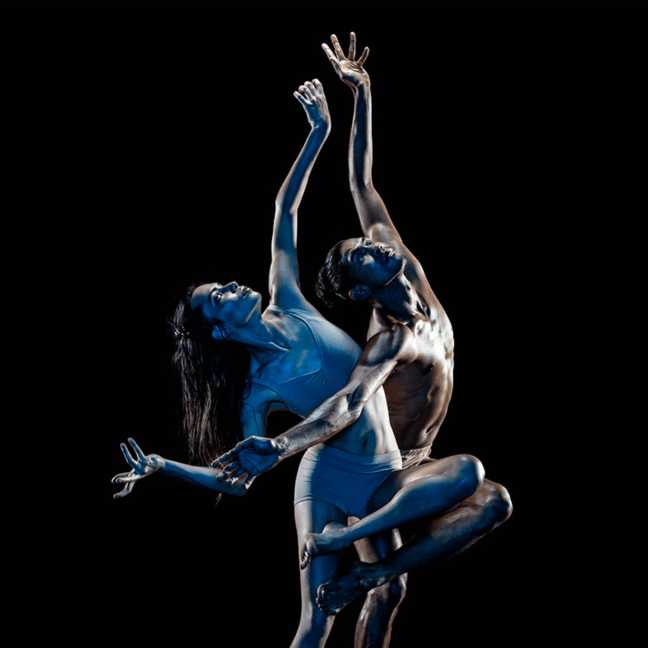
Two dancers reach up while jumping and twisting their arms

Guess who had front row tickets to Dark Emu by Bangarra Dance Theatre?

Based on Bruce Pascoe’s wonderful and important research into Australia’s pre-history – the agrarian and aquaculture innovation by Aboriginal and Torres Strait Islander people people prior to invasion.

Continue reading Dark Emu by Bangarra Dance Theatre