Sociology of Eco-Tourism


In this post, I show how sociology can contribute to collective understandings of sustainable tourism in China. I was inspired in response to the #ISeeTheWorldWithScience initiative promoted by a community I co-manage, Science on Google+. This is a game where members of our community are invited to write a caption for science images using their scientific perspective. The image for this week was of a beautiful forest (above). The instructions were:

I See the World with Science Image Game

Pillars of solitude. Life grabbing hold. Misty Mountains eroded by time. 

What more does science let you see?

#ISeeTheWorldWithScience Game: Suggest a short caption for the picture.  The caption must be founded on solid science but the more surprising the better. The community moderators will choose the best caption and repost an image with the caption on it in. Vote for your favourites by +1ing to influence the moderator’s choice!

Discussion: Discuss any aspect of the photo and what any field of science tells us more about what we are seeing and it’s context, including how we are seeing it, why it’s important.*

I captioned my response with ‘sociology of eco-tourism.’ Here’s why. Continue reading Sociology of Eco-Tourism
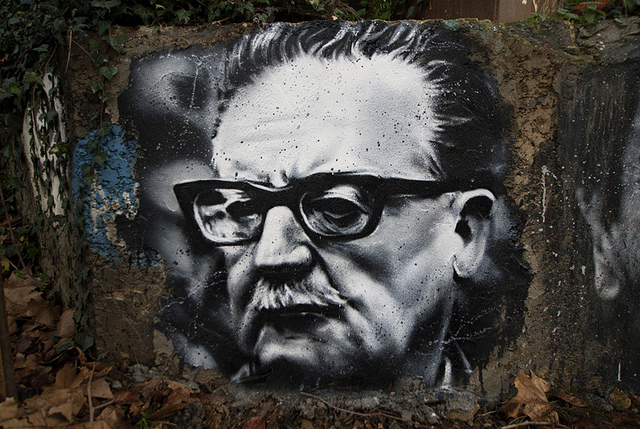
Chileans in Australia: The Other 9/11 and the Legacy of the Pinochet Regime

By Zuleyka Zevallos, PhD

Today is the “Other September 11.” On this day in Chile, 1973, President Salvador Allende was killed in a coup by Augusto Pinochet. My blog post explores the ongoing impact of this event on Chileans living in Australia.

In his historic speech, Allende’s final address to the nation, he talks of his sacrifice against imperial forces and his vision for the future. SBS News has a great website commemorating this event, including the role that the Australian Government played in feeding intelligence to the USA, which eventually led to the rise of the Pinochet regime. When the Australian Labor government came to power in 1972, Prime Minister Gough Whitlam is said to have been appalled about Australia’s involvement in the coup and removed his Government’s political support.

Australia began accepting Chilean refugees in the mid-1970s. The Chilean-Australian community grew from 6,000 in 1971 to over 24,000 by 1991. Continue reading Chileans in Australia: The Other 9/11 and the Legacy of the Pinochet Regime

Rethinking Gender and Sexuality: Case Study of the Native American “Two Spirit” People

Sociology and anthropology have long used the experiences of “third sex” cultures, such as the Native American Two Spirit people, to teach students about the social construction of sex and gender. In many cultures around the world, people are allowed to live their lives beyond conventional binaries; they need not adhere to the biological sex they were born into. These people are usually revered and there are special circumstances where individuals are allowed to shift their gender position. These groups, including the Two Spirit people, are used as examples in the sociology of Lesbian, Gay, Bisexual, Transgender, Queer and Intersexual (LGBTQI) issues. Recent scholarship, however, has questioned this practice, demonstrating that social scientists are applying Western concepts to misunderstand the Two Spirit phenomena.

Continue reading Rethinking Gender and Sexuality: Case Study of the Native American “Two Spirit” People