Racist Scaremongering as Social and Political Control

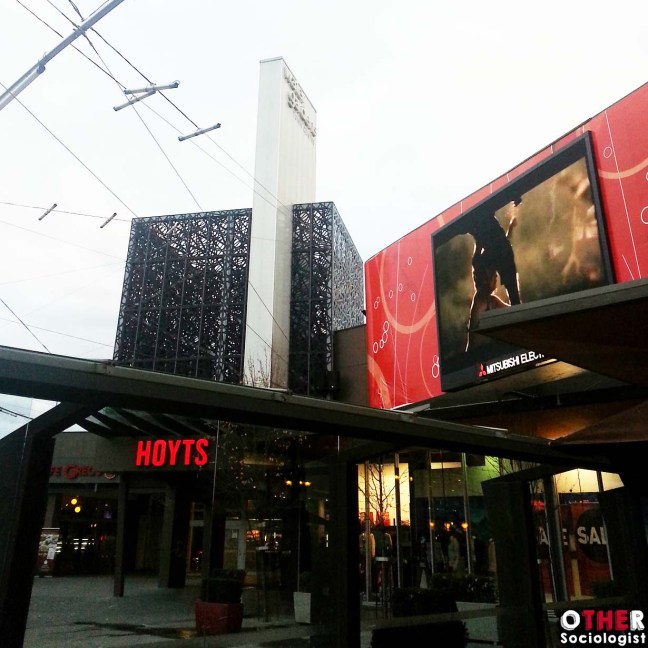
On the 8 August 2018, only four days after I published my last post on the social construction of migrant youth deviance in public spaces (Zevallos 2018a), there was an incident whipping up racist fear of ‘Sudanese gangs’ in the area where I went to school as a youngster. I had flown home for a workshop and then visited my family. They told me how the local gossip grapevine and local media were misreporting the event. Initial word-of-mouth said that between 200 to 300 Sudanese youth gathered at Watergardens Shopping Centre and were starting trouble, throwing rocks at police. While Nine News (2018) reported 20 to 30 kids vandalised property, ABC News (2018) reported up to 50 young people had come for a fight ‘over girlfriends.’ Riot police confronted the youth, and blocked the area. The next day, my family saw police on horses patrolling the Coles supermarket carpark (!).

All of this to stop Black children from gathering together in a public place.

In a week where we saw Nazi language used in the Australian Parliament, let’s delve into the use of scaremongering as a social control mechanism that reinforces political strategy.

https://twitter.com/OtherSociology/status/1031027911514513408

Continue reading Racist Scaremongering as Social and Political Control
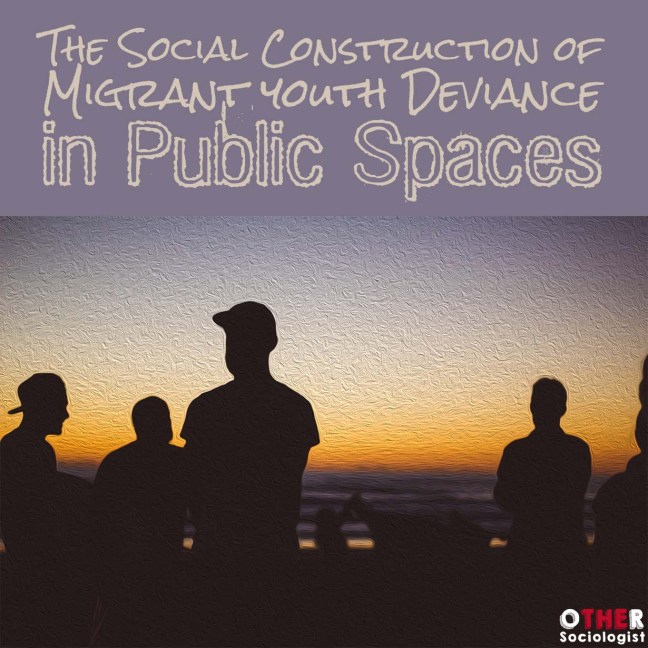
The Social Construction of Migrant Youth Deviance in Public Spaces

Silhouette of figures wearing baseball caps with the sunset in the background

This cartoon below by Charles Barsotti is a good illustration of the social construction of group deviance in public spaces. This cartoon points out how some social groupings can be given negative labels, such as a “cult.” The beliefs or the practices of particular socio-economic groups can are treated with suspicion by a dominant group where they do not conform to society’s norms, values, behaviour or appearance. Non-conformity can lead to the creation of stereotypes; that is, labels that simplify specific qualities of some people as typical of the group they belong to (hence the cartoon, where one wolf says to another, “We’re a pack, not a cult.”).

In most circumstances crowds that “blend in” and meet society’s standards of “acceptability” escape the stigma of social deviance. Cases where “ordinary” groups might be negatively labelled by authorities might occur during times of civil unrest, such as during political protests, or due to other political cycles, such as the lead up to an election.

Racial minority youth are often labelled as deviant simply for being in public. In the case of Aboriginal youth, even something as routine as being in a shopping centre is mired by harassment by security (Perry 2018: Powell 2018). In another example, Muslim girls have been forced to leave a school excursion at a public exhibition centre because other visitors felt “uncomfortable” (Foster 2017).

https://twitter.com/OtherSociology/status/870554192343060480

Let’s take a look at this problem of stereotyping racial minority youth in public spaces, focusing specifically today on migrant minorities. We’ll examine how labelling these youth as “deviant” keeps society from paying attention to pressing social problems, such as structural inequality and interpersonal gender violence.

Continue reading The Social Construction of Migrant Youth Deviance in Public Spaces

Indigenous Women’s Leadership

This past week, Australia celebrated NAIDOC Week (8-15 July), a time to recognise the leadership, culture and achievements of Aboriginal and Torres Strait Islander people. Originally standing for National Aborigines and Islanders Day Observance Committee, NAIDOC Week has historically reflected the ongoing resistance to genocide, assimilation and land dispossession, famously culminating in the annual Day of Mourning in 1938 (a protest against Australia Day on 26 January). The NAIDOC committee emerged in 1956, and has in recent decades coordinated local and national events and awards to promote Indigenous excellence. This year’s theme is Because of Her We Canpromoting the multiple leadership roles of Indigenous women for their families and communities, as they push for social justice and human rights at the local community and national levels.

I share with you two events I attended that highlight the role of Aboriginal and Torres Strait Islander women in academia, journalism, business, law and social policy. Continue reading Indigenous Women’s Leadership

Harmony and Anti-Racism

Crowd gathers at a multiculturalism event, including women in hijab and children playing drums

This is the speech I gave at an internal corporate event for Harmony Day. This day is actually the International Day for the Elimination of Racial Discrimination. The former is framed as a celebration of multiculturalism, the latter is a call for anti-racist action and social change. Myself and the other speakers took our cue from the latter.

Today I’m going to give you a sociological context for racial diversity in Australia, and how to promote racial harmony in our communities and our workplace. Continue reading Harmony and Anti-Racism

Invasion Day 2018

The 26 January is a public holiday nationally known as Australia Day, however, for decades, Aboriginal and Torres Strait Islander people have protested against this day, as it commemorates genocide and dispossession. Last year’s Invasion Day rallies were attended by over 61,000 people around Australia. This year’s rally had around 80,000 people marching across all capital cities, including 60,000 people in Naarm (Melbourne) and between 15,000 to 20,000 people in Gadigal (Sydney).

A child holds a sign showing the ongoing significance of the Day of Mourning

This year marks 230 years since the British invaded Australia, leading to the decimation of Aboriginal and Torres Strait Islander people, with inequities continuing to this day. It is also the 80 year anniversary of the Day of Mourning protests, organised by the Australian Aboriginal Progressive League.

Today’s post reflects on the protests on the lands of the Gadigal people of the Eora Nation (Gadigal is the city now known as Sydney). I then provide a visual sociology of the culmination of the protest march, which ended at the Yabun Festival.

https://twitter.com/OtherSociology/status/956670694586073089

Continue reading Invasion Day 2018

Racist Moral Panic

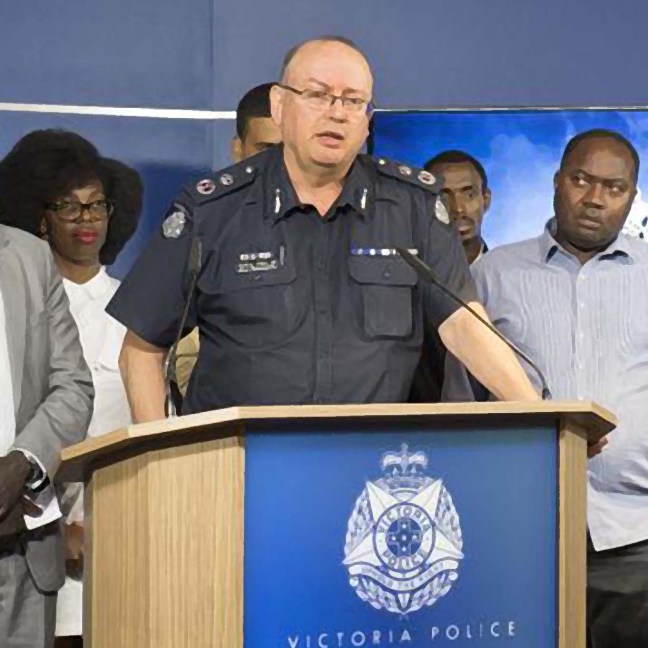
A news story about the newly established African-Australian community taskforce contributes to scaremongering. There’s increased policing of South Sudanese-Australian groups not because there’s a specific problem – data show that the majority of youth crime is committed by White youth.

Many South Sudanese Australians are positioned as a “threat,” meaning their achievements, knowledge and hard work is subsumed by political rhetoric and media hyperbole.

The motivation to criminalise African-Australians coincides with the election year. 

There are many videos, accounts and police reports of people from various African backgrounds being attacked by White people for simply being Black, emboldened by politicians and the moral panic. Where’s the white crime taskforce? Continue reading Racist Moral Panic

Ethnocentrism of Baby Names

An Asian woman and Black man play with two Asian babies

The popular culture website, Popsugar, published an article calling non-Anglo names “quirky.” This is one example among many where Anglo-Saxon languages and Western cultures are seen as the universal norm used to judge all other cultures (in sociology, this is known as “ethnocentrism”).

Continue reading Ethnocentrism of Baby Names

Anti-Indigenous Racism by Other People of Colour

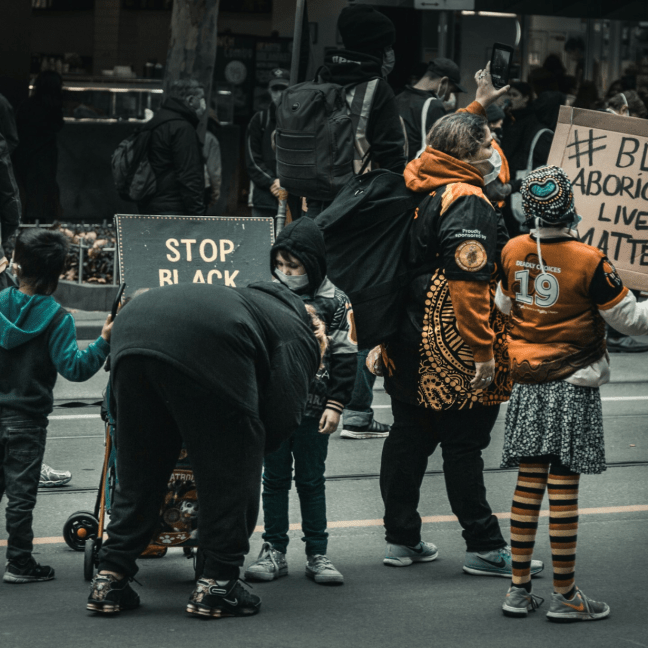
People at a protest hold signs that that #BLM Aboriginal Lives Matter

In July 2017, a young family tried to get a taxi after they marched for NAIDOC Week, a week of events recognising the cultures, languages and achievements of Aboriginal and Torres Strait Islander people, in Naarm (Melbourne). Five cab drivers refused to take them, making up the same excuse that they had just dropped someone off, or that they were waiting for another passenger, only to drive off alone. It is illegal to refuse a fare. The two drivers in the video shared below are non-Indigenous people of colour.

Continue reading Anti-Indigenous Racism by Other People of Colour

Indigenous Sociology for Social Impact

The history of Aboriginal and Torres Strait Islander social justice activism to destabilise and overcome colonial practices in Australia began with the British invasion in 1788 and has continued to the present-day. These acts of social and political organisation have strong sociological resonance that should centrally inform sociological inquiry in Australia. Yet Indigenous knowledges are peripheral to the discipline of sociology. This post is the first in a series exploring ways to decolonise sociology, through the leadership of Associate Professor Kathleen Butler, sociologist and Aboriginal woman belonging to the Bundjalung and Worimi peoples of coastal New South Wales.

To redress the problematic racial dynamics of sociological theory and practice, Associate Professor Butler convened the first Indigenous Sociology for Social Impact Workshop at the University of Newcastle, Ourimbah campus, on Darkinjung land. Held on 27-28 October 2016, Professor Butler invited Indigenous and non-Indigenous sociologists from different parts of Australia to consider gaps and opportunities in addressing the ongoing impact of colonialism in our theories, methods and practice.

Today’s post places the workshop in historic context and summarises the discussion. I also include reflections by Associate Professor Butler about the outcomes from the workshop. I end with a set of questions that emerged from the workshop that we should now face as a discipline in order to centre Indigenous knowledges and methods in sociology.

https://twitter.com/OtherSociology/status/791441601570627585

Continue reading Indigenous Sociology for Social Impact