“Colonial Sugar,” Tracey Moffatt and Jasmine Togo-Brisby, exhibition at the City Gallery Wellington. From 1863 to 1904, the Queensland government in Australia enslaved at least 62,000 people from the Pacific to fuel production in its prosperous sugarcane plantations. Continue reading Colonial Sugar
Racial microaggressions are the brief and subtle daily insults that denigrate people of colour. This term was first conceptualised in 1977 by Chester Pierce and colleagues in a study of racism in television commercials.
“These are the subtle, stunning, often automatic, and non-verbal exchanges which are ‘put downs’ of Blacks by offenders. The offensive mechanisms used against Blacks often are innocuous. The cumulative weight of their never-ending burden is the major ingredient in Black-White interactions.”
Microaggression is a term that Dr Derald Wing Sue and colleagues reinvigorated in 2007, to describe racist dynamics between White therapists and their clients who are people of colour. They note that microaggressions occur because White people lack awareness of how race affects their biases, stereotypes, behaviour and attitudes, and also because they lack an understanding of the experiences of people of colour.
Racial microaggressions are brief and commonplace daily verbal, behavioural, or environmental indignities
Microaggressions can be delivered as an insult or an appeal for validation about White person’s beliefs. These may be verbal signs (words or tone) or physical cues (snubs, or dismissive looks, gestures). Racial microaggressions can also build up not by targeting a specific individual but through atmosphere, such as a hostile workplace, where a minority woman is excluded from social events.
When White people try to dismiss Indigenous and other people of colour’s discussion of colonialism and its present-day impact by focusing on “tone,” that’s racism. Consider this exchange. I shared an article by Teila Watson , Birri Gubba Wiri and Kungalu/Gungalu Murri woman artist, who wrote about the impact of colonialism on Australia’s past, present and future. Originally published in The Guardian, Watson was unimpressed that the editors changed the title from White “Australia” Has a Black Future, to “Indigenous knowledge systems can help solve the problems of climate change.” So she chose to self-publish the longer version of her article with the original title on Medium.
A white woman reshared my tweet of this article, adding that she refuses to read the article due to the title, which she sees is “uncivil.”
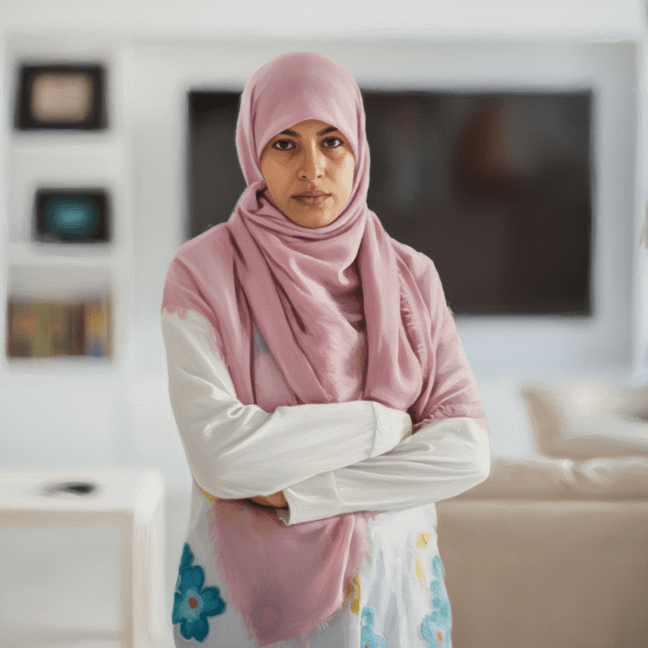
A new study shows women with “Muslim” names have to send 1.4 times as many job applications as women with Anglo-sounding names to be considered by employers, and women in hijab need to send 4.5 times as many applications.
Rugby star Sam Thaiday (below) who is Torres Strait Islander, made a sexist and racist comment during The Footy Show, a very popular, long-running TV show that is dominated by White male athletes and comedians who are infamous for racism and sexism. While mainstream media picked up the story from Aboriginal and Torres Strait Islander women, these outlets did not credit them.
Whilst in London a couple of years a go, I came across a sign which reads, “Begin your dream today, emigrate to Australia!” (see below). A warm invitation indeed: unless of course you are an asylum seeker – in which case our Government will revoke this welcome and abscond its responsibility to the United Nations Convention Convention relating to the Status of Refugees.
Since 2001, the Australian government has passed several laws that allow the detention of asylum seekers in offshore centres located on the islands of Nauru and Manus. This was first established by excising islands from Australia’s territory; attempting to pay off people smugglers; and a series of other policy changes known as the “Pacific Solution.” In the first seven years of the scheme, over 1,600 people were held in detention. They arrived predominantly from Afghan, Iraqi and Sri Lankan backgrounds. While this program was initially wound back by 2008, it was reintroduced in 2010. Offshore detention reached its peak in 2014, with over 2,400 people held in detention centres, including 222 children. At the end of March 2016, almost 1,000 people remained in Manus and up to 1,200 people on Nauru.
In 2014, the Government offered migrants up to $10,000 to go back home to face certain persecution; a scheme that was resolutely condemned by human rights experts. The Government simultaneously cut legal aid to refugees, making it even harder for them to receive informed support.
The ensuing health damage suffered by asylum seekers is woefully inhumane. Australia’s humanitarian program has been criminally pared back, along with our collective morality. We must not accept this unfair system in the name of so-called “Australian values.”
Your bridge to Australia. Your bridge to Australia. Begin your dream today.
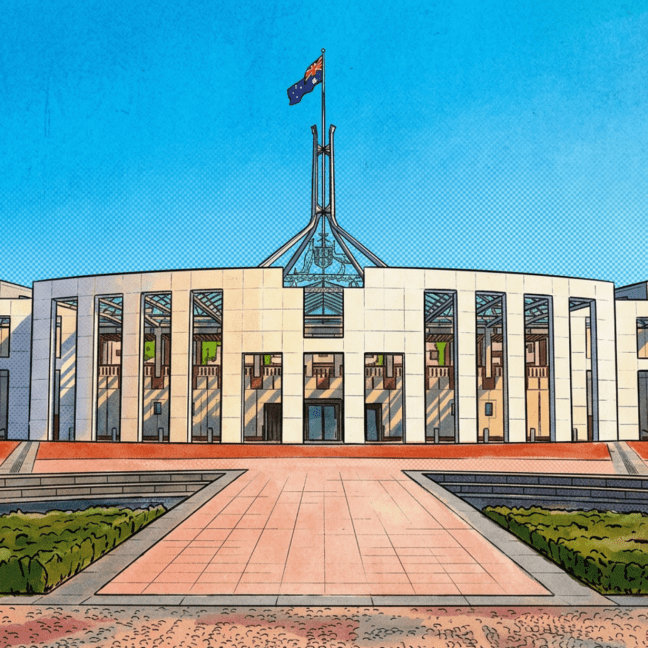
Politicians embody state power. They create laws and are elected to represent democracy, however, many of their decisions maintain racism and social inequality. In this sense, they personify institutional racism. A clear example is former Attorney-General George Brandis, who was one of the key drivers to amend 18C of the Racial Discrimination Act 1975. He worked alongside Prime Minister Malcolm Turnbull (considered a “moderate” Liberal politician), to weaken racial protections.
“When we focus on the individual, or the individual instance of racism, we actually miss out on looking at society and how it continues to perpetuate these sorts of structures that discriminate against these groups of people… We seem very keen to pin it on individual people rather than actually re-imagining a society that exists and doesn’t elevate these sorts of dialogues.”
The 13 February 2017 was the ninth anniversary of the Australian Government’s formal apology for the Stolen Generations. From 1910 to 1970, up to one third of all Aboriginal and Torres Strait Islander children (100,000 children) were forcibly removed from their families and sent away from their communities. They were classified according to their skin colour and put into Christian missionaries where they suffered abuse and neglect, or they were placed with White foster families who did not understand their needs. These children were forced to forget their language, culture and spirituality, and in many cases they were not told of their Indigenous heritage.
The Bringing Them Home report of 1997 gathered evidence of the impact this cultural genocide had on Indigenous Australians, showing that it led to intergenerational trauma, poor health, and socio-economic issues. The report made 54 important recommendations to end the cycle of violence against Indigenous Australians.
Twenty years later, Indigenous children are being removed from their families up to four times the rate.
Djiringanj Dancers, a group of women cultural performers, singing about the “West Wind” at the Corroboree grounds, during the Yabun Festival.
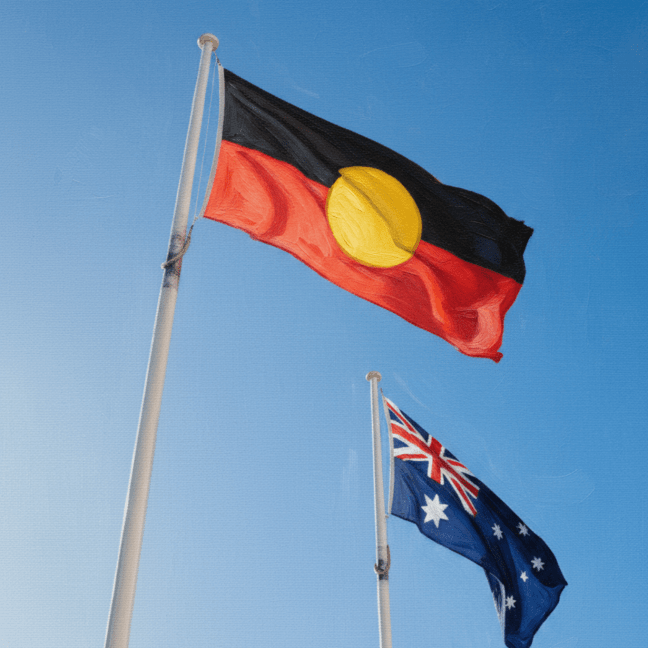
The Yabun Festival is a celebration for Survival Day. The 26 of January is a national holiday that marks the day British ships arrived in Australia and began the genocide of Indigenous Australians. Survival Day is a day led by Indigenous Australians who affirm the resilience, creativity and excellence of First Australians. This year, the Invasion Day Protests, which aim to change the date and meaning of Australia Day, ended by protesters joining Yabun at the end of the march to enjoy music, stalls, cultural performances, speeches and more.