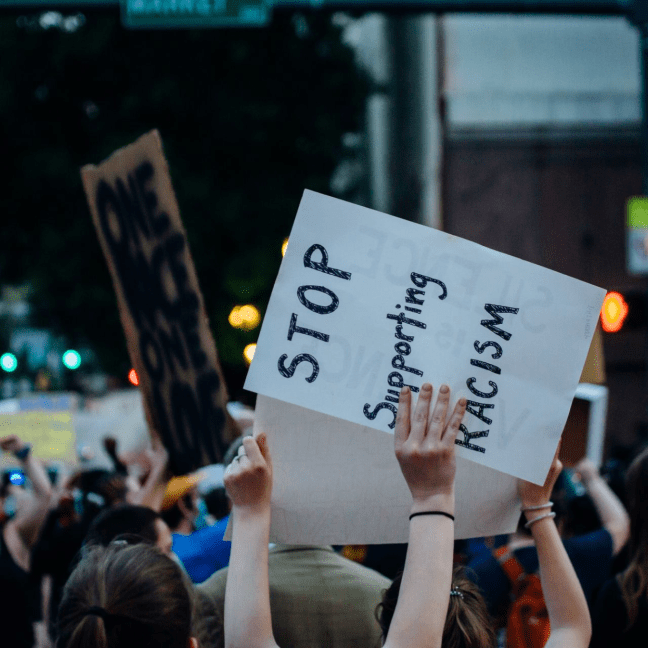
No pride in genocide! I am in Sydney, land of the Gadigal people of the Eora Nation, who have looked after these lands for over 75,000 years. I pay my respects to elders past, present and emerging.
The 26 January is a painful day for Aboriginal and Torres Strait Islander people. It is a date commemorating the day British ships (”the First Fleet”) arrived on Aboriginal and Torres Strait Islander lands. It is a day that marks the decimation of First Australians; the dispossession of their land; the removal of children to be raised in Missions and in White foster homes with no ties or knowledge of their culture (“the Stolen Generation”); amongst many other human rights crimes. This history impacts Indigenous life chances in the present-day.
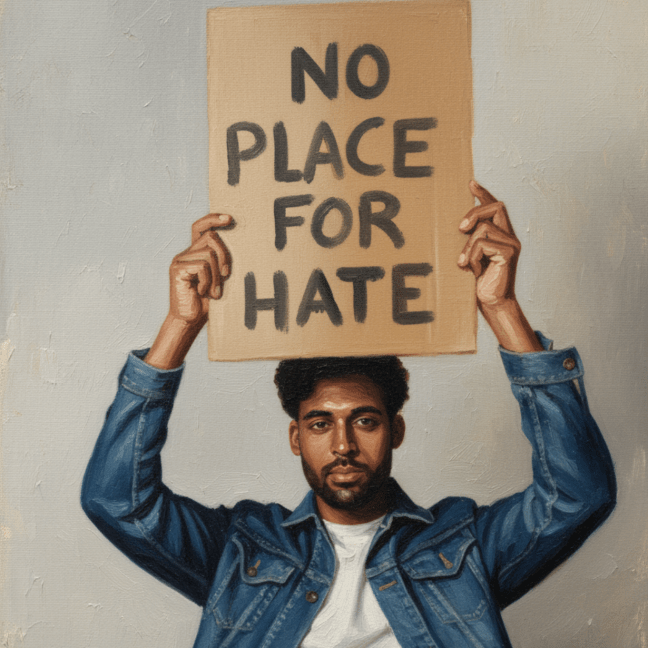
On the 26th, I joined 10,000 people in Sydney who marched in solidarity with Indigenous Australians to tell the Australian Government to change the date of Australia Day so that First Australians aren’t being excluded through a national holiday making genocide. Another 50,000 people marched in Melbourne, and tens of thousands more did the same in cities and town around Australia.
Below, you can read my tweets of the protest as it unfolded.
‘The term “white privilege” is misleading. A privilege is special treatment that goes beyond a right. It’s not so much that being White confers privilege but that not being White means being without rights in many cases. Not fearing that the police will kill your child for no reason isn’t a privilege. It’s a right. But I think that is what “white privilege” is meant to convey, that Whites don’t have many of the worries nonwhites, especially Blacks, do. I was talking to a white friend of mine earlier today. He has always lived in the New York City area. He couldn’t see how the Michael Brown case had anything to do with him. I guess that would be an example of white privilege.
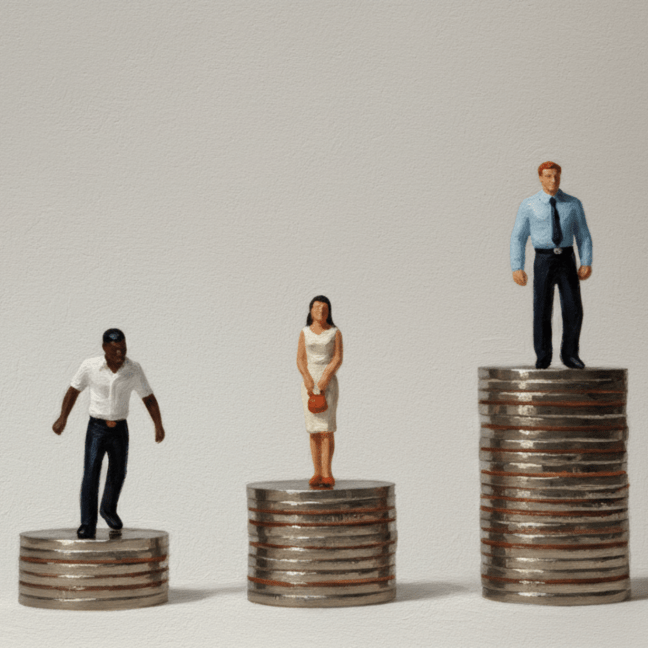
‘Other examples of white privilege include all of the ways that whites are unlikely to end up in prison for some of the same things blacks do, not having to worry about skin-color bias, not having to worry about being pulled over by the police while driving or stopped and frisked while walking in predominantly white neighborhoods, having more family wealth because your parents and other forebears were not subject to Jim Crow and slavery. Probably all of the ways in which whites are better off than blacks in our society are forms of white privilege. In the normal course of events, in the fullness of time, these differences will even out. But the sudden killings of innocent, unarmed youth bring it all to a head.” – George Yancy and Naomi Zack on The New York Times.
“White privilege is like an invisible weightless knapsack of special provisions…” – Peggy McIntosh
Educator Peggy McInotsh introduced the idea of white privilege, the special benefits, protections and access to power conferred onto White people, which allows them to advance in life without conscious awareness of racial discrimination. She came to this concept as she reflected on her feminist practices. She noticed that even when male colleagues were willing to support women’s efforts to increase gender equity, they were not willing to give up their own status and power. Having tried to include women of colour in her feminist activities with little successful engagement, she came to see how she, as a White woman, had also been reticent to give up her own benefits to make feminism truly inclusive of racial minorities. She notes that educated White people like herself are raised to notice the “bad” aspects of racism, but not the benefits that make her life easier.
She came to realise that Whiteness was like an invisible knapsack she carried around with her, which protects her from noticing the advantages of race. Noticing her racial privileges, she understood the myth of meritocracy, for in the bag of Whiteness, she finds the key to open many doors that women of colour cannot access. Her skin colour was “an asset” that helped her secure a better education; it made it easy to take for granted that she belonged to the broader culture that facilitated her success, despite the gender inequalities she fought.
I have come to see white privilege as an invisible package of unearned assets that I can count on cashing in each day, but about which I was “meant” to remain oblivious… Whites are taught to think of their lives as morally neutral, normative, and average, and also ideal, so that when we work to benefit others, this is seen as work which will allow “them” to be more like “us.”
McIntosh began to recognise that “privilege confers dominance.” She came to see that her feminism was oppressive, even though she wasn’t conscious of the benefits of her race; but this is the point: by not being aware of race, she was contributing to inequity. She had failed to notice how the benefits she enjoys are part of a system that disadvantages people of colour. Just as patriarchy positions men as the universal norm, requiring women to adjust their behaviour and expectations to the needs and interests of men, McIntosh recognises how Whiteness pushes her to view the world through a racial lens. She’s encouraged to leave undisturbed the norm that Others should be more like White people, instead of challenging the system.
Read more on White privilege and related concepts on my resource, Sociology of Race.
The latest Pew Research Centre survey shows that white people do not recognise institutional racism as the main cause of racial inequalities. Instead, they focus on individual prejudice, family, and lack of role models. White people are also half as likely to say Black people are treated unfairly at work and by police.
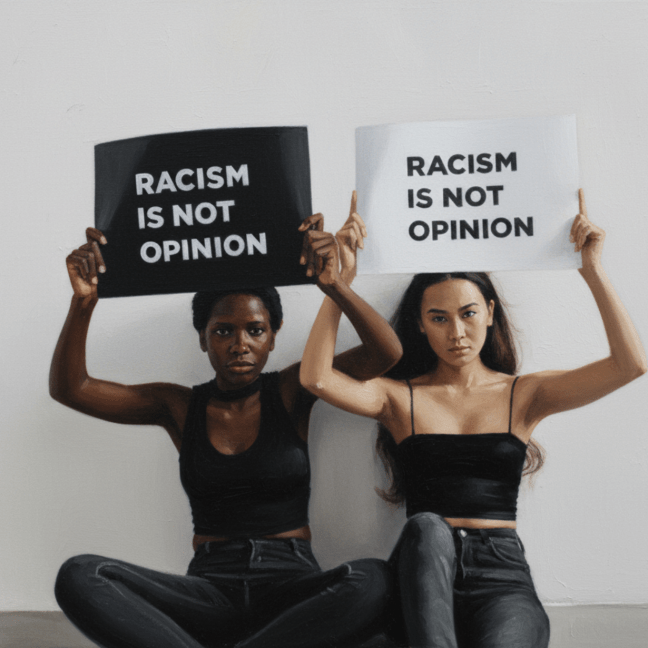
Earlier today, 28 May, seven men were arrested, after a racist, anti-Muslim right-wing group crashed an anti-racism protest outside a primary school in Coburg, Melbourne, Victoria. All except one are aged 25 to 33 years, and the other man is 18. One of the men carried three knives. Media reporting focuses on the “violent clash on the streets,” as if the two groups are neutral, or equally oppressive. We know the men perpetrating violence are white because their race is not mentioned. Islamophobia is mentioned as an aside, rather than the catalyst, and the anti-racism focus of the original rally is also not discussed. This illustrates how white supremacy works, by maintain the ideology that white people are superior to people of colour.
Australia is so wedded to racism that having two people of colour nominees for the Gold Logie (the top award for TV personalities) had led to a furore.
“People look at us without really seeing us. Instead, they simply see our race… the onus isn’t just on us inching past our fear of embarrassing a white person. It’s on white people to learn to make distinguishing faces a priority. Whether they realise it or not, the repeated misidentification broadcasts its own message: I’m Asian, indistinct and not worth remembering.”
Iris Kuo, journalist
“Mistaking” people of colour because “you all look alike” is not just a faux pax. It is racism at work.
In her opinion article for the Washington Post, Kuo recounts examples of herself, friends, and colleagues being mistaken for other Asian people who look nothing alike. It happens at work, and in other social interactions with white people.
“All my life I’ve been mistaken for other people of my race. It’s a degrading and thoughtless error that boils away my identity and simplifies me as one thing: ‘that Asian.'”
She notes she is expected to laugh this off, but it happens so frequently that it has a negative impact. Kuo recognises this happens to other people of colour, who are expected to let the moment pass, so as not to “embarrass” white people. She notes that when people of colour do speak up, the interaction is minimised or ignored. For example, when she complained about multiple incidents of a colleague mistaking her for other Asian people, the manager excused the problem, by saying: “I don’t think anyone here’s got a mean bone in their body.”
When white people get called out for racism, they usually moralise the issue, deflecting to a question of manners, naiveté, or an innocent mistake. They refuse to recognise this as racism, because white people think racism in terms of:
Extreme bigotry: racial slurs, yelling, violence
Conscious hatred: a personal flaw of an isolated individual
Moral failing: being called a racist is seen as a personal character flaw, and a label that is more hurtful than racism itself
Adjudicated through whiteness: white ideology defines what is, and is not, racism, according to the values, experiences, and discretion of individual white people, rather than a structural system of inequality
These examples are known as microaggressions – the brief and subtle daily insults that denigrate people of colour. It occurs because whiteness allows white people to take their own race for granted as a universal experience, without acknowledging their biases and prejudice. Microaggressions happen because white people reinforce racial categories, reducing other groups to a monolith “other,” while seeing themselves and other white people as individuals worthy of special attention, decency and respect.
Microaggressions reinforce racial power, because they are a routine reminder to people of colour that they are being racialised (reduced to their racial difference, and therefore lesser than white people).
This also shows how while people “do” race – by categorising “others” into racial categories, and reinforcing the racial hierarchy, that some groups have more power than others to define social reality. If they didn’t “mean to offend” or “didn’t mean any harm” then racial harm is nullified. Race becomes a problem for people of colour to manage, in ways that do not disrupt white people’s dominance.
TW: Rape.Today in White people justify racism: two examples of how sexism is used as racist scaremongering.
West Indies cricketer, Chris Gayle, who is Black, was sexist during an interview with an Australian woman journalist, Mel McLaughlin, who is White. Gayle issued a non-apology, saying he was joking. Sexist jokes are not “jokes;” it is sexism. Gayle’s behaviour is unprofessional and profoundly damaging given his prominent position, and also because women everywhere deserve to go to work without men objectifying them, regardless of their job or the stature of the person indulging gender inequity. It’s the second time Gayle has behaved this way to a woman journalist; in his homeland, feminist groups have called out his behaviour. This pattern is toxic. Gayle has been fined $10,000 for his comments. Good! This is an appropriate response; a better response would be to require that he additionally undertake gender equity training.
“Over the course of my life, mostly from white people back in the States, I’ve been told I look like a number of black people, from Eddie Murphy to Martin Luther King, so I was aware that other races’ perception of my appearance had a tendency to be warped. Often the people making these observations were unaware they were picking at the scabs of festering wounds of dehumanisation. Nor did they seem aware that their ideas could veer into stereotyping very easily. So, at least for me, this “name-calling” became a sort of indicator of a person’s ignorance or insensitivity level..”
Ongoing human rights crimes have been committed against Indigenous Australians, starting with dispossession and colonisation. This post features museum and dance works addressing Australia’s colonial history and its ongoing aftermath: the “Secret Histories” exhibition at the Australian Museum, as well as Bangarra Dance Theatre’s latest work, “Spirit of the Patyegarang.”
The Australian Government is actively sustaining cultural violence against Indigenous Australians. The Abbott Government is trying to force 150 Aboriginal Australian communities off their lands in Western Australia. This would displace up to 12,000 Aboriginal Australians, effectively making them refugees in their own ancestral lands. This comes after months of ongoing campaigns to address:
The removal of 15,000 Indigenous children: The Grandmothers Against Removals group have been fighting for the return of Aboriginal children who live in so-called “out of home care,” away from their families. This practice goes back to early colonialism, where Indigenous children were removed from their communities and forced to give up their culture.
The Indigenous Advancement Strategy: The Government announced that $860 million of Commonwealth funding would be cut from already under-resourced Indigenous programs.
The denial of basic services to remote Indigenous communities: as shown in the Utopia Homelands in the Northern Territory, an Indigenous community that lived without clean water for two months in late 2014.