Share the Spirit: Survival Day 2015

The 26th of January is Australia Day and a national holiday. Various events happen all over Melbourne, but some of these recognise that this day raises important issues about Indigenous culture in Australia. Protests over colonialism have been ongoing since Europeans settled in Australia in 1788. On the 26th of January 1938, 150 years after the decimation of Indigenous people began, William Cooper (leader with the Australian Aboriginal League) together with Jack Patten and William Ferguson (the Aboriginal Progressive Association) declared the first “Day of Mourning,” a day recognising the history of colonial violence and dispossession. Survival Day events represent the resilience and contribution of Aboriginal and Torres Strait Islander people, who collectively make up the world’s oldest, continuous culture.

I attended the Share the Spirit festival, hosted by Songlines Music. This event has been running at the Treasury Garden since 2002. Together with similar events in Sydney, Perth, Adelaide and elsewhere, they are amongst the biggest Indigenous cultural events in Australia. Continue reading Share the Spirit: Survival Day 2015

‘White Supremacy Is Not An Attitude… It’s a Question of Power’

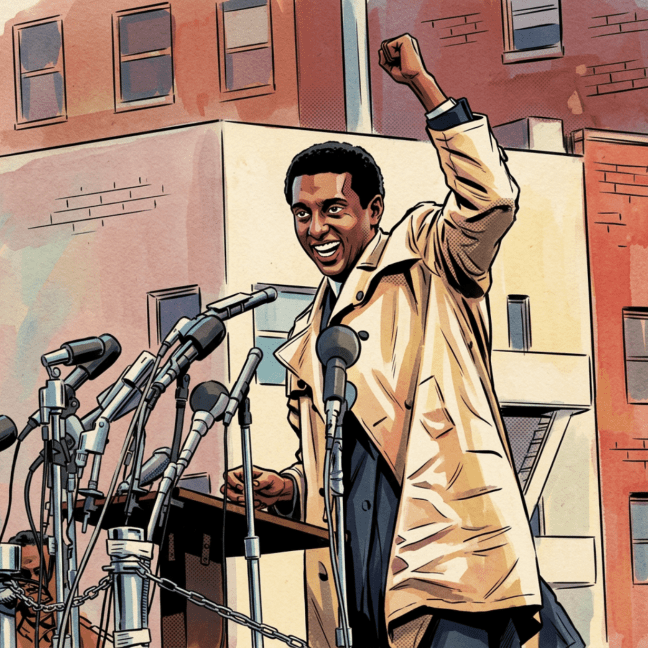
Kwame Ture (AKA Stokely Carmichael) is a young Black man speaking at a podium with many microphones. He has a short Afro and wears a trenchcoat. He has his fist in the air in the Black power sign

“Some groups in this country, talking all sorts of nonsense, will make you think that white supremacy is a sickness, is a ‘this,’ is a ‘that.’ White supremacy, as far as we’re concerned, just means we’re powerless. That’s all. White supremacy is not an attitude, it’s not a sickness, it’s a question of power. If a white man wants to lynch me, that’s his problem. If he has the power to lynch me, that’s my problem. But as long as I have the power to stop the white man from lynching me, him wanting to lynch me is his problem, and it can remain his problem forever. So the only reason the white man can lynch me is because I am powerless.”

Kwame Ture (previously known as Stokely Carmichael)
Continue reading ‘White Supremacy Is Not An Attitude… It’s a Question of Power’

Two Out of Five Migrants Experience Racism

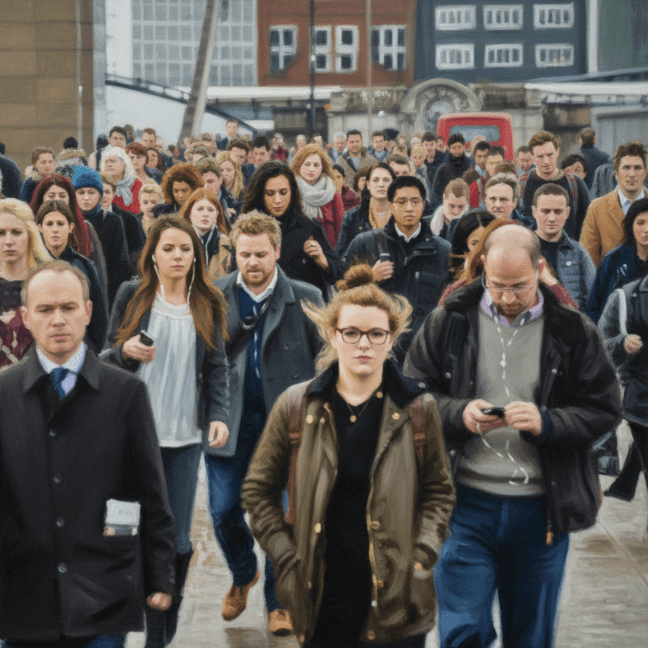
A massive crowd of walking people dressed in coats and scarves

An Australian study by philosophy Professor Andrew Markus finds that 40% of migrants from non-English speaking backgrounds have been subject to racism. This is an increase of 19% from six years a go. The groups who reported highest level of abuse include: people from Malaysia (45%), India and Sri Lanka (42%), Singapore (41%), Indonesia (39%), and China and Hong Kong (39%). The national average for experiences of racism was 12%.

Continue reading Two Out of Five Migrants Experience Racism

Visual Science: Maps and Other Representations of Culture and History

Visuals can shape world views – but not always for the better. Portuguese anthropologist João Figueiredo shared an example how an entrepreneur announced at a conference that Portugal is the centre of the Earth because of his country’s position on a map he presented. This idea is, of course, scientifically incorrect. Unfortunately, this did not stop this notion from being integrated into a Portuguese Government marketing campaignMaps are factual, so they can’t be political, right? Not so. Maps are created by people and they carry the history of cultures and political ideologies. In this post, we’ll look at the culturally loaded notions of North and South on visual maps, and other representations of science in evolution and science presentations, that have strong cultural authority, even though they are incorrect. 

Continue reading Visual Science: Maps and Other Representations of Culture and History

Day of Mourning

Day of Mourning – Australia Hall, Sydney, 1938. Protest of 150 years of colonialism.

On 26 January [1938], as Australia celebrates the 150th anniversary of the landing of the First Fleet in Sydney Cove, Indigenous Australians attend a Day of Mourning and Protest in Sydney. The mourners wait for the sesquicentenary procession to pass, then march in silent protest from the Sydney Town Hall to an Australian Aborigines Conference at the Australian Hall. The Australian Aborigines’ League and Aborigines Progressive Association of New South Wales use the meeting to speak out about the denial of civil rights for Indigenous Australians. The protest is the culmination of years of campaigning by Aboriginal leaders including William Ferguson, William Cooper and John Patten. Patten and Ferguson circulate a pamphlet, Aborigines Claim Citizen Rights.

Top photo via Indigenous Rights. Document and quote via Museum of Australian Democracy at Old Parliament House.

The Surprising Cultural History of New Year’s Resolutions

By Zuleyka Zevallos, PhD

In a fun rummage through vintage sociology, I found an interesting study by Isidor Thorner. Writing in 1951, he used a survey of Americans from various backgrounds to determine the relationship between New Year’s Resolutions (NYR) and Protestant values. Below I take a look at the major findings of Thorner’s study, exploring the historical and cultural variations of resolutions.

Protestant culture highly valued the idea of being in full control of one’s emotions. This meant being organised and denying oneself frivolous pursuits so as to be free to fulfil religious duty. Not adhering to these strict values brought about great personal shame.

Thorner argues that the New Year’s resolutions helped Protestants to manage their emotional baggage, and that over time, this practice lost its religious connotation and spread more widely.

Photo by Steve Davidson via Flickr.

Continue reading The Surprising Cultural History of New Year’s Resolutions

Reverse Racism is Not Real

A white hand holds a "reverse Uno" card, which shows two arrows pointing in opposite ends

Bangladeshi Australian comic Aamer Rahman humorously shows the problem with the idea of “reverse racism.” Sociological research bysociologist Eduardo Bonilla-Silva and colleagues backs up the idea behind his comedy, by showing the paradoxical beliefs held by white people who think they have been the victims of reverse racism: first, that racism is no longer a problem; second, that minorities get special privileges that are unfair, and which disadvantage white people.

Continue reading Reverse Racism is Not Real

Paternalism, Colonialism and Indigenous Education

Photo by Mark Roy via Flickr

By Zuleyka Zevallos, PhD

WARNING: Aboriginal and Torres Strait Islander readers are warned that the content on this page may contain images and references to deceased persons. (Why this warning?)

The Council of Australian Governments has conducted a national review of Indigenous socio-economic outcomes. Its recent report finds that while some measures are improving, there is still a large gap between Indigenous and non-Indigenous Australians. This post provides a snapshot of the findings with a focus on education and responses by the state. One of the solutions being offered to improve educational outcomes amongst Indigenous youth is to send them to boarding schools. I discuss this in relation to Australia’s colonial history and the Government’s paternalistic views on Indigenous welfare.

I review other approaches to Indigenous education, which focus on working to students’ strengths in order to improve outcomes. This means making curriculum more focused on applied skills, vocational training within remote communities, and ensuring knowledge is culturally relevant. At the same time, educational efforts must avoid “pigeon holing” Indigenous students and teachers. Instead, education needs to make leadership and career pathways more accessible, and ensure that Indigenous insights are being fed back into the education system.

Finally, my post explores how sociological teaching and activism needs to change in reflection of the history of Indigenous educational practices.

Continue reading Paternalism, Colonialism and Indigenous Education