How to Improve COVID-19 Mass Vaccination Experience

Infographic on COVID-19 Mass Vaccinaton Behavioural process. On the left, what it is currently: 2 month wait, routine sms, long delays, routine follow-up. On the right what could be improved: timely access, behavioural prompt, enhanced service

I present a visual ethnography of a mass vaccination site in Sydney, which took place from late-July to mid-August 2021. Ethnography is the study of people’s behaviour and organisations in their everyday setting. The aim of this analysis is to provide behavioural insights on how the mass vaccination process might be improved. Behavioural insights is the application of social and behavioural sciences to improve delivery of policy, programs, and services. I discuss some of the behavioural barriers in the mass vaccination process, especially things that could potentially contribute to people delaying coming back for their second dose. I also discuss how improved behavioural cues and messages could enhance the vaccination experience.

Continue reading How to Improve COVID-19 Mass Vaccination Experience
Policing Public Health

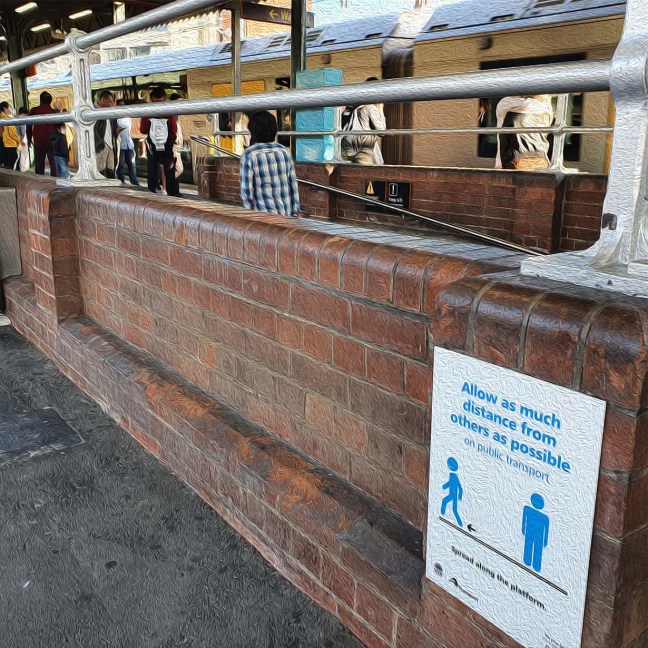
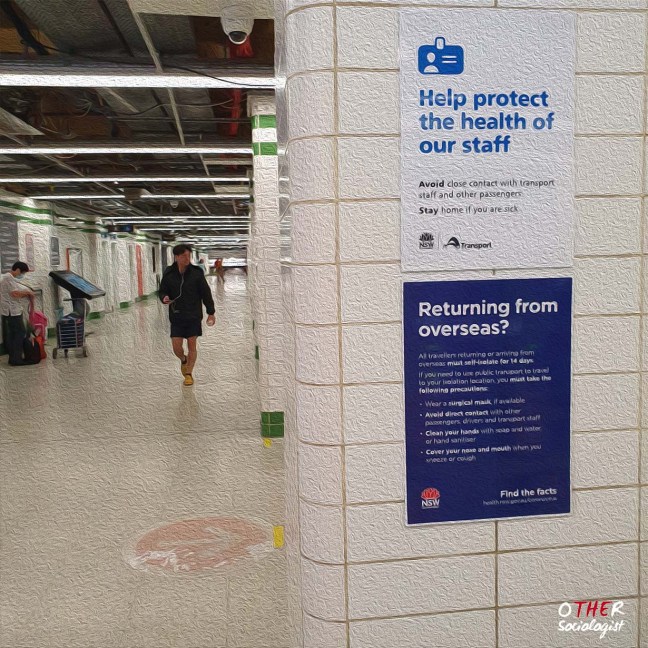
A person walks in the distance inside Central Station in Sydney. Two COVID posters say: 1 "help protect staff," and 2) "returning from overseas?"

This analysis discusses policing responses to public health during the COVID-19 pandemic, specifically impacting communities with high rates of migrants, refugees, and First Nations people. First, I reflect on some of the lessons from the COVID-19 “hard lockdown” of social housing towers in Melbourne in 2020. I then discuss health inequalities in multicultural suburbs of Sydney, which are now being placed into a strict lockdown. I explore how racist ableism operates in these settings, and what an alternative, cultural safety approach would look like.

Continue reading Policing Public Health

Race, Class and the Delta Outbreak

Entrance to a supermarket. Stickers on the ground say "please stand here." Workers are busy in the background

This post explores how race and class impact media discourses of public health during the COVID-19 pandemic. Media reports have selectively focused on migrants and working class people linked to specific infection chains. Race and class are absent from media narratives involving white, middle class, and wealthy people, even when these events account for high rates of infection and trangression of COVID-19 rules. This analysis shows how inequality is reproduced and normalised through institutions, such as the media.

Continue reading Race, Class and the Delta Outbreak

Applied Sociology of Qualifications

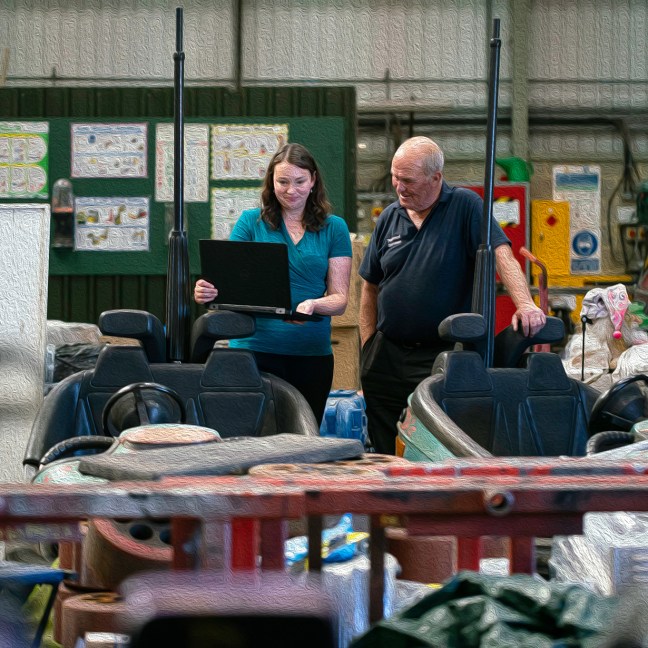
A young white woman stands next to an older white man in an industrial workshop. They are both smiling looking at her laptop

Cross-posting research I’ve led, which examines how to help students complete their qualifications. Our research shows that more apprentices and trainees will complete their training if students are given six behaviourally informed SMS prompts. Messages provided timely and practical advice on workplace rights, and where to seek support if they were struggling. Our results equate to 16% fewer learners dropping out. Our intervention led to a 7:1 return on investment.

Continue reading Applied Sociology of Qualifications

Political Attacks on Critical Race Theory

Crowd of protesters in Sydney

Almost 530 researchers (including me) have signed the Open Letter Against Racism. Critical race theory is an academic field under uninformed and unwarranted political attack in Australia and in other nations. See an excerpt below and please read the full letter.

Continue reading Political Attacks on Critical Race Theory

LGBTQIA Inclusion at Work

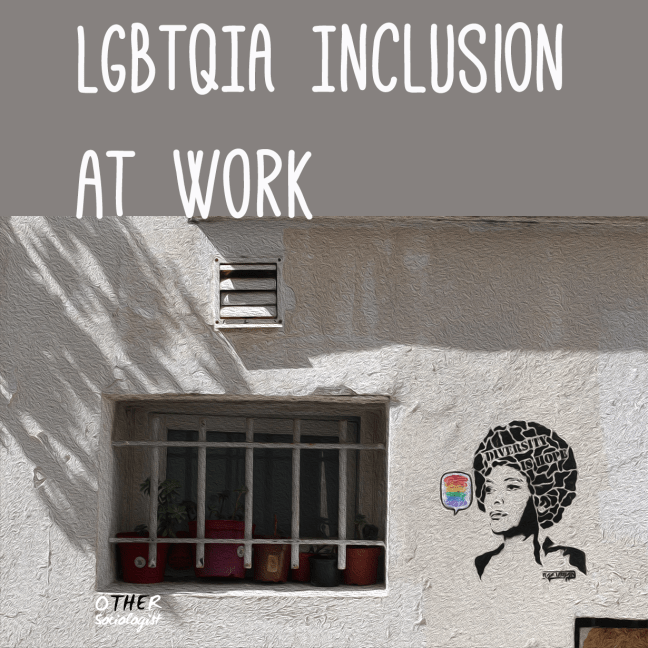
A window with bars and a wall with a stencil of a Black woman's face. Text reads: LGBTQIA inclusion at work

Ending discrimination against gender and sexual minorities requires major social transformation. Institutional change is paramount. As you keep fighting to make your organisation accountable, here are three small but impactful things you can do at your workplace to end this form of discrimination.

Continue reading LGBTQIA Inclusion at Work

Stop Black Deaths in Custody

Protesters march through Sydney. One of them wears a tshirt that says "Bla(c)k lives matter." Many carry communist flags. A large banner in front has the colours of the Aboriginal flag

There is no more pressing national issue in Australia than justice for Aboriginal and Torres Strait Islander people. It has been 30 years since the publication of the report on The Royal Commission into Aboriginal Deaths in Custody. The Royal Commission reviewed 99 deaths in custody between January 1980 to May 1989. However, as of April 2021, 474 Aboriginal and Torres Strait Islander people have died in custody since the report was delivered in April 1991. This includes five people in past month alone. No police or corrections officers involved in these deaths have ever been convicted, despite CCTV footage, expert witnesses, and other evidence.

If you only do one thing thing today, please sign this petition, asking the Prime Minister meet with families whose loved ones have died in custody.

The Royal Commission made 339 recommendations. Three decades later, the recommedations overwhelmingly remain unfulfilled.

There are many Aboriginal families who are actively fighting for justice, through various coronial inquests and other legal battles. By taking one minute to sign the petition, your quick but valuable action will ensure Aboriginal families directly affected by the failures of the criminal justice system can finally be heard directly by Australia’s leaders.

Continue reading Stop Black Deaths in Custody

Public Sociology and the Pandemic

Oil painting of a subway sign about COVID-19. It shows an imprint of two hands. The message reads: have you washed your hands?

It’s been a long while! Over the past couple of months, in my paid work, I’ve been co-leading a large randomised control trial in public health. Hoping we can publish results in the new year. Our team is also busy researching issues of technology and safety. In my personal research, Associate Professor Alana Lentin and I wrapped up series 1 of Race in Society. We covered media representations; the lockdown and ableism; intersectionality; policing; and economics. I’ll bring you write ups of other episodes soon, or head to our YouTube to watch the videos.

In case you missed it, here are two interviews I gave earlier in the year, on the sociology of COVID-19. Unfortunately, the topics of moral panics and misinformation remain relevant.

Continue reading Public Sociology and the Pandemic

The Economics and Social Costs of COVID-19

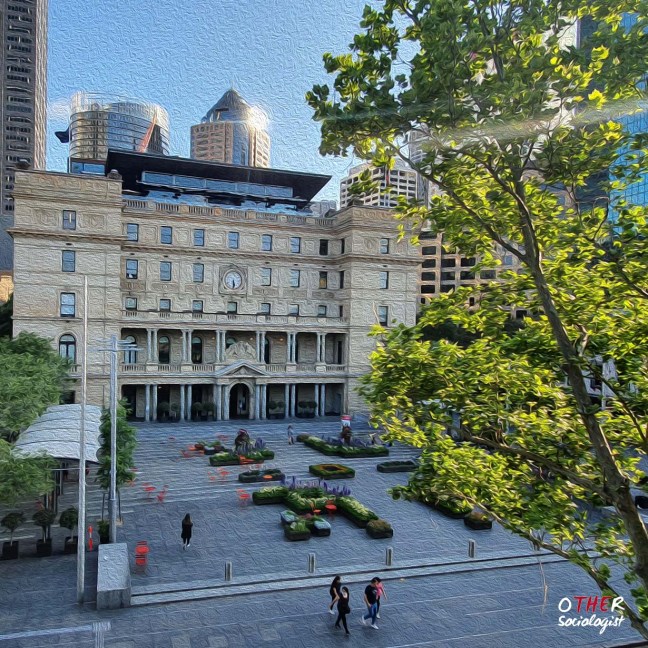
Aerial view of Sydney Customs House, a large Building at Circular Quay, Sydney

In Episode Seven of our Race in Society series—the final episode of season 1 on “Race and COVID-19″—Associate Professor Alana Lentin and I are joined by two guests to discuss The Economics and Social Costs of COVID-19. We examine the impact of the COVID-19 crisis on undocumented migrant workers, whose labour is being exploited.

The economy depends upon the work of racialised people, exposing them to higher risk due to casualised frontline services, which have kept the health system and other businesses going throughout lockdown. At the same time, racialised people are provided inadequate protections against infection, including poor personal protective equipment.

Our first guest, Sanmati Verma, is an Accredited Specialist in Immigration Law. She discusses the legal issues faced by temporary visa holders and migrants, as they lack access to economic security. Our other guest is Professor Sujatha Fernandes, who is Professor of Political Economy and Sociology at the University of Sydney. Her research explores the uses and misuses of storytelling to shape understandings of the political activism of racialised people. She discusses how “curated storytelling” narrows the public’s engagement with economic rights during the pandemic.

Continue reading The Economics and Social Costs of COVID-19