Racial and Gender Justice for Aboriginal Women in Prison

A room full of majority women watch a mix of Aboriginal and non-Indigenous women panellists at the Sydney Law School

On Thursday 23 May 2019, I attended at the Sydney University Law School Beyond Punishment Seminar Series: Aboriginal Women in the Criminal Justice Network. The speakers discussed data on Aboriginal and Torres Strait Islander women in prison, and programs to support them in the state of New South Wales (NSW). ‘Aboriginal’ women in the context of the talks and the discussion below also encompasses Torres Strait Islander women.*

Before I tell you more about the talks, I’ll set the scene, looking solely at the adult prison context affecting Aboriginal women being targeted by the criminal justice system.

Over-incarceration is an issue best examined through a lens of intersectionality, a term originally exploring the limitations of dominant definitions of discrimination under industrial law (Crenshaw 1989: 150). Legal outcomes of Aboriginal women are simultaneously impacted by race, gender, class and other systemic inequalities. Lack of legal resources available to Aboriginal women to navigate the legal system is born of concurrent racial justice and gender inequalities. Economic disadvantage, poor access to therapeutic and other health services, and housing insecurity are preconditions of offending; these are class and racial justice issues. Sexual violence and poverty of Aboriginal mothers are typical of imprisoned women’s backgrounds at a rate that is much higher than male prisoners (Stathopoulos and Quadara 2014). Again, these are both racial and gendered issues, which are interconnected with colonial violence and intergenerational trauma.

I am writing on 26 May; National Sorry Day. This day commemorates the truth-telling of the Bringing Them Home report, the documentation of the Stolen Generations. Around 100,000 Aboriginal and Torres Strait Islander children were forcibly taken from their families under our racist social policy. The first institution built to ‘civilise’ Aboriginal children through the use of violence was in Parramatta, New South Wales (Marlow 2016). From 1910 to 1970, across the nation, Aboriginal children were forced to forget their culture, language and spirituality. They were placed into neglect by Christian-run missions and into White foster care (AHRC 1997). Today, the state continues to forcibly remove Aboriginal children from their families at four times the rate as non-Indigenous kids (Zevallos 2017). New forced adoption laws in New South Wales mean children placed in care will be forcibly adopted (Zevallos 2019). For Aboriginal women in prison, this will almost certainly mean losing legal rights to see their children. Fracturing families through the imprisonment of mothers is another way in which colonial violence continues in the present-day.

Forced removal of Aboriginal children leads to cultural disconnection, exposure to child abuse, an increased likelihood of entering the criminal justice system, and trauma for mothers. These are gender, race and class dynamics unique to Aboriginal women, their families and communities. Continue reading Racial and Gender Justice for Aboriginal Women in Prison

Understanding Racism in Social Context

Race is a social construction. This means that biological or phenotypic traits are classified in ways that reinforce inequalities benefiting majority groups. Hence “race” is understood differently across nations, depending on history and culture. White people have a tendency to see racism in subjective and relativist views: White Canadians think that racism is less of an issue in their country than in the USA; White people in Aotearoa New Zealand think racism in Australia is far worse than in their own backyard; and Australians think racism in Australia has “gotten better,” and that we are better off than the USA. These comparisons are one way in which White supremacy is maintained locally. Individual observations about so-called “worse” racism in other countries only serves to maintain racial injustice. Let’s now see how this plays out in everyday discussions of racism.

Continue reading Understanding Racism in Social Context

Using Intersectionality in Collective Responses to Sexual Harassment

Trigger warning sexual harassment and assault: let’s talk about intersectionality, policy and practice in dealing with sexual harassment.

There seem to be endless cases of sexual harassment coming to light, but these are the tip of the iceberg. In Australia, 575 cases of harassment and rape have been reported in higher education in the past five years alone. Most cases go unpunished, while other institutional responses are sluggish or inadequate. For example,  of the 575 cases, only six perpetrators were expelled. In the University of New England, perpetrators were only fined $55 and received eight hours community service.

The issues are well-known, but equity advocates note that little institutional reform has happened. Continue reading Using Intersectionality in Collective Responses to Sexual Harassment

Enacting Whiteness When Tagging People of Colour

I’ve written about why white people should reflect on the deeper motivations whenever they feel a need to tag Aboriginal and Torres Strait Islander people, and other people of colour, in conversations on race and racism. Tagging people of colour into racist exchanges introduces further discrimination and abuse into that person’s life. I show this through an example of online abuse I received after one of my white followers tagged me into conversations involving someone who had previously harassed me.

Continue reading Enacting Whiteness When Tagging People of Colour

Interview: Talking Feminist Sociology

Drawing of several women dressed in historical STEM outfits

In case you missed this on my other social media, in January 2019, Lady Science published a podcast about my career and feminism.  I was interviewed in late 2018 by Leila McNeill, one of the editors-in-chief. Below is an excerpt where you can learn a little about my professional history. I discuss how racial minority sociologists are challenging knowledge production in our field. I show how the concept of otherness is feeding the overt political resurgence of White nationalism. Then I cover the importance of intersectionality in sociological practice.

My face is drawn Brown, with red lipstick and red lines shining out of my top of my head
Portrait of me commissioned from the feminist and artist, Tyler Feder

Leila: To kick off our series I’ll be talking with Zuleyka Zevallos, a sociologist from Australia, about the history of sociology, how the work of Indigenous and minority sociologists is changing the field, and how intersectional feminism influences her work. Leila: Without further ado, I’ll let Zuleyka introduce herself.

Z. Zevallos: Yep, so my name’s Zuleyka Zevallos. I’m a sociologist, and I’ve got a PhD in sociology. I started off doing research on the intersections of identity from migrant background women. I was really interested in how their experiences of gender, sexuality, ethnicity and also religion made their sense of identity, and how that also interconnected with their experiences of racism and multiculturalism, and how all of that affected their sense of belonging to their communities, as well as broader Australian society.

Z. Zevallos: After I finished my PhD I’ve been teaching the whole way through, and then I was an academic for a little while. I taught the sociology of gender and sexuality as well as leading courses on ethnicity and race. I also looked at the impact of technology on society…

Z. Zevallos: I spent the first few years working with an interdisciplinary social modelling team. That was a really great experience because it really taught me different applications of sociology, but also how to speak to scientists from the natural and physical sciences, from computer sciences, and how to blend their disciplines with mine.
Continue reading Interview: Talking Feminist Sociology

Stop Forced Adoptions

Protesters gather out the front of the Parliament of New South Wales. A lage Aboriginal flag hangs over the gates. An Aboriginal man is signing translation in Auslan. There are camera crews and photographers.

Today marks the 11th anniversary of former Prime Minister Kevin Rudd’s Apology to the Stolen Generations. From 1910 to 1970, up to one third of all Aboriginal and Torres Strait Islander children (100,000 children) were forcibly removed from their families and sent away from their communities. They were classified according to their skin colour and put into Christian missionaries where they suffered abuse and neglect, or they were placed with White foster families who did not understand their needs. These children were forced to forget their language, culture and spirituality, and in many cases they were not told of their Indigenous heritage.

The Bringing Them Home report of 1997 gathered evidence of the impact this cultural genocide had on Indigenous Australians, showing that it led to intergenerational trauma, poor health, and socio-economic issues. The report made 54 important recommendations to end the cycle of violence against Indigenous Australians.

Twenty years later, Indigenous children are being removed from their families up to four times the rate.

Join the Grandmothers Against Removals, protesting forced adoptions law in NSW. Their ethos is that: ‘The best care for kids is community.’ Below are my live-tweeted comments, beginning at the Archibald Fountain in Sydney.

Continue reading Stop Forced Adoptions

Sociology of Spiders

A tiny spider on a centre of an orange wall, in a halo of light

A diminutive spider accompanied by its tiny shadow had me captivated as I pondered the sociology of spiders and fear.

Spiders inspire irrational fright, despite the fact that most spiders can’t harm humans. The small percentage that can are not usually found in our homes and they don’t specifically seek us out for attack. Yet even I overreact at the sight of a spider at home (or in my swag during a recent camping trip!).

Our collective fear of spiders in urban areas is culturally determined, and it far outweighs the risk posed. Spiders feature as focus and metaphor for different types of fears in Western societies. Even amongst educated people, spiders are a source of disgust and anxiety. Why might that be the case?

Continue reading Sociology of Spiders

Invasion Day 2019

This past weekend was the Australia Day long weekend. The holiday marks the genocide and dispossession of Aboriginal and Torres Strait Islander people. This day will never be inclusive or live up to ideals of multiculturalism, as it is a Day of Mourning for First Nations people. We need to not just change the date but also #ChangeTheNation. This is time for truth-telling of our national history, a Voice to Parliament and Makarrata (treaty), as outlined in the Uluru Statement From the Heart.

On 26 January, beginning at 11am, we marched at the Invasion Day rally from Hyde Park South to the Yabun Festival. The rally starts with speeches, smoking ceremony and dance commentating survival. Remembering the Waterloo Creek massacre.

Continue reading Invasion Day 2019

Whiteness, Racism, and Power

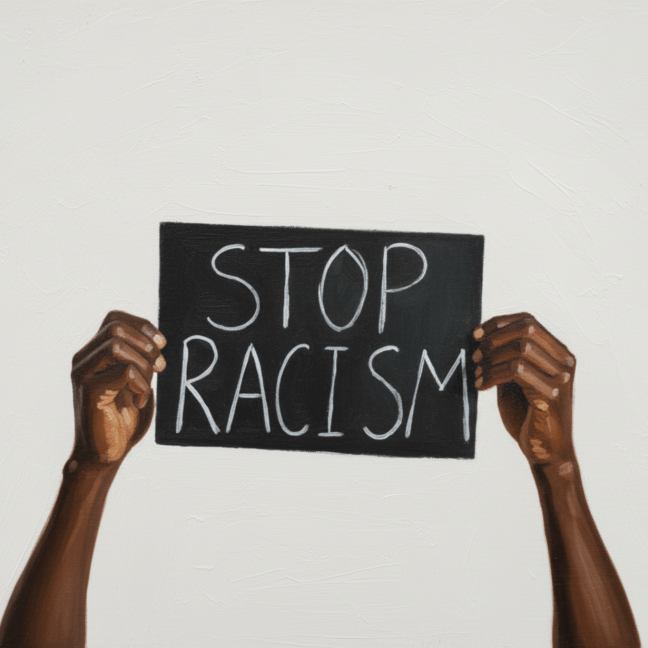
Two hands hold up a sign that says: STOP RACISM

Here’s a typical example of how white people exercise and maintain racism. TV personality, Kerri-Anne Kennerly, flies into a rage about Saturday’s Invasion Day protests, led by Aboriginal people, seeking to change the date of Australia Day and establish systemic reform that includes a Voice to Parliament and Makarrata (treaty). Kennerly taps the table angrily, ‘Has anyone of them been out to the Outback where children, babies, 5 year olds are being raped. Their mothers are being raped. Their sisters are being raped. They get no education. What have you done? Zippo.’

Continue reading Whiteness, Racism, and Power