Subverting Colonialism in Peru

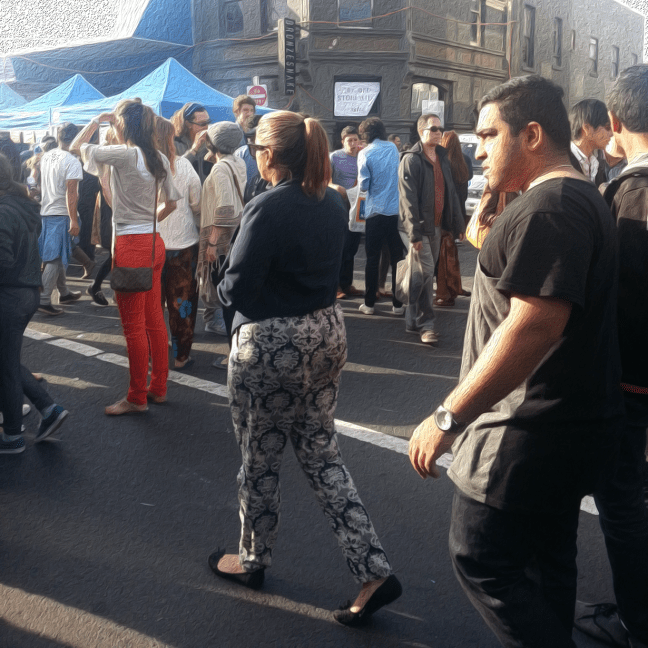
Peru’s Señor de Choquekillca Festival is held in Ollantaytambo, near Cuzco (the ancient Incan city of Machu Picchu). The festival commemorates a local saint and it also represents the Inca’s mocking of the conquistadors who invaded and almost obliterated the Indigenous Quechua culture.

Writing for the Huffpost, Andrew Burmon muses that the festival comes across as a “strange” multicultural event that doesn’t match Western ideas of multiculturalism. The festival simultaneously represents an embrace of certain elements of Catholicism which are blended with Indigenous spirituality, as well as a rejection of Spanish colonialism.

In Western nations, multiculturalism takes on many contested forms, but it is usually about tolerance of cultural and religious difference as a means of social integration of minority groups. This festival in Ollantaytambo subverts this notion by recreating the history of colonialism as an act of cultural and religious rebellion. The town honours its tradition by staging people drinking outside a church as well as by having a cross procession.

The people dress up in beautifully ornate costumes as well as grotesque masks in a celebration, condemnation and reconciliation of the past.

Senor de Choquekillca is a strange sort of festival. A religious celebration in honor of a small town boy made saint that has morphed into an occasion for trans-generational venting, Choquekillca provides the citizens of the small town of Ollantaytambo with an occasion to dress up in white face and mock the conquistadors who destroyed the Inca civilization flourishing in this part of the Peruvian Andes…

That is what is great about the party: Like history itself, it doesn’t really make sense.

Peru’s Christian faith is a spoil of war, but no less genuine for being coerced. Likewise, the Incan culture is mourned despite being obviously extant. Unlike westerners, who more often than not see multiculturalism as the amalgamation of different peoples, the people of the Sacred Valley – inundated though they are by Machu Picchu-bound travelers – are multicultural on the inside, contradictions be damned.

It is hard not to love a people not only capable of holding contradictory ideas in their heads, but willing to celebrate them in concert. 

Photos via: Huffington Post.

Hollywood Racism: The Magical Negro Trope

By Zuleyka Zevallos

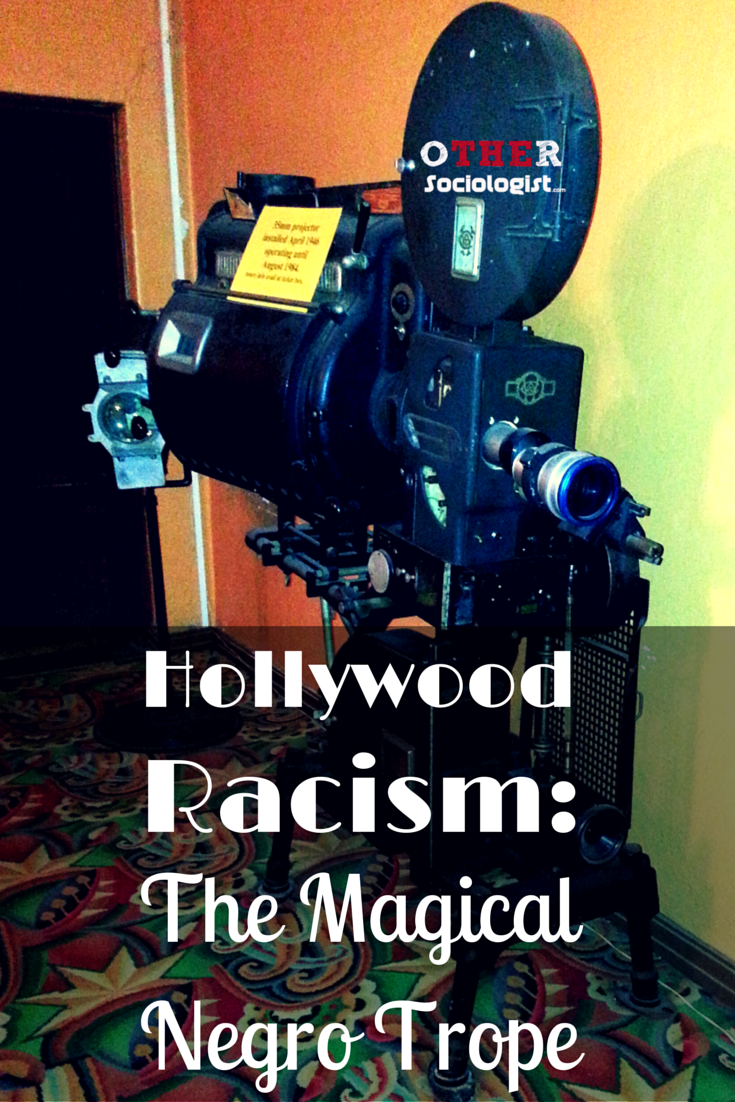
Adam Serwer reports in Mother Jones that George Lucas’ latest film, Red Tails had trouble getting made, partly because the “studios weren’t willing to finance a film without a white protagonist as an anchor”.  Lucas’ claim can be put into wider historical context by examining the entrenched racist practices of big Hollywood studios. In particular, the idea of the “magical negro trope” puts things into perspective. This term refers to the way valiant Black characters in movies exist only as a narrative device to teach the white protagonist how to be a better person. This post explores variations of the “magical negro” and the gendered dimensions of these characters.

Hollywood Racism: The Magical Negro Trope

Continue reading Hollywood Racism: The Magical Negro Trope

Samoa Loses a Day: Sociology of Time

Samoa (Credit: sarah|rose, Flickr. CC)

The island nation of Samoa wants to improve its trade relations with Australia, New Zealand and China. As such, it is getting set to lose a day in order to align its time zone with its trade partners. Tomorrow, on what should have been Friday the 30th of December in Samoa, time on this island will jump ahead to Saturday the 31st of December.

I want to explore this shift in time in Samoa through the broader lens of the sociology of time. The theory of social construction states that the things that we take for granted as ordinary, mundane or commonsense are actually social ideas shaped by culture. The idea of temporal time is measured through our watches, calendars and other scientific instruments and technologies. As such, the passing of time is perceived as an unremarkable fact of life. The social meaning of time in different cultures varies. The idea of time as a fixed entity is actually a social illusion. I will show how history, social forces and life situations shape our ideas about time. I include a case study of ‘island time’ to show the variability of how time is understood and valued in island nations such as Samoa and Gabriola Island in British Columbia, Canada. I use the impending time change in Samoa to introduce the idea of ‘social time’, which is a useful way to understand how people in different cultures organise and think about time.

Continue reading Samoa Loses a Day: Sociology of Time