The Myth About Women in Science? Bias in the Study of Gender Inequality in STEM

The Myth About Women in Science? Bias in the Study of Gender Inequality in STEMA new article on CNN by psychology professors, Wendy Williams and Stephen Ceci, boldly proclaims that gender bias in Science, Technology, Engineering and Mathematics (STEM) is a myth. Their research has been published in the Proceedings of the National Academy of Sciences (PNAS). Unfortunately, their work has a flawed methodological premise and their conclusions do not match their study design. This is not the first time these researchers have whipped up false controversy by decrying the end of sexism in science.

Williams and Ceci write on CNN:

Many female graduate students worry that hiring bias is inevitable. A walk through the science departments of any college or university could convince us that the scarcity of female faculty (20% or less) in fields like engineering, computer science, physics, economics and mathematics must reflect sexism in hiring.

But the facts tell a different story…

Our results, coupled with actuarial data on real-world academic hiring showing a female advantage, suggest this is a propitious time for women beginning careers in academic science. The low numbers of women in math-based fields of science do not result from sexist hiring, but rather from women’s lower rates of choosing to enter math-based fields in the first place, due to sex differences in preferred careers and perhaps to lack of female role models and mentors.

While women may encounter sexism before and during graduate training and after becoming professors, the only sexism they face in the hiring process is bias in their favour.

Williams and Ceci’s data show that, amongst their sample, women and male faculty say they would not discriminate against a woman candidate for a tenure-track position at a university. Sounds great, right? The problem is the discrepancy between their study design, that elicits hypothetical responses to hypothetical candidates in a manner that is nothing like real-world hiring conditions, and the researchers’ conclusions, which is that this hypothetical setting dispels the “myth” that women are disadvantaged in academic hiring. The background to this problem of inequality is that this is not a myth at all: a plethora of robust empirical research already shows that, not only are there less women in STEM fields, but that women are less likely to be hired for STEM jobs, as well as promoted, remunerated and professionally recognised in every respect of academic life.

Continue reading The Myth About Women in Science? Bias in the Study of Gender Inequality in STEM

Motherhood Penalty in Academia

In late 2014, two sociologists were featured in the New York Times (NYT) talking about the “cultural bias against mothers” in the paid work force. Professor Michelle Budig’s research finds that high income men with kids enjoy the biggest career benefits while low-income women suffer as a result of having children. In part, this is because employers think that marriage and children makes men more stable, while women with children are stigmatised as being less reliable (employers see mothers as “flaky”). This stereotype goes back to the traditional male breadwinner model that arise during the Industrial Revolution, which became solidified in post-WWII period during the 1950s. People presume the model we know today has always existed but that’s not the case. Marketing and economic relations have made it seem as if married men are ideal workers, while women are supposedly made for care-giving. This is not the case, when we look to institutional barriers and employer biases.

Motherhood penalty
Motherhood penalty

Continue reading Motherhood Penalty in Academia

Transgender Women’s Experiences of Gender Inequality at Work

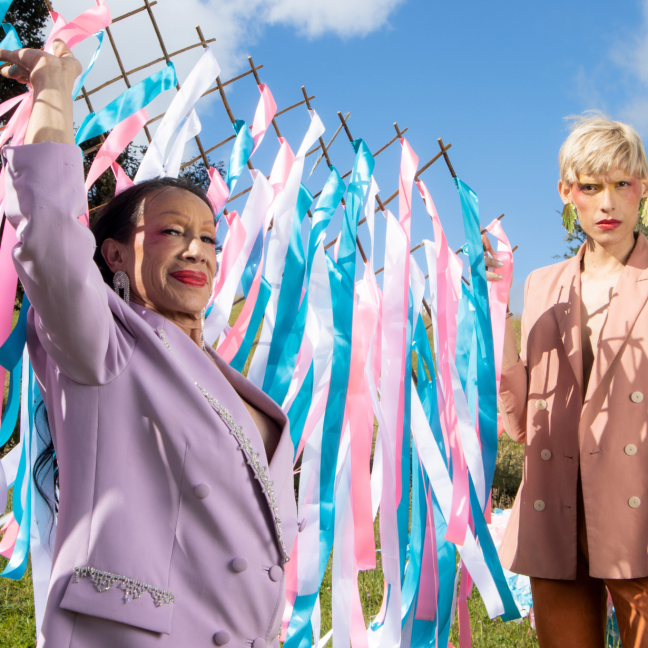
An older trans woman of colour in a lavender suit holds her arm up and smiles, while a younger white trans woman in a pink suit stares forward. They stand outdoors, in front of a fence with ribbons in the blue, pink, and white colours of the trans flag

Sociologists Candace West and Don Zimmerman popularised the theory of “doing gender.” This theory sees that gender identity is something we do – itis a performance and an achievement that people put a lot of work into, rather than some innate biological state of being. People do gender by the way they dress, the way they talk, the way they move their bodies, the types of leisure activities they engage in their spare time, through their division of labour at home, at work and in every other context. Doing gender takes work: you need to learn what’s expected of you as a “man” or as a “woman.”

Early knowledge on doing gender comes from childhood socialisation. Subsequent life experiences teach us, often through trial and error, what the norms and expectations are for masculinity and femininity in different social settings, such as at work.

West and Zimmerman argued that, since gender is something we learn to do, and doing gender leads to inequality, it is possible to undo gender inequality, by doing gender in alternative ways that do not punish femininities. The doing/undoing of gender has been an ongoing focus of gender studies, most recently focused on transgender people. I will discuss recent scholarship about how transgender people do gender at work, with a focus on the experiences of transgender women. Social scientists are preoccupied with the idea that transgender people are in a special position to “undo” gender. I want to explore why viewing transgender experiences in this way contributes to the othering of transgender people, by amplifying their difference as a solution to gender inequality. Society can absolutely undo gender, but part of this means addressing the inequalities transgender people experience. This is something that mainstream feminism has yet to fully embrace.

Continue reading Transgender Women’s Experiences of Gender Inequality at Work

Science Fellowships and Institutional Gender Bias in STEM

Women of colour speaking and doing science. Text reads: Science Fellowships and Institutional Bias

You may have read in late September that the ratio of women receiving Royal Society funding has “plummeted from one in three in 2010 to one in 20 this year.”  While the Society also awards the Dorothy Hodgkin Fellowships to early career women researchers, this award exists to boost women’s participation in science, not to augment or mask the issues in the Society’s mainstream Fellowship program.

The Royal Society was silent for a couple of days after its list of fellows list was made public, despite a large outcry by the scientific community on social media and opinion columns in the media. The Society President, Sir Paul Nurse, finally announced an investigation a couple of days after the fact. The question is: why did the Society wait until it was made public to assess their program?

I want to stress that while I’m using the Royal Academy’s Fellowship outcomes as a case study, the issue I am illustrating is the reactionary treatment of gender bias in all fields of Science, Technology, Engineering and Mathematics (STEM). The point here is to tease out institutional patterns and to make the case that institutional approaches are needed to address gender inequality. While this point may seem obvious, the fact is that inequality in science, as with other spheres of social life, is still treated as a surprise. This is because, on the whole, organisations (and society in general) remains reactionary to addressing gender inequality. Diversity is an afterthought, when it should be a proactive and ongoing project at the organisational and societal levels.

This is the first in a series of articles I’m writing on why the scientific community, inclusive of various disciplines, needs to re-examine its position on the problem of inequality in STEM. The picture I am building up is one of methodological rigour and interdisciplinary collaboration in order to better work towards gender inclusion.

Continue reading Science Fellowships and Institutional Gender Bias in STEM

Sociology of Halloween Costumes for Women

Today is Halloween in Australia. We don’t really celebrate Halloween as a nation, although trick or treating is slowly becoming more common in some areas. (The kids in my court have been preparing all week by walking back and forth to each other’s houses with little Halloween buckets!) So unless you’re a horror lover like myself, you may only see costumes if you got to a Halloween party. But if you’ve ever had to dress up, as I did a couple of months back for my niece’s party, it can be tough to find a costume that doesn’t hyper-sexualise women, unless of course you make your own.

There’s a scene in the Tina Fey movie Mean Girls, where the lead character dresses up in an awesome scary costume and everyone is astonished because she isn’t in a revealing outfit (acceptable outfits featured are “sexy mouse”). In the film, they call this the “slut rule.” From the script:

“In Girl World, Halloween is the one night a year when a girl can dress like a total slut and no other girls can say anything about it.The hard-core girls just wear lingerie and some form of animal ears.”

– Mean Girls

This passage not only shows how society pathologises women’s sexuality (if you’re sexual you must be a “slut”), but it also reflects how women are punished for their sexuality when acting outside of the constrictive social norm (you’re only allowed to be “sexy” on special occasions, like Halloween, and even then you have to follow inane rules about what’s deemed attractive).

Halloween is also a time when people will be culturally insensitive with their costume choices, thinking minorities should be flattered that their culture is sexualised and fetishised for one day of the year.

I love ghouls, so if you can’t revel in horror with your costume choice, women can still have fun and be empowered, like this little girl who dreams of being a scientist working for NASA!

Credits

Image: Jeff Parker. [Text] “Don’t get me wrong, the princess costume is nice, Mum. But this Halloween, I thought I’d dress up as a NASA Mission Commander…”

Women and Girls on Film: “Inequality is Rampant”

Storify is closing and over the coming weeks, I will be migrating my posts to my blog. This is an archive of my article first published on Storify on 24 September 2014. 

In September 2014, the United Nations, the Geena Davis Institute on Gender in Media, and The Rockefeller Foundation published a study on the representation of cisgender people on film. Here I report on the major findings and include some of my related social media posts.

The study conducted by Dr Stacy Smith, Marc Choueiti and Dr Katherine Pieper included 120 globally released movies in 11 major film regions: Australia, Brazil, China, France, Germany, India, Japan, Russia, South Korea, United States, and the United Kingdom. The study included almost 5,800 speaking or named characters. The researchers find that, globally, only 31% of speaking roles in films are given to women and less than a quarter of films are centred on a woman protagonist (23%).

The study finds that girls and women are slightly better represented in the UK (38% of speaking roles), Brazil (37%) and Korea (36%). Women and girls’ representation in Germany (35%) and China (35%) is relatively worse, but gender inequality is even more entrenched in India (25%) and the USA and U.K. (24%). This is especially alarming since Hollywood is the biggest exporter of films globally and they are clearly leading in the wrong direction.

Only 28 films in the sample (23%) feature a woman or girl in the lead role or otherwise sharing the story with another main character. The study also considers the gender balance of film casts (where 45 to 55% of characters are women or girls). Only 12 films met this criteria (10%). When women characters are featured in the main storyline, they appear in highly femininised genres. For example: women feature in 33% of comedy roles; 34% of dramas; and 29% of animated movies, but they make up only made up 23% of characters in action/adventure films.

The study included 1,452 film makers and people working in key roles behind the scenes. Women make up only 7% of directors, less than 20% of writers, and 23% of producers. The UK (27%) and China (17%) are comparably better, while France, Japan, Korea, Russia, and the USA are below the industry average of 7%.

Around 60% of younger characters (children and teenagers) are boys while 40% are girls. While 34% of men are cast as characters aged 40 to 64 years of age, only 19% of women are depicted as middle aged characters. The researchers find this is especially problematic given that the younger women who do appear in films are highly sexualised.

Women are more than twice as likely to wear sexually revealing clothing (25% of women vs 9% of men). Women are more likely to be thin (38.5%) in comparison to men (16%). Women are also more likely to be partially or fully naked (24% women vs 11.5% of men). Women characters are also five times more likely to have their looks commented upon by others (13% vs less than 3%). Younger women are more likely to wear revealing clothing, but women across the ages of 13 to 39 years are equally likely to be sexualised.

Continue reading Women and Girls on Film: “Inequality is Rampant”

Beyond Boycotts: Gender, Globalisation and Garment Factories in Bangladesh

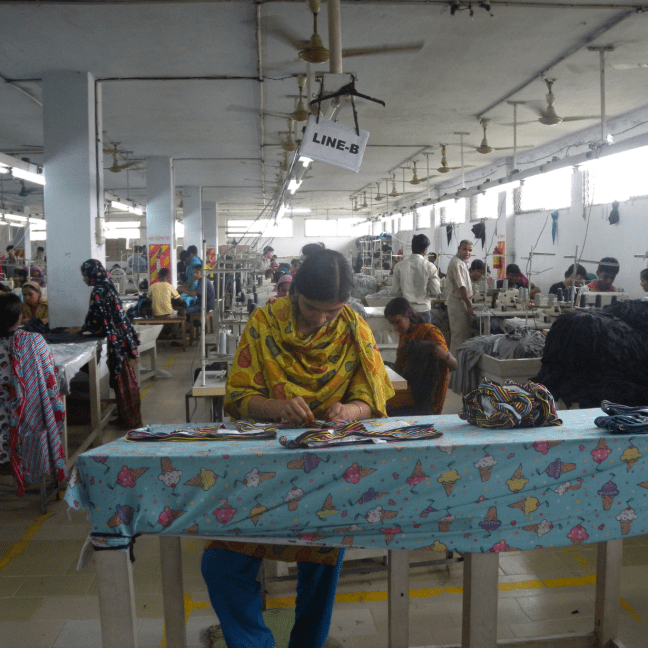
A Bangladeshi woman sews clothing on a long narrow table, in a factory filled with many workers standing and sitting as they work

In Bangladesh, four million people work in textile factories. Their work accounts for 80% of their country’s annual exports. Yet they work in extremely dangerous conditions. It’s been a year since 1,100 workers died in two incidents of fire and structural collapse in April 2013. My post explores this tragedy through a sociological lens, looking at empirical studies of the local working conditions and social reality in which garment workers live. These tragedies are an ugly reminder of the unequal economic relations that sustain globalisation. One of the visceral Western response to these tragedies may be to cry for a boycott of these companies. Sociological research shows that the resolution is much less tidy. The story behind this is not simply about corporate greed. It is a tale about gender inequality and the social costs of economic mobility. Let’s start by remembering the 2013 tragedy.

Continue reading Beyond Boycotts: Gender, Globalisation and Garment Factories in Bangladesh

Everyday Sexism in Academia

Myth women in Science Flawed research design

I recently wrote up an overview of the sociological and legal definitions of sexism, which you can find on the STEM Women websiteSexism describes the ideology that one gender is superior to another. To put it another way, it’s a system of attitudes, beliefs, stereotypes, and other types of bias that perpetuate the idea that women are somehow lesser than men. These attitudes may or may not be voiced overtly, but they nevertheless guide social interaction and behaviour.

The word “sexism” has taken on a life of its own in the public imagination, when people joke about what it is, even suggesting that there’s such a thing as “reverse sexism” (there isn’t), typically when denouncing affirmative action or gender quotas at work. The scientific meaning of sexism is lost when people argue about what sexism is or isn’t. Many people think sexism is subjective. That’s incorrect.

There are different terms floating around that often confuse people. For example, hostile sexism is the type of overt physical and verbal aggression people often think about when they think of “sexism.” Benevolent sexism includes inappropriate “compliments” that focus on a woman’s looks, which inadvertently reproduce the idea that women should be judged primarily on their physical appearance and sexuality.

Unintentional” or “accidental” sexism encompasses the “jokes,” comments and behaviour that people put down to ignorance. This includes everything from putting up pictures of semi-naked women at work, “overlooking” women on meeting invites or other career opportunities, and “casual remarks” and “oversights” like speaking about professionals, such as engineers, using the pronoun “he.”

In the STEM Women article, I show that these various terms and the attitudes and behaviours described by hostile, benevolent and unintentional sexism are all the same: they are all examples of sexism. The fact that one person might view one example as more extreme than another has no bearing on the impact these attitudes and behaviours have on women. Their cumulative effect is that women are denigrated, undervalued and expected to “put up” with sexism.

The sociological concept of everyday sexism captures the idea that everyday social exchanges, whether they’re “benevolently,” “unintentionally” or “accidentally” sexist, are actually connected to broader issues in sexist culture, such as sexual harassment and institutional discrimination. Sexism is more than the things that we say and do: it’s about the prejudices that underpin sexist culture. It’s about all the individual and collective things we do and say that makes possible sexual harassment and discrimination.

Continue reading Everyday Sexism in Academia