Interview: Many Women Of Colour Feel Unsafe Working In Science

Excuse me while I migrate various content to a central place on my blog! This post was first published on 11 July 2017.

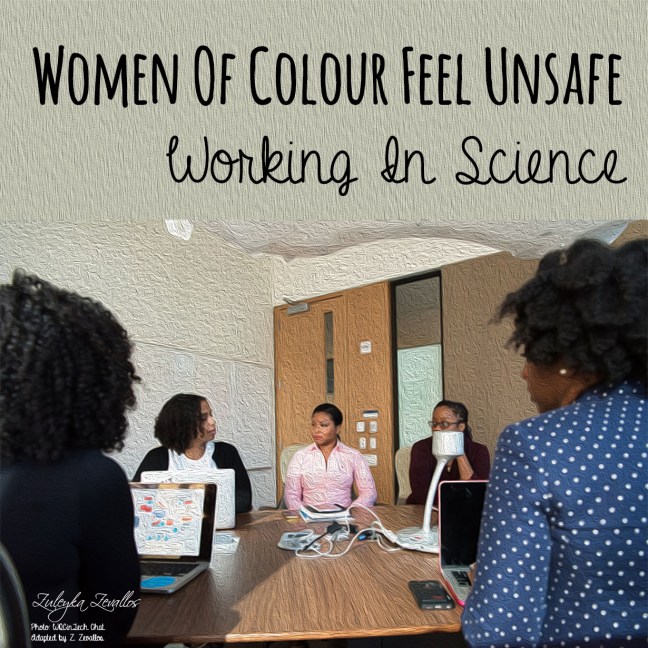
I was interviewed by Buzzfeed, about a new study by Professor Kate Clancy and colleagues, showing women of colour scientists are more likely to experience race and gender harassment. Women of colour scientists are also excessively critiqued for being either too feminine or masculine enough, they have their physical abilities questioned, and they are more likely to miss professional opportunities like conferences, fieldwork, classes and meetings because their workplaces are unsafe. My comments from the interview:

“The study really reinforces a lot of what the literature already tells us — that women of colour are more likely to experience multiple forms of harassment and feel more acutely the impact of a hostile work environment in the sciences,” Zuleyka Zevallos, a sociologist at Swinburne University in Australia, told BuzzFeed News.

Although this isn’t the first study to show evidence of the “double bind” of racial- and gender-based harassment, some critics continue to deny that the effect is real.

“A lot of the pushback that we see in the individual scientific communities —astronomy or any other science — is that scientists want data,” Zevallos said. “And even though there’s a plethora of data, it’s like they need to see more data for themselves.”

In their study, Clancy and colleagues surveyed women and men from various racial backgrounds, focusing on academics working in the field of astronomy and planetary science. The study finds that 88% of their respondents heard negative language from peers at their current job, 52% from supervisors, and 88% from other people at work. Thirty-nine percent report experiencing verbal harassment at their current position and a further 9% experienced physical harassment. Around a third of the overall sample feel unsafe at their current role (27%), however, women of colour were the most likely group to feel unsafe in their place of work due to their race, gender, and religion (although the latter was not statistically significant).

Breaking this figure down by race, 40% women of colour and 27% of White women, feel unsafe in their current role due to gender. Further, 28% of women of colour feel unsafe due to race.

Clancy and colleagues note a meta-analysis of 343 studies has established that people are less likely to participate in counterproductive workplace research. This suggests that, despite their stark findings, people are likely to underreport negative experiences for fear of professional repercussions. So experiences may be far worse in reality.

The study concludes that astronomy creates an hostile environment with profound impact on junior scholars, White women, and the greatest problems for women of colour.

The study proposes four solutions to workplace inequity.

  1. A code of conduct/education for all trainees and employees at all levels;
  2. Diversity and cultural awareness training on challenges faced by women of colour and underrepresented minorities;
  3. Leaders need to model appropriate behaviour;
  4. Swift, just and consistent sanctioning for perpetrators of harassment in the workplace.

Moreover the study concludes that better support networks for women of colour are needed.

Both in the academic literature and in my professional equity and diversity work, experts see a reticence in equity programs to deal with racism alongside gender imbalance. As I’ve detailed elsewhere, the astronomy community, along with other disciplines, deals with sexual harassment and gender inequity in haphazard ways, but still ignores racism. The present study by Clancy and colleagues might be used to better shape policy and programs. Bias awareness training is the bare minimum needed; to make positive changes to attract, retain and promote women of colour, structural reform is necessary.

Too many scientific societies feel that tackling gender equity is “a good start” but still see diversity and inclusion of people of colour and other underrepresented minorities is the “next step.” Some leaders perceive that diversity work undermines gender equity programs. This study, and many others before it, show that intersectionality is pivotal in making lasting change. Intersectionality describes how gender inequality is impacted by racial inequality and other forms of disadvantage like sexuality, disability, class and beyond. We cannot address gender inequity separate from racial inequity as both issues impact one another, as well as increase other problems for minority groups.

Read about the study and comments by lead author Professor Clancy on Buzzfeed.

Photo credit: WOCinTech Chat, CC 2.0 via Flickr. Adapated by Z. Zevallos.

Sociology of Abortion Politics

Women protesting, with a sign that reads "My body. My choice."

This week, on 11 May 2017, a bill two-years-in-the-making to decriminalise abortion in the state of New South Wales, Australia, was defeated 14 to 25, meaning abortion remains a crime under the Criminal Act. Greens MP and Spokesperson for the Status of Women, Dr Mehreen Faruqi MLC, who led the campaign to decriminalise said: “This bill was not about promoting or not promoting abortion. It was about choice.”

Another separate bill to establish 150 metre safe zones to protect abortion clinics has been introduced by Labor MP Penny Sharpe. This bill works to eliminate harassment and intimidation by anti-choice lobbyists who film and degrade women who walk into clinics.

In NSW, women can access abortions only with their doctor’s consent that there are “reasonable grounds” for the abortion, linked to physical and mental danger. Otherwise abortion is punishable by five years in jail.

This law has been in place since the 1970s, but stems back to 1900. Counter to national myths of our egalitarianism, abortion laws unearth how gender inequality is maintained by White, conservative Christian patriarchal ideology that seeks to control women’s autonomy. Sociological studies show how medical professionals have long been at the vanguard of change, by shifting understandings of abortion from moral arguments, to a medical choice.

Christian lobby groups, who hold strong political power, push back against medical and community views, using emotional imagery to influence abortion laws. This has proven effective over time, and continues to hold back progress in New South Wales (and Queensland, another conservative stronghold). Despite this recent set-back, momentum towards progressive change continues. A better sociological understanding of religiously conservative ideology and tactics may hold the key towards the next legal breakthrough.


Continue reading Sociology of Abortion Politics

Racism and Sexism in the Media

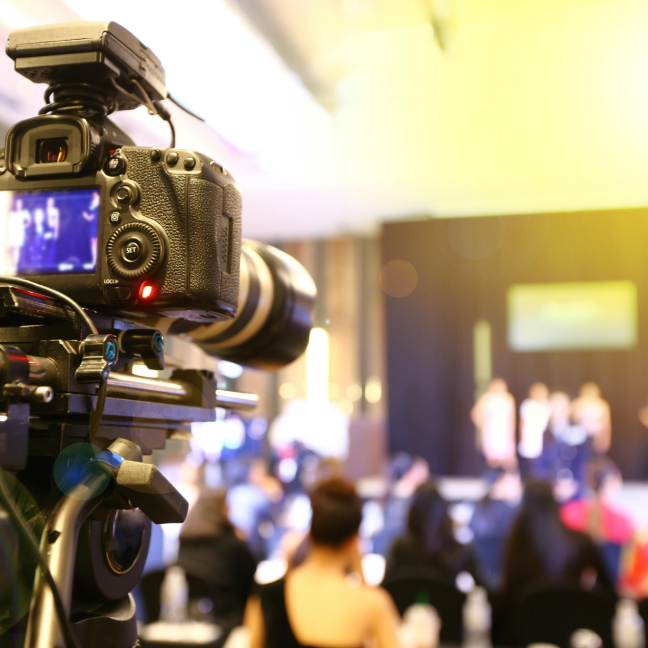
A camera is pointed at a crowd and stage, with the background blurry

Rugby star Sam Thaiday (below) who is Torres Strait Islander, made a sexist and racist comment during The Footy Show, a very popular, long-running TV show that is dominated by White male athletes and comedians who are infamous for racism and sexism. While mainstream media picked up the story from Aboriginal and Torres Strait Islander women, these outlets did not credit them.

Continue reading Racism and Sexism in the Media

Women’s March Sydney

On the 21 of January 2017, I joined up to 10,000 Sydney-siders at the Women’s March, and 2.5 million people globally. I initially had reservations about the March. As I recounted last week, the march started as an idea by a woman activist in Hawaii and it was soon taken over by White women from Pantsuit Nation, a group that has no commitment to anti-racism.  Bob Bland, a White woman from Washington, wanted to rectify the direction of the event and soon invited three women of colour to shape the Washington March: Tamika Mallory; Linda Sarsour; and Carmen Perez. The Women’s March Washington had a special focus on intersectionality; addressing how gender inequality is impacted by racism and other forms of discrimination such as homophobia, transphobia, ableism (the discrimination of people with disabilities), and more. The Washington March was the model for the other local and international marches. As more White women became involved in discussions at the national and international levels, this mission was drowned out. Women of colour were made to feel excluded from planning groups whenever the issue of intersectionality was raised.

So when the Sydney March was announced I first felt trepidation. As the final line up of speakers was announced, it became clearer that the Sydney organisers were making the event more consciously supportive of intersectionality. The organisers regularly focused their social media posts on inclusion, thereby reaffirming their commitment to diversity and inclusion. There were some limitations as I’ll discuss later. For example, transgender women seemed to lack representation amongst speakers at the event and best practice for the inclusion of women with disabilities may have been improved.

For me, the big draw card was Aboriginal activist, Jenny Munro, who has dedicated her life to advancing the human rights of Aboriginal people. Her activism and life’s work has a strong focus on Aboriginal sovereignty, children and housing. She leads the Redfern Tent Embassy and is a living legend. She did not disappoint; but I’ll get to that!

The day led to many useful discussions on diversity and how to disrupt patriarchy. I shared highlights of my day on Twitter and I bring these to you in this post as well as additional photos and video I wasn’t able to share on the day. The quotes are not strictly verbatim – treat them more as field notes to flesh out my visual sociology. I will also address the ongoing global conversations about the Women’s Marches and in particular, the critiques about the exclusion of women of colour, transgender women, sex workers and women with disabilities from various overseas events, with a focus on the USA. I’ll draw some qualified lessons on intersectionality from the USA to Australia and I wrap up with a discussion of why intersectionality is important.

This one minute video includes some of the footage I shot at the Sydney Women’s March and draws out the key lessons on intersectionality.

(Click to jump down to the video transcript.)

Continue reading Women’s March Sydney

Intersectionality and the Women’s March

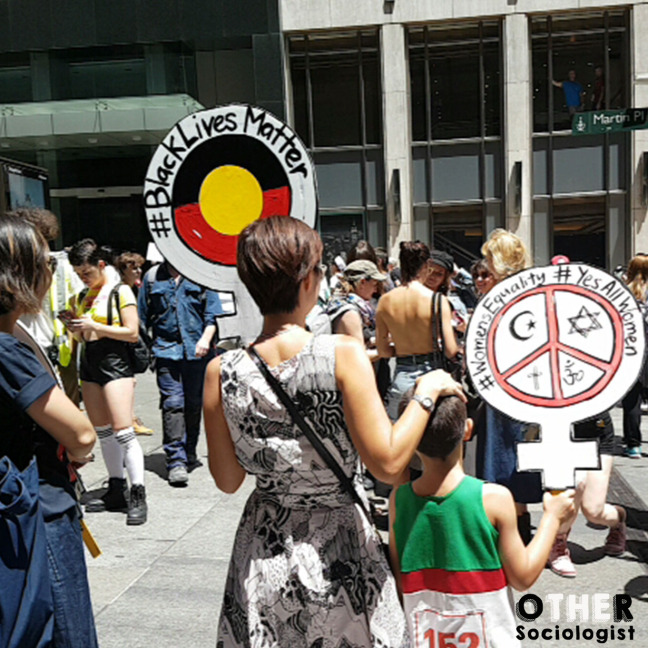
crowd at the Sydney Women’s March, with a woman holding a “Black lives matter” sign bearing the Aboriginal flag, with her hand on the head a young boy who holds a sign made from the symbol for “woman,” bearing religious symbols for Islam, Judaism, Christianity and Hinduism, with the words, #WomensEquality and #YesAllWomen

This is the first of a two-part reflection on the global Women’s March that occurred on 21 January 2017. It reflects the tensions between the initial goal of the Women’s March in Washington, which aimed to be inclusive of intersectionality, and the White women who wanted to attend the March, but objected to this aim.

Despite many positive outcomes, the issues discussed here that centre on whiteness continued to affect the attendance, experience and discussions of the marches after the event. This post examines the attitudes of White women as discussed in an article by The New York Times, which reflect the broader dissent expressed by white women who continue to oppose intersectional conversations about the Women’s March.

The issues here remain relevant not simply as women around the world reflect on the racism and exclusion they faced at the marches, but also because one of the co-organisers, Linda Sarsour, is currently facing racist backlash only days after the event.

The second part to this discussion is forthcoming and it will be a visual reflection of my attendance at the Sydney March.

We support the advocacy and resistance movements that reflect our multiple and intersecting identities. We call on all defenders of human rights to join us
Women’s March organisers: Tamika Mallory; Linda Sarsour [holding a baby]; and Carmen Perez
Continue reading Intersectionality and the Women’s March

Sociology of Small Scale Farming

Woman farmer in Sapa, Vietnam

By 2013, Vietnam had halved malnutrition by investing in small scale (family) farming in just 12 years. Can the same happen in other nations? The United Nations believes so. What are some of the sociological considerations to boost the success of small scale farming? While this agricultural enterprise may be able to help families reduce hunger, it may not necessarily help households rise above the poverty line, unless social issues such as gender inequality are also addressed.

Ways to Enhance Gender Equity and Diversity in STEMM

At the Kiwi Foo ‘unconference,’ I spoke about Informed and Practical Ways to Enhance Gender Equity and Diversity in Science, Technology, Engineering, Mathematics and Medicine (STEMM).

Ruby Payne-Scott. Photo via Peter Gavin Hall, Wikipedia
Ruby Payne-Scott. Photo via Peter Gavin Hall, Wikipedia, CC 3.0

I started my talk at Kiwi Foo by telling the story of Ruby Payne-Scott, a pioneer in radio astronomy whose work led to major technological innovation and scientific knowledge. She supported top secret science on radar detection in the 1940s during the war, and she was a women’s rights activist. During the 1930s and 1940s, she worked for Australia’s premier government research agency, CSIRO, at a time where women were not allowed to be married and working in the public service. So she secretly married in 1944 and subsequently lost (but fought hard to keep) her permanent position at CSIRO. She was finally forced to resign in 1951, a few months before the birth of her son, Peter, as her pregnancy was no longer able to be hidden. Her career in science was effectively ended because her family status was deemed unlawful for the public service.

Ruby Payne-Scott, third from the right, at the 1952 International Union of Radio Science conference, University of Sydney
Ruby Payne-Scott, 5th from the right, at the 1952 International Union of Radio Science conference, University of Sydney. Photo: Wikipedia, CC 3.0

Women scientists and allies who care about gender equity in STEMM tell Dr Payne-Scott’s story often, though it is a shamefully unknown story by broader Australia. My point in beginning my talk with this lamentable tale is that Payne-Scott’s historic impact lives on for the wrong reasons. In Australia, the shameful employment discrimination she endured overshadows her scientific achievements in many ways. More sadly, while women in the present day are no longer discriminated in the same overt way, other structural inequalities make it difficult for women to remain in science, especially after they have children. So Payne-Scott’s legacy remains perennially relevant, 70 years later.

Continue reading Ways to Enhance Gender Equity and Diversity in STEMM

Sociology of Kiwi Foo, an Unconference

Kiwi Foo Baa Camp timetable

In March, I travelled to Auckland New Zealand for Kiwi Foo, a two-and-a-half day “unconference” where 150 participants from New Zealand and other parts of the world from a wide range of professional backgrounds self-organise the sessions. This includes people from technology companies, policy and community organisations, as well as academics . The idea behind Foo Camp is to bring together like-minded individuals who might otherwise not meet, and listen to one another and look for ways to connect in our common goal to make the world a better place.

In order to attend, one must be nominated by a previous Foo alumn from Kiwi camp or SciFoo from the UK. You pay for your own travel but all other costs, including food and lodging if you want it, are provided. When you accept the invitation, you nominate three keywords. Upon arrival, in a large hall filled with around three hundred people, each person stands up to introduce themselves by their name, their affiliation and their keywords, without elaboration. It took awhile but it was fun. My three keywords were: gender equity & diversity; science communication; sociology.

Continue reading Sociology of Kiwi Foo, an Unconference

Addressing Sexism in Scientific Publishing

Three women of colour sit and read textbooks

Barely a few days have passed since the last gender bias in science crisis, and the scientific community is already dealing with yet another high-profile example of gender discrimination. This time, the issue is with sexism in science publishing.

Dr Fiona Ingleby, a postdoctoral researcher in evolutionary biology from the University of Sussex, took to Twitter to express her frustration over sexist comments by a reviewer from a journal by PLOS ONE, an open access publishing network. Dr Ingleby and her colleague, evolutionary biologist Dr Megan Head from the Australian National University, are both women. They had submitted a manuscript based on their research on gender differences amongst students moving from PhDs to postdoctoral roles. The reviewer rejected their manuscript on the basis of the researchers’ gender, suggesting the data would be more fit for publication if they included a male author. In other words, the science of gender bias can only be “objective” if a man is involved. I’ve previously noted that women’s research on gender bias in science is often rejected by men, who, despite scientific evidence to the contrary, will argue that gender bias either does not exist, or if it does, it is is skewed in women’s favour.

Continue reading Addressing Sexism in Scientific Publishing