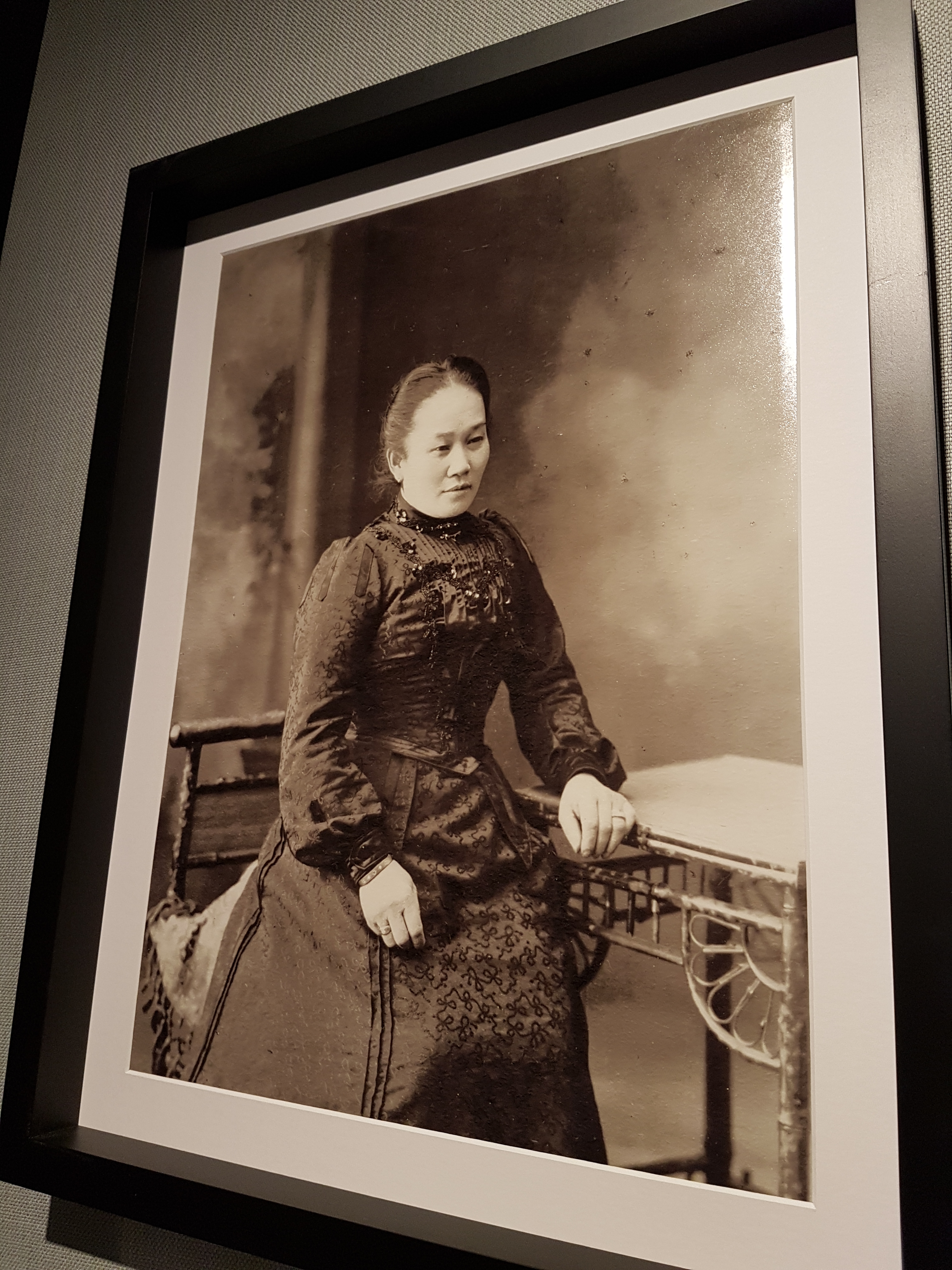
This is Matilda (Aheong) Li Keong, the first documented Chinese woman migrant in New Zealand Aotearoa.
Continue reading Being Chinese in Aotearoa
This is Matilda (Aheong) Li Keong, the first documented Chinese woman migrant in New Zealand Aotearoa.
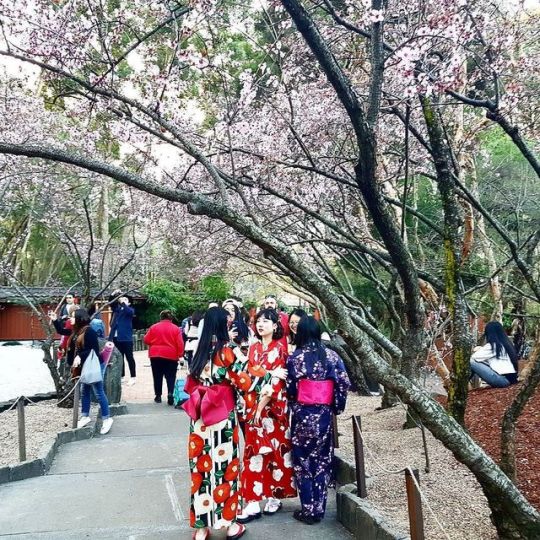
Continue reading Being Chinese in AotearoaAbove are the Sakura Kids Cheerleading, at the ‘Mini-Matsuri’ Japanese Festival in Chatswood, Cammeraygal Country.
Below, is the Cherry Blossom Festival in Auburn, Darug Country.
Mervyn Bishop, a Murray man, was the first Aboriginal person to work at a major metro daily newspaper, joining the Sydney Morning Herald in 1962. In 1971 he was named Australian Press Photographer of the Year. He would go on to cover major events, including the anti-war protests of the 1960s, the Bicentennial in 1988, and Aboriginal community life in remote regions of Australia. Continue reading Mervyn Bishop
Djiringanj Dancers, a group of women cultural performers, singing about the “West Wind” at the Corroboree grounds, during the Yabun Festival.
The Yabun Festival is a celebration for Survival Day. The 26 of January is a national holiday that marks the day British ships arrived in Australia and began the genocide of Indigenous Australians. Survival Day is a day led by Indigenous Australians who affirm the resilience, creativity and excellence of First Australians. This year, the Invasion Day Protests, which aim to change the date and meaning of Australia Day, ended by protesters joining Yabun at the end of the march to enjoy music, stalls, cultural performances, speeches and more.

No pride in genocide! I am in Sydney, land of the Gadigal people of the Eora Nation, who have looked after these lands for over 75,000 years. I pay my respects to elders past, present and emerging.
The 26 January is a painful day for Aboriginal and Torres Strait Islander people. It is a date commemorating the day British ships (”the First Fleet”) arrived on Aboriginal and Torres Strait Islander lands. It is a day that marks the decimation of First Australians; the dispossession of their land; the removal of children to be raised in Missions and in White foster homes with no ties or knowledge of their culture (“the Stolen Generation”); amongst many other human rights crimes. This history impacts Indigenous life chances in the present-day.
On the 26th, I joined 10,000 people in Sydney who marched in solidarity with Indigenous Australians to tell the Australian Government to change the date of Australia Day so that First Australians aren’t being excluded through a national holiday making genocide. Another 50,000 people marched in Melbourne, and tens of thousands more did the same in cities and town around Australia.
Below, you can read my tweets of the protest as it unfolded.

Intergenerational crowd protesting for Indigenous rights on 26 January 2017. Continue reading Invasion Day Protest 2017

One of the themes of my visual sociology is the representation of science. Conservation is as much about social practices as it is about earth science, biology and other natural sciences. Today’s post is about the sociology of the National Arboretum, which sits on Ngunawal country. Ngunawal people are the traditional custodians of this part of Acton, west of the city in Canberra. Less than a seven minute drive central business district, this is one of the world’s largest arboretums for rare and endangered trees. I am no arborist. I cannot even claim to be a fan of gardening. I was interested in the Arboretum first in an attempt to capture a visual sociology of Canberra, and second to see how people interact with this place as a science centre. The focus of my post today is on the social dynamics of the Arboretum, especially on community aspects of conservation and the trees that drew the greatest interest amongst the crowds I saw: the Bonsai and Penjing Collection .

The National Gallery of Victoria in Melbourne, Australia, is currently showing an exhibition of two monumental artists, Andy Warhol and Ai Weiwei, whose work and interests often intersected, even though they were working in different eras. As Weiwei was still studying in the 1970s and early 1980s, a time when Warhol’s star was meteoric. In this post, I only focus on Weiwei’s work.
Ai Weiwei shares Warhol’s scepticism for “high art” and authority, as evidenced in his 1995 classic artwork, “Dropping a Han Dynasty Urn,” which he redid in 2015 with legos (featured in my photos below). Similarly his two installations, Chandelier with Restored Han Dynasty Lamps for the Emperor and Forever Bicycles (both 2015) make a comment on the cultural artefacts that are revered at a later point in time, even though they were once everyday household items with little value.

Ongoing human rights crimes have been committed against Indigenous Australians, starting with dispossession and colonisation. This post features museum and dance works addressing Australia’s colonial history and its ongoing aftermath: the “Secret Histories” exhibition at the Australian Museum, as well as Bangarra Dance Theatre’s latest work, “Spirit of the Patyegarang.”
Continue reading “Secret histories” of AustraliaThe 26th of January is Australia Day and a national holiday. Various events happen all over Melbourne, but some of these recognise that this day raises important issues about Indigenous culture in Australia. Protests over colonialism have been ongoing since Europeans settled in Australia in 1788. On the 26th of January 1938, 150 years after the decimation of Indigenous people began, William Cooper (leader with the Australian Aboriginal League) together with Jack Patten and William Ferguson (the Aboriginal Progressive Association) declared the first “Day of Mourning,” a day recognising the history of colonial violence and dispossession. Survival Day events represent the resilience and contribution of Aboriginal and Torres Strait Islander people, who collectively make up the world’s oldest, continuous culture.
I attended the Share the Spirit festival, hosted by Songlines Music. This event has been running at the Treasury Garden since 2002. Together with similar events in Sydney, Perth, Adelaide and elsewhere, they are amongst the biggest Indigenous cultural events in Australia. Continue reading Share the Spirit: Survival Day 2015
 The Other Sociologist