“Secret histories” of Australia

Ongoing human rights crimes have been committed against Indigenous Australians, starting with dispossession and colonisation. This post features museum and dance works addressing Australia’s colonial history and its ongoing aftermath: the “Secret Histories” exhibition at the Australian Museum, as well as Bangarra Dance Theatre’s latest work, “Spirit of the Patyegarang.”

Continue reading “Secret histories” of Australia

Addressing Sexism in Scientific Publishing

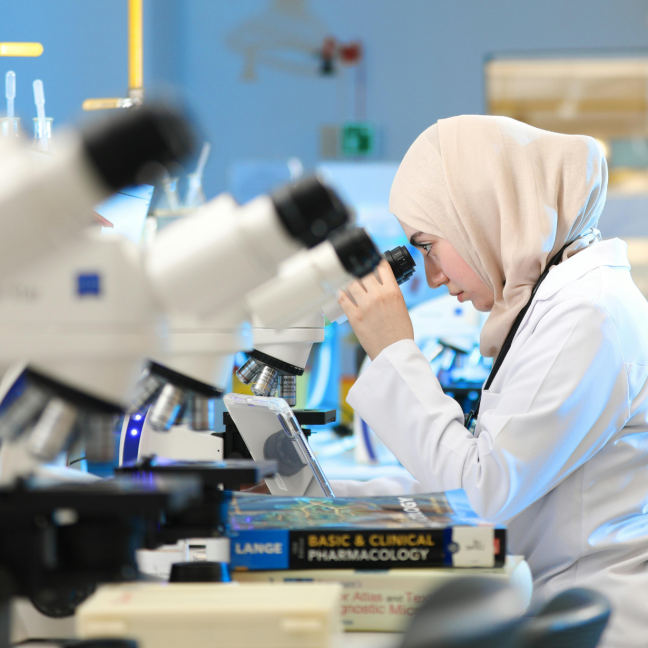
Three women of colour sit and read textbooks

Barely a few days have passed since the last gender bias in science crisis, and the scientific community is already dealing with yet another high-profile example of gender discrimination. This time, the issue is with sexism in science publishing.

Dr Fiona Ingleby, a postdoctoral researcher in evolutionary biology from the University of Sussex, took to Twitter to express her frustration over sexist comments by a reviewer from a journal by PLOS ONE, an open access publishing network. Dr Ingleby and her colleague, evolutionary biologist Dr Megan Head from the Australian National University, are both women. They had submitted a manuscript based on their research on gender differences amongst students moving from PhDs to postdoctoral roles. The reviewer rejected their manuscript on the basis of the researchers’ gender, suggesting the data would be more fit for publication if they included a male author. In other words, the science of gender bias can only be “objective” if a man is involved. I’ve previously noted that women’s research on gender bias in science is often rejected by men, who, despite scientific evidence to the contrary, will argue that gender bias either does not exist, or if it does, it is is skewed in women’s favour.

Continue reading Addressing Sexism in Scientific Publishing

Publication: Sexism in Science Reporting

This article was first published in DiverseScholar, on 20 April, 2015.

In my previous DiverseScholar article, I showed why the study behind The New York Times Op Ed (claiming the end of sexism) was methodologically flawed and ideologically biased [Zevallos 2014]. I showed that a focus on an individual choice narrative to explain why women are disadvantaged in STEM (Science, Technology, Engineering and Math) is fundamentally unsound when understood alongside the long-standing empirical evidence from the social sciences. Here, I will review several science controversies related to the editorial and institutional decisions within STEM. These patterns show that everyday interactions contribute to gender inequality, from the use of images, to dress, to the way distinguished women scientists are described in the media. I start with a selected timeline of events highlighting gender inequality in STEM. Continue reading Publication: Sexism in Science Reporting

The Myth About Women in Science? Bias in the Study of Gender Inequality in STEM

The Myth About Women in Science? Bias in the Study of Gender Inequality in STEMA new article on CNN by psychology professors, Wendy Williams and Stephen Ceci, boldly proclaims that gender bias in Science, Technology, Engineering and Mathematics (STEM) is a myth. Their research has been published in the Proceedings of the National Academy of Sciences (PNAS). Unfortunately, their work has a flawed methodological premise and their conclusions do not match their study design. This is not the first time these researchers have whipped up false controversy by decrying the end of sexism in science.

Williams and Ceci write on CNN:

Many female graduate students worry that hiring bias is inevitable. A walk through the science departments of any college or university could convince us that the scarcity of female faculty (20% or less) in fields like engineering, computer science, physics, economics and mathematics must reflect sexism in hiring.

But the facts tell a different story…

Our results, coupled with actuarial data on real-world academic hiring showing a female advantage, suggest this is a propitious time for women beginning careers in academic science. The low numbers of women in math-based fields of science do not result from sexist hiring, but rather from women’s lower rates of choosing to enter math-based fields in the first place, due to sex differences in preferred careers and perhaps to lack of female role models and mentors.

While women may encounter sexism before and during graduate training and after becoming professors, the only sexism they face in the hiring process is bias in their favour.

Williams and Ceci’s data show that, amongst their sample, women and male faculty say they would not discriminate against a woman candidate for a tenure-track position at a university. Sounds great, right? The problem is the discrepancy between their study design, that elicits hypothetical responses to hypothetical candidates in a manner that is nothing like real-world hiring conditions, and the researchers’ conclusions, which is that this hypothetical setting dispels the “myth” that women are disadvantaged in academic hiring. The background to this problem of inequality is that this is not a myth at all: a plethora of robust empirical research already shows that, not only are there less women in STEM fields, but that women are less likely to be hired for STEM jobs, as well as promoted, remunerated and professionally recognised in every respect of academic life.

Continue reading The Myth About Women in Science? Bias in the Study of Gender Inequality in STEM

#SOSBlakAustralia: Colonialism of Indigenous Australians in 2015

Genetics research shows Aboriginal Australians are descendants of the first people to leave Africa. They represent the oldest continuous culture. #SosBlakAustralia
#SosBlakAustralia

The Australian Government is actively sustaining cultural violence against Indigenous Australians. The Abbott Government is trying to force 150 Aboriginal Australian communities off their lands in Western Australia. This would displace up to 12,000 Aboriginal Australians, effectively making them refugees in their own ancestral lands. This comes after months of ongoing campaigns to address:

  • The removal of 15,000 Indigenous children: The Grandmothers Against Removals group have been fighting for the return of Aboriginal children who live in so-called “out of home care,” away from their families. This practice goes back to early colonialism, where Indigenous children were removed from their communities and forced to give up their culture.
  • The denial of basic services to remote Indigenous communities: as shown in the Utopia Homelands in the Northern Territory, an Indigenous community that lived without clean water for two months in late 2014.

Continue reading #SOSBlakAustralia: Colonialism of Indigenous Australians in 2015

Rethinking the Narrative of Mars Colonisation

Rethinking the Narrative of Mars ColonisationBiologist Dr D. N. Lee has been doing an amazing job educating on how enthusiastic narratives of “colonising” Mars are problematic. On her Twitter, Lee notes that the dominant ways of talking about colonisation add to the marginalisation of under-represented minorities in Science, Technology, Engineering and Mathematics (STEM). If we want to make science more inclusive, we need to better understand how the stories we tell about STEM may exclude and damage under-represented groups we are trying to support.

Continue reading Rethinking the Narrative of Mars Colonisation

Migrants in Australia

Migrants in Australia

Australia is home to the oldest continuous culture in the world, that of Indigenous Australians, and our society also houses one of the highest migrant populations in the world. Australia encompasses over 300 migrant ancestries, with migrants and their children making up half of our population. I’ve just launched a new video series called Vibrant Lives, which explores some of these diverse cultures and the various meanings of multiculturalism in Australia. I’ll focus on different minority groups, as well as covering community events, religious festivals, art exhibitions and community organisations around Melbourne. This post provides some sociological context for my first video on migrant-Australians.

Continue reading Migrants in Australia

Share the Spirit: Survival Day 2015

The 26th of January is Australia Day and a national holiday. Various events happen all over Melbourne, but some of these recognise that this day raises important issues about Indigenous culture in Australia. Protests over colonialism have been ongoing since Europeans settled in Australia in 1788. On the 26th of January 1938, 150 years after the decimation of Indigenous people began, William Cooper (leader with the Australian Aboriginal League) together with Jack Patten and William Ferguson (the Aboriginal Progressive Association) declared the first “Day of Mourning,” a day recognising the history of colonial violence and dispossession. Survival Day events represent the resilience and contribution of Aboriginal and Torres Strait Islander people, who collectively make up the world’s oldest, continuous culture.

I attended the Share the Spirit festival, hosted by Songlines Music. This event has been running at the Treasury Garden since 2002. Together with similar events in Sydney, Perth, Adelaide and elsewhere, they are amongst the biggest Indigenous cultural events in Australia. Continue reading Share the Spirit: Survival Day 2015

Sociology of Gender Bias in Science

Sociology of Gender Bias in Science
Sociology of Gender Bias in Science. Photos: Texas A&M University-Commerce, CC 2.0

A new study by Dr Corinne Moss-Racusin and colleagues has analysed the public’s comments in response to a prominent study on gender bias in Science, Technology, Engineering and Mathematics (STEM). The researchers find that men are more likely to post negative comments in response to scientific findings about sexism in STEM careers. To provide a flipside illustration, I share some examples of what it is like to be a woman moderator of a large, international science community on Google+. This case study will illustrate the recurring arguments used to invalidate the science on inequality in STEM. These arguments are focused on biological (mis)understandings of gender; stereotypes of what motivates men and women; and a desire to police the boundaries of science. Denying that sexism exists is a common tactic to invalidating the science on gender bias in science, and attacking the social sciences is concurrently used to discredit findings on inequality, as well as support the idea that inequality does not exist in STEM.

Continue reading Sociology of Gender Bias in Science