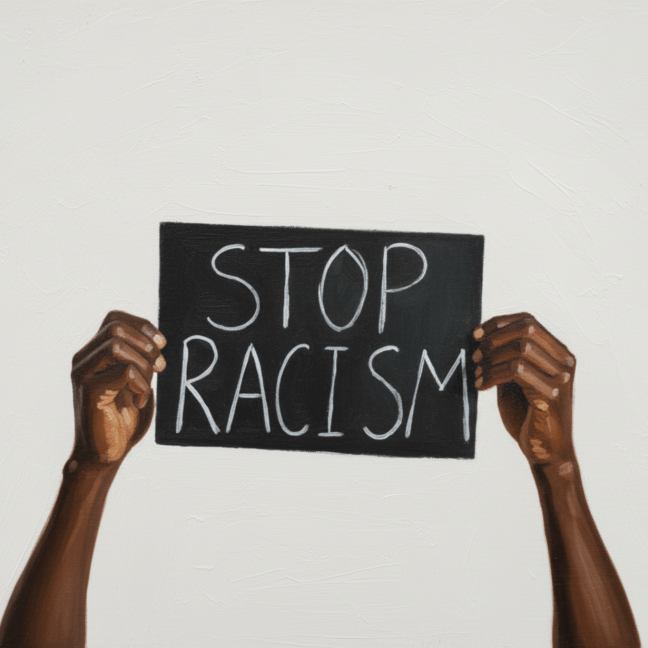
The Australian Government is proposing to remove legal protections against racial abuse. This will make it easier for overt racial discrimination to flourish.
Continue reading Repealing Racial ProtectionsRepealing Racial Protections
The Australian Government is proposing to remove legal protections against racial abuse. This will make it easier for overt racial discrimination to flourish.
Continue reading Repealing Racial Protections
I recently wrote up an overview of the sociological and legal definitions of sexism, which you can find on the STEM Women website. Sexism describes the ideology that one gender is superior to another. To put it another way, it’s a system of attitudes, beliefs, stereotypes, and other types of bias that perpetuate the idea that women are somehow lesser than men. These attitudes may or may not be voiced overtly, but they nevertheless guide social interaction and behaviour.
The word “sexism” has taken on a life of its own in the public imagination, when people joke about what it is, even suggesting that there’s such a thing as “reverse sexism” (there isn’t), typically when denouncing affirmative action or gender quotas at work. The scientific meaning of sexism is lost when people argue about what sexism is or isn’t. Many people think sexism is subjective. That’s incorrect.
There are different terms floating around that often confuse people. For example, hostile sexism is the type of overt physical and verbal aggression people often think about when they think of “sexism.” Benevolent sexism includes inappropriate “compliments” that focus on a woman’s looks, which inadvertently reproduce the idea that women should be judged primarily on their physical appearance and sexuality.
“Unintentional” or “accidental” sexism encompasses the “jokes,” comments and behaviour that people put down to ignorance. This includes everything from putting up pictures of semi-naked women at work, “overlooking” women on meeting invites or other career opportunities, and “casual remarks” and “oversights” like speaking about professionals, such as engineers, using the pronoun “he.”
In the STEM Women article, I show that these various terms and the attitudes and behaviours described by hostile, benevolent and unintentional sexism are all the same: they are all examples of sexism. The fact that one person might view one example as more extreme than another has no bearing on the impact these attitudes and behaviours have on women. Their cumulative effect is that women are denigrated, undervalued and expected to “put up” with sexism.
The sociological concept of everyday sexism captures the idea that everyday social exchanges, whether they’re “benevolently,” “unintentionally” or “accidentally” sexist, are actually connected to broader issues in sexist culture, such as sexual harassment and institutional discrimination. Sexism is more than the things that we say and do: it’s about the prejudices that underpin sexist culture. It’s about all the individual and collective things we do and say that makes possible sexual harassment and discrimination.
Continue reading Everyday Sexism in Academia
Continue reading ‘White Supremacy Is Not An Attitude… It’s a Question of Power’“Some groups in this country, talking all sorts of nonsense, will make you think that white supremacy is a sickness, is a ‘this,’ is a ‘that.’ White supremacy, as far as we’re concerned, just means we’re powerless. That’s all. White supremacy is not an attitude, it’s not a sickness, it’s a question of power. If a white man wants to lynch me, that’s his problem. If he has the power to lynch me, that’s my problem. But as long as I have the power to stop the white man from lynching me, him wanting to lynch me is his problem, and it can remain his problem forever. So the only reason the white man can lynch me is because I am powerless.”
Kwame Ture (previously known as Stokely Carmichael)
An Australian study by philosophy Professor Andrew Markus finds that 40% of migrants from non-English speaking backgrounds have been subject to racism. This is an increase of 19% from six years a go. The groups who reported highest level of abuse include: people from Malaysia (45%), India and Sri Lanka (42%), Singapore (41%), Indonesia (39%), and China and Hong Kong (39%). The national average for experiences of racism was 12%.
Continue reading Two Out of Five Migrants Experience Racism
Have you ever had a song playing in your mind that you just can’t tune out? The social science term for this is “involuntary musical imagery” (IMI) otherwise known as an “earworm.” In this post, I’ll discuss research about IMI, focusing on data from a study by Victoria Williamson and colleagues tracing the “earworm” phenomenon. I end by discussing some gaps in the research, and I reflect on my experiences with earworms.
Much of our thinking happens without our conscious attention. Involuntary thoughts are always running in the back of our brains. These unconscious thoughts happen spontaneously, but they reflect our prior experiences. So why do earworms exist? It turns out that they serve both a functional and a socio-psychological purpose.
Continue reading Earworms: How and Why Music Gets Stuck in Your Head
Visuals can shape world views – but not always for the better. Portuguese anthropologist João Figueiredo shared an example how an entrepreneur announced at a conference that Portugal is the centre of the Earth because of his country’s position on a map he presented. This idea is, of course, scientifically incorrect. Unfortunately, this did not stop this notion from being integrated into a Portuguese Government marketing campaign. Maps are factual, so they can’t be political, right? Not so. Maps are created by people and they carry the history of cultures and political ideologies. In this post, we’ll look at the culturally loaded notions of North and South on visual maps, and other representations of science in evolution and science presentations, that have strong cultural authority, even though they are incorrect.
Continue reading Visual Science: Maps and Other Representations of Culture and History
Day of Mourning – Australia Hall, Sydney, 1938. Protest of 150 years of colonialism.
On 26 January [1938], as Australia celebrates the 150th anniversary of the landing of the First Fleet in Sydney Cove, Indigenous Australians attend a Day of Mourning and Protest in Sydney. The mourners wait for the sesquicentenary procession to pass, then march in silent protest from the Sydney Town Hall to an Australian Aborigines Conference at the Australian Hall. The Australian Aborigines’ League and Aborigines Progressive Association of New South Wales use the meeting to speak out about the denial of civil rights for Indigenous Australians. The protest is the culmination of years of campaigning by Aboriginal leaders including William Ferguson, William Cooper and John Patten. Patten and Ferguson circulate a pamphlet, Aborigines Claim Citizen Rights.
Top photo via Indigenous Rights. Document and quote via Museum of Australian Democracy at Old Parliament House.
My post will discuss the sociology of beliefs, values and attitudes to describe the cultural, institutional and historical ways in which the public has engaged with science. I present two case studies of “hot topics” that usually draw anti-science comments. I show how cultural beliefs about trust and risk influence the extent to which people accept scientific evidence. I go on to discuss how sociology can help improve public science outreach.
Continue reading The Sociology of Why People Don’t Believe Science
By Zuleyka Zevallos, PhD
In a fun rummage through vintage sociology, I found an interesting study by Isidor Thorner. Writing in 1951, he used a survey of Americans from various backgrounds to determine the relationship between New Year’s Resolutions (NYR) and Protestant values. Below I take a look at the major findings of Thorner’s study, exploring the historical and cultural variations of resolutions.
Protestant culture highly valued the idea of being in full control of one’s emotions. This meant being organised and denying oneself frivolous pursuits so as to be free to fulfil religious duty. Not adhering to these strict values brought about great personal shame.
Thorner argues that the New Year’s resolutions helped Protestants to manage their emotional baggage, and that over time, this practice lost its religious connotation and spread more widely.

In honour of Nelson Mandela’s life, let’s take a critical look at the sociology of Mandela’s leadership. This is as an opportunity to better understand how Mandela’s social experiences inspired his search for social justice.
Davide Morsellia and Stefano Passini draw on social psychology and sociology in order to compare the social and political influences on three world leaders of civil rights movements in three different societies: Nelson Mandela in South Africa, Mahatma Gandhi in India and Martin Luther King Jr in America. The researchers argue that these three world leaders engaged in “prosocial moral disobedience.” That is, they actively went against authority despite the personal persecution that followed. They did so not simply due to personal qualities, but as a direct result of their socialisation. This post will show that Mandela’s moral development and personal attitudes were affected by his social context.
Continue reading Nelson Mandela’s ProSocial Moral Disobedience