Reverse Racism is Not Real

A white hand holds a "reverse Uno" card, which shows two arrows pointing in opposite ends

Bangladeshi Australian comic Aamer Rahman humorously shows the problem with the idea of “reverse racism.” Sociological research bysociologist Eduardo Bonilla-Silva and colleagues backs up the idea behind his comedy, by showing the paradoxical beliefs held by white people who think they have been the victims of reverse racism: first, that racism is no longer a problem; second, that minorities get special privileges that are unfair, and which disadvantage white people.

Continue reading Reverse Racism is Not Real

Paternalism, Colonialism and Indigenous Education

Photo by Mark Roy via Flickr

By Zuleyka Zevallos, PhD

WARNING: Aboriginal and Torres Strait Islander readers are warned that the content on this page may contain images and references to deceased persons. (Why this warning?)

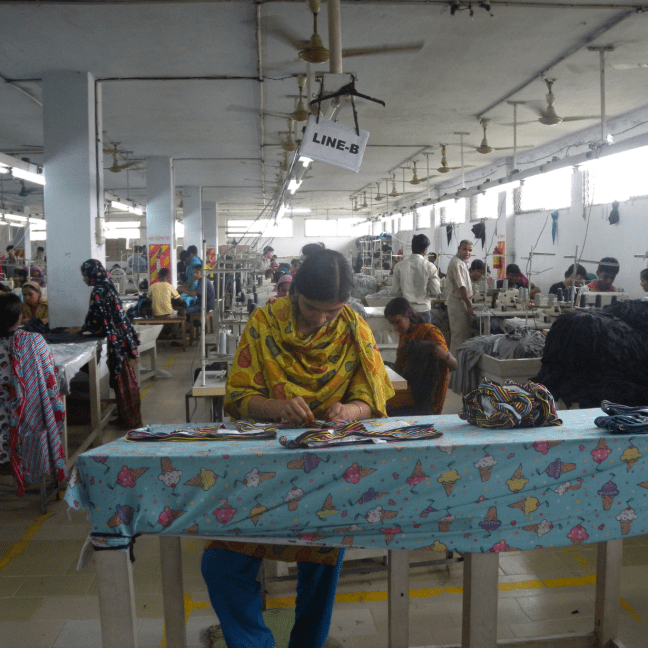
The Council of Australian Governments has conducted a national review of Indigenous socio-economic outcomes. Its recent report finds that while some measures are improving, there is still a large gap between Indigenous and non-Indigenous Australians. This post provides a snapshot of the findings with a focus on education and responses by the state. One of the solutions being offered to improve educational outcomes amongst Indigenous youth is to send them to boarding schools. I discuss this in relation to Australia’s colonial history and the Government’s paternalistic views on Indigenous welfare.

I review other approaches to Indigenous education, which focus on working to students’ strengths in order to improve outcomes. This means making curriculum more focused on applied skills, vocational training within remote communities, and ensuring knowledge is culturally relevant. At the same time, educational efforts must avoid “pigeon holing” Indigenous students and teachers. Instead, education needs to make leadership and career pathways more accessible, and ensure that Indigenous insights are being fed back into the education system.

Finally, my post explores how sociological teaching and activism needs to change in reflection of the history of Indigenous educational practices.

Continue reading Paternalism, Colonialism and Indigenous Education

Why Don’t More People Join Social Justice Movements?

By Zuleyka Zevallos, PhD

This week I interviewed sociologist and activist Dr Dan Brook for Sociology at Work (video below). I enjoyed chatting with Dan about his philosophy that sociology is inherently about social justice and social transformation. Any sociologist would agree with this – but how do we actually help achieve tangible social change? I’ve been thinking a lot about why some social justice movements are more successful than others. This has been on my mind for awhile, since I met with an old colleague a couple of months a go.

My colleague is a fellow sociologist and a political refugee who can never return to their birthplace due to persecution. After resettling in Australia, my colleague had been an academic for some time, but he felt limited in his capacity to achieve social change. He left academia and has been working as a researcher for law enforcement for the better part of a decade. This colleague is older than I am and he has a wistful view of social activism in the 1960s. He wondered,”Why don’t people care today like they did back then?” I explained that people back then were not inherently more radical – the fact is that social justice was at their door. It was on the news every night. Many people they knew personally were dying in wars overseas. The political economy was personally affecting their everyday lives. My colleague did not like to hear this; he wanted to think that people were simply “better people” back then. As he saw it, people simply cared more about the world before and they don’t care much today.

Today’s post shows that “caring” is only part of the picture when it comes to social justice activism. Resources such as money, time and technology have a significant impact on people’s ability to turn a grassroots social justice issue into social reform. Social context also matters. What is the political, social and economic climate in which activists work? I will also show that there are two general types of activists whose resources and networks help them yield higher returns on their efforts.

Continue reading Why Don’t More People Join Social Justice Movements?

Sociology of Eco-Tourism


In this post, I show how sociology can contribute to collective understandings of sustainable tourism in China. I was inspired in response to the #ISeeTheWorldWithScience initiative promoted by a community I co-manage, Science on Google+. This is a game where members of our community are invited to write a caption for science images using their scientific perspective. The image for this week was of a beautiful forest (above). The instructions were:

I See the World with Science Image Game

Pillars of solitude. Life grabbing hold. Misty Mountains eroded by time. 

What more does science let you see?

#ISeeTheWorldWithScience Game: Suggest a short caption for the picture.  The caption must be founded on solid science but the more surprising the better. The community moderators will choose the best caption and repost an image with the caption on it in. Vote for your favourites by +1ing to influence the moderator’s choice!

Discussion: Discuss any aspect of the photo and what any field of science tells us more about what we are seeing and it’s context, including how we are seeing it, why it’s important.*

I captioned my response with ‘sociology of eco-tourism.’ Here’s why. Continue reading Sociology of Eco-Tourism

Chileans in Australia: The Other 9/11 and the Legacy of the Pinochet Regime

By Zuleyka Zevallos, PhD

Today is the “Other September 11.” On this day in Chile, 1973, President Salvador Allende was killed in a coup by Augusto Pinochet. My blog post explores the ongoing impact of this event on Chileans living in Australia.

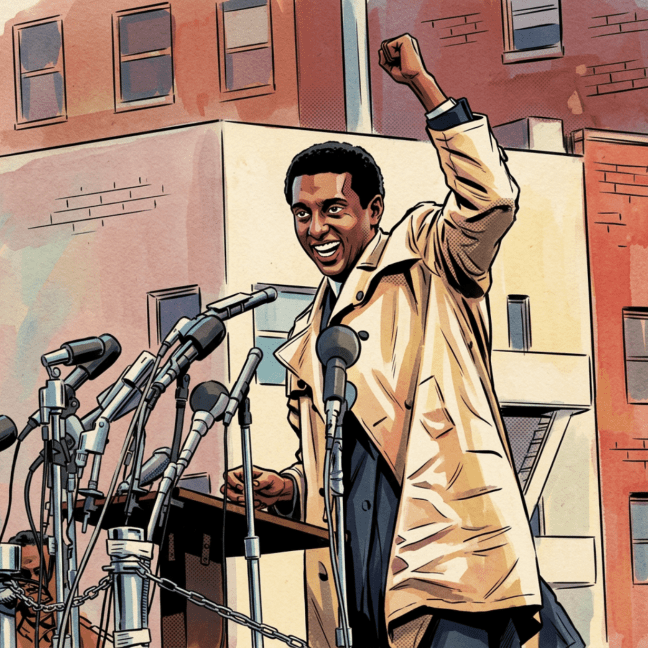
In his historic speech, Allende’s final address to the nation, he talks of his sacrifice against imperial forces and his vision for the future. SBS News has a great website commemorating this event, including the role that the Australian Government played in feeding intelligence to the USA, which eventually led to the rise of the Pinochet regime. When the Australian Labor government came to power in 1972, Prime Minister Gough Whitlam is said to have been appalled about Australia’s involvement in the coup and removed his Government’s political support.

Australia began accepting Chilean refugees in the mid-1970s. The Chilean-Australian community grew from 6,000 in 1971 to over 24,000 by 1991. Continue reading Chileans in Australia: The Other 9/11 and the Legacy of the Pinochet Regime

Rethinking Gender and Sexuality: Case Study of the Native American “Two Spirit” People

Sociology and anthropology have long used the experiences of “third sex” cultures, such as the Native American Two Spirit people, to teach students about the social construction of sex and gender. In many cultures around the world, people are allowed to live their lives beyond conventional binaries; they need not adhere to the biological sex they were born into. These people are usually revered and there are special circumstances where individuals are allowed to shift their gender position. These groups, including the Two Spirit people, are used as examples in the sociology of Lesbian, Gay, Bisexual, Transgender, Queer and Intersexual (LGBTQI) issues. Recent scholarship, however, has questioned this practice, demonstrating that social scientists are applying Western concepts to misunderstand the Two Spirit phenomena.

Continue reading Rethinking Gender and Sexuality: Case Study of the Native American “Two Spirit” People

Adapting Sociological Teaching and Learning for Online Environments

Image

A new sociological study finds that students who study online perceive that they have learned less in comparison to students who attend face-to-face lectures. The researchers, Kelly Bergstrand and Scott Savage, find that online students also feel they have been treated with less respect by their lecturers and they generally rate their courses more negatively. Is there an issue with the way sociology is taught specifically that does not translate well to an online environment, or is there something broader at play? Today’s post examines the skills and resources that sociology demands of students, and questions whether the training and delivery of these skills are being adequately supported by the higher education system. I also discuss the influence of larger online courses that are offered “free” to the public and how this relates to funding cuts and a push for online learning in the tertiary sector.

Continue reading Adapting Sociological Teaching and Learning for Online Environments

Corporate Responsibility in Health Campaigns

Oil drawing of the tops of coke bottles against a red background with the title, 'Corporate responsibility in health campaigns'

When Coke launched its obesity campaign in Australia, social scientists spoke out about the problems with the messaging and strategy. The company says they are helping to combat weight-related illness by releasing smaller cans and by selling its low calorie Coke varieties. Coke also says it is providing nutritional information on its vending machines and it has teamed up with a bicycle group to encourage exercise.

Today’s post discusses the problems with Coke’s social media marketing strategy to appear more socially conscious about public health. The issue is not about whether or not you or I drink cola occassionally; the issue is broader, about how companies blur the lines on health and junk food.

Continue reading Corporate Responsibility in Health Campaigns