Sociology of Artificial Intelligence

White 3D model of a person's head

This is the first in a series of posts exploring the sociology of artificial intelligence (AI). I cover definitions of AI, before exploring sociological issues of public awareness, ethics, and regulation. I discuss how AI models replicate race, class, and social inequality. I show why First Peoples’ leadership must be central to the development AI policies. I discuss how sociology can address structural change and ethical use of AI. The rest of this series will examine how AI may transform work, and how AI companies are using customer data to grow their market dominance and policy influence.

Continue reading Sociology of Artificial Intelligence

Critical Race Studies and Racial Literacy

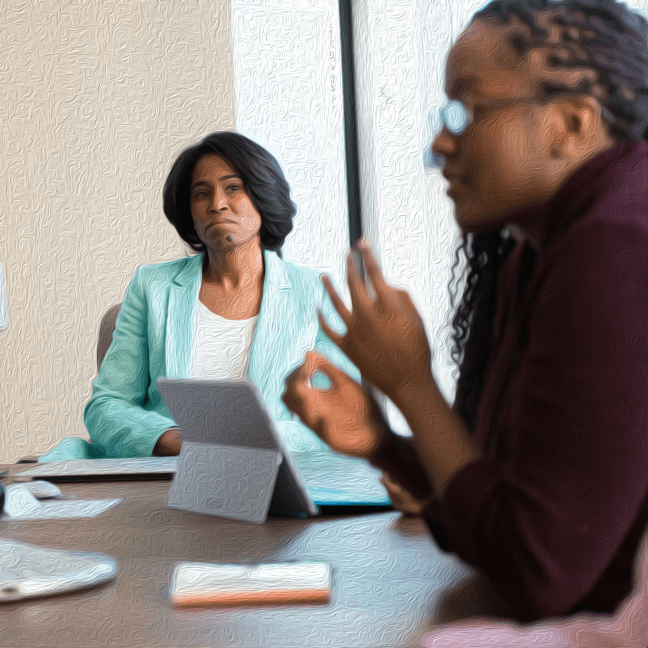
A Black woman in a jacket watches another Black woman talking

I have published two new book chapters. In ‘Critical Race Studies and Intersectionality Responses to COVID-19,’ I provide practical guidance for educators and researchers on how to apply insights from the webseries, Race in Society. The series featured First Peoples scholars and practitioners, and other people of colour researchers discussing issues of race and the pandemic. In ‘Race at Work Within Social Policy,’ I analyse how anti-racism and intersectionality work is co-opted and suppressed in social policy. Read about both chapters below, including where to order the books and upcoming events.

Continue reading Critical Race Studies and Racial Literacy

Race and Indigenous Language Rights in Peru

Quechuan woman carries goods on her back with a child walking beside her. They are on a mountain

On 27 August 2021, in his maiden speech to the Peruvian Congress, Guido Bellido, Prime Minister of Peru, was heckled by his fellow politicians, and reprimanded by the President of Congress for giving an extended welcome in Quechua and Aimara. Quechua is the language of the Quechuan people, the largest Indigenous group in Peru. Aimara is the second largest Indigenous group. Bellido is Quechuan. He was elected as the Cusco representative for Congress on 29 July 2021. Cusco is a Quechuan-majority region, where citizens have a legal right to Quechuan language services, and public servants must speak at least basic Quechua. As a public servant and Indigenous person elected to serve Cusco, Bellido had a legislated right to speak Quechuan.

Quechua and Aimara are both official national languages of the Republic of Peru, alongside Castellano (Español, or Spanish spoken in South America). Quechua has an ongoing influence on the evolution of Castellano in Peru. This includes every day words, grammar, conventions used for the third person, and regional variations of speech.1

Indigenous languages are the original mode of verbal communication in Peru. The events in Congress reflect the pervasive impact of race on politics and all other aspects of society.

To explore the functions of race in Peru, I begin with an examination of Bellido’s speech as a case study of race. I’ll then explore the history of race and language in Peru, before discussing why racial inequality persists despite the development of Constitutional right to language and ethnic (cultural) autonomy. I then deep dive into a racial profile of Quechuan people, using data from the most recent Census.

Continue reading Race and Indigenous Language Rights in Peru

Policing Public Health

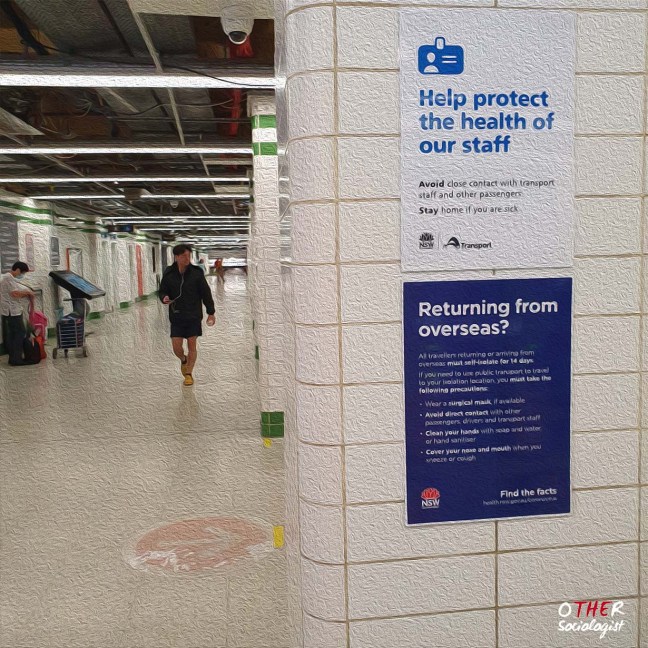
A person walks in the distance inside Central Station in Sydney. Two COVID posters say: 1 "help protect staff," and 2) "returning from overseas?"

This analysis discusses policing responses to public health during the COVID-19 pandemic, specifically impacting communities with high rates of migrants, refugees, and First Nations people. First, I reflect on some of the lessons from the COVID-19 “hard lockdown” of social housing towers in Melbourne in 2020. I then discuss health inequalities in multicultural suburbs of Sydney, which are now being placed into a strict lockdown. I explore how racist ableism operates in these settings, and what an alternative, cultural safety approach would look like.

Continue reading Policing Public Health

Race, Class and the Delta Outbreak

Entrance to a supermarket. Stickers on the ground say "please stand here." Workers are busy in the background

This post explores how race and class impact media discourses of public health during the COVID-19 pandemic. Media reports have selectively focused on migrants and working class people linked to specific infection chains. Race and class are absent from media narratives involving white, middle class, and wealthy people, even when these events account for high rates of infection and trangression of COVID-19 rules. This analysis shows how inequality is reproduced and normalised through institutions, such as the media.

Continue reading Race, Class and the Delta Outbreak

Political Attacks on Critical Race Theory

Crowd of protesters in Sydney

Almost 530 researchers (including me) have signed the Open Letter Against Racism. Critical race theory is an academic field under uninformed and unwarranted political attack in Australia and in other nations. See an excerpt below and please read the full letter.

Continue reading Political Attacks on Critical Race Theory

Public Sociology and the Pandemic

Oil painting of a subway sign about COVID-19. It shows an imprint of two hands. The message reads: have you washed your hands?

It’s been a long while! Over the past couple of months, in my paid work, I’ve been co-leading a large randomised control trial in public health. Hoping we can publish results in the new year. Our team is also busy researching issues of technology and safety. In my personal research, Associate Professor Alana Lentin and I wrapped up series 1 of Race in Society. We covered media representations; the lockdown and ableism; intersectionality; policing; and economics. I’ll bring you write ups of other episodes soon, or head to our YouTube to watch the videos.

In case you missed it, here are two interviews I gave earlier in the year, on the sociology of COVID-19. Unfortunately, the topics of moral panics and misinformation remain relevant.

Continue reading Public Sociology and the Pandemic

The Economics and Social Costs of COVID-19

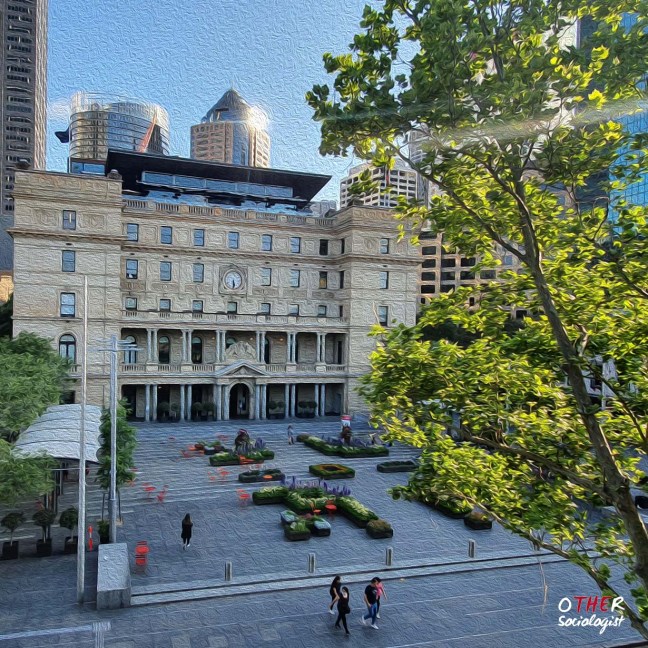
Aerial view of Sydney Customs House, a large Building at Circular Quay, Sydney

In Episode Seven of our Race in Society series—the final episode of season 1 on “Race and COVID-19″—Associate Professor Alana Lentin and I are joined by two guests to discuss The Economics and Social Costs of COVID-19. We examine the impact of the COVID-19 crisis on undocumented migrant workers, whose labour is being exploited.

The economy depends upon the work of racialised people, exposing them to higher risk due to casualised frontline services, which have kept the health system and other businesses going throughout lockdown. At the same time, racialised people are provided inadequate protections against infection, including poor personal protective equipment.

Our first guest, Sanmati Verma, is an Accredited Specialist in Immigration Law. She discusses the legal issues faced by temporary visa holders and migrants, as they lack access to economic security. Our other guest is Professor Sujatha Fernandes, who is Professor of Political Economy and Sociology at the University of Sydney. Her research explores the uses and misuses of storytelling to shape understandings of the political activism of racialised people. She discusses how “curated storytelling” narrows the public’s engagement with economic rights during the pandemic.

Continue reading The Economics and Social Costs of COVID-19

Policing the Quarantine

Protesters march in Sydney. They hold up signs saying "BLM" and "Go back to eating donuts. End police brutality"

In Episode Six of our Race in Society series, Associate Professor Alana Lentin and I focus on Policing the Quarantine. Our racially-driven criminal justice system has been an ongoing feature of colonialism, from invasion in 1788, to the present day. Since the 1991 Royal Commission into Aboriginal deaths in custody, over 434 Aboriginal and Torres Strait Islander People have died in police custody. Policing powers have been extended throughout the pandemic, and disproportionately target Aboriginal and Torres Strait Islander people and other people of colour. This includes the administration of fines, lockdowns, and curfews.

To help us to think through these topics, we are joined by three panellists. First, Roxanne Moore, Executive Officer of the National Aboriginal and Torres Strait Islander Legal Services (NATSILS), discusses police accountability. Second, Professor Megan Davis, Pro Vice-Chancellor Indigenous at the University of New South Wales and Professor of Law, provides insight on constitutional and human rights during the pandemic. Dr Vicki Sentas, Senior Lecturer in the Faculty of Law at the University of New South Wales, discusses racial profiling and police reform.

Continue reading Policing the Quarantine