Whitewashing White Supremacy

The back torso of a white man in a painter's white overalls, holding a white bucket, getting ready to paint and empty room

White supremacy is an ideology promoting the racial superiority of white people. One of the key ways white supremacy retains its power is through language that “naturalises” white dominance, making the current social order seem natural, normal, and logical. The recent editorial direction by the New York Times of how to refer to the “alt right” plays into white supremacist ideology, by sanitising its political aims and making its ideology more palatable.

Continue reading Whitewashing White Supremacy

White People Don’t See Insitutional Racism

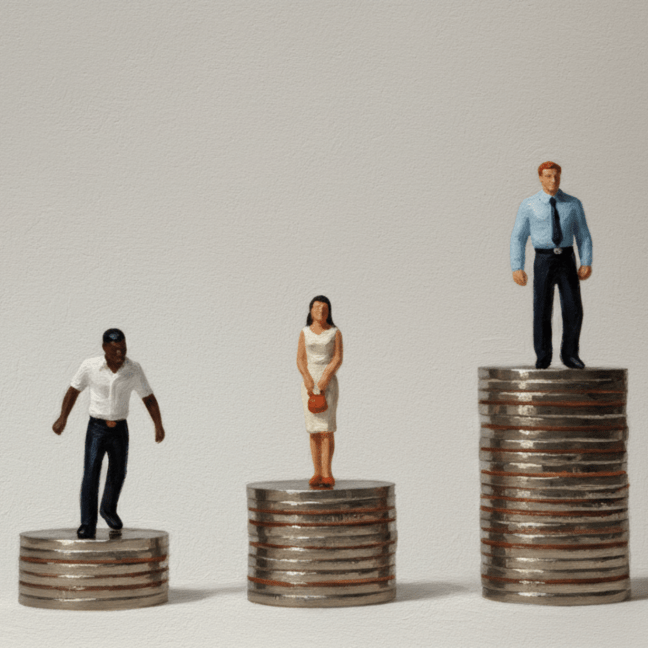
A Black man stands on a low stack of coins. A white man stands slightly higher up, while a white man stands on a stack twice as large

The latest Pew Research Centre survey shows that white people do not recognise institutional racism as the main cause of racial inequalities. Instead, they focus on individual prejudice, family, and lack of role models. White people are also half as likely to say Black people are treated unfairly at work and by police.

Continue reading White People Don’t See Insitutional Racism

Sociology of Kiwi Foo, an Unconference

Kiwi Foo Baa Camp timetable

In March, I travelled to Auckland New Zealand for Kiwi Foo, a two-and-a-half day “unconference” where 150 participants from New Zealand and other parts of the world from a wide range of professional backgrounds self-organise the sessions. This includes people from technology companies, policy and community organisations, as well as academics . The idea behind Foo Camp is to bring together like-minded individuals who might otherwise not meet, and listen to one another and look for ways to connect in our common goal to make the world a better place.

In order to attend, one must be nominated by a previous Foo alumn from Kiwi camp or SciFoo from the UK. You pay for your own travel but all other costs, including food and lodging if you want it, are provided. When you accept the invitation, you nominate three keywords. Upon arrival, in a large hall filled with around three hundred people, each person stands up to introduce themselves by their name, their affiliation and their keywords, without elaboration. It took awhile but it was fun. My three keywords were: gender equity & diversity; science communication; sociology.

Continue reading Sociology of Kiwi Foo, an Unconference

White Supremacy and Islamophobia

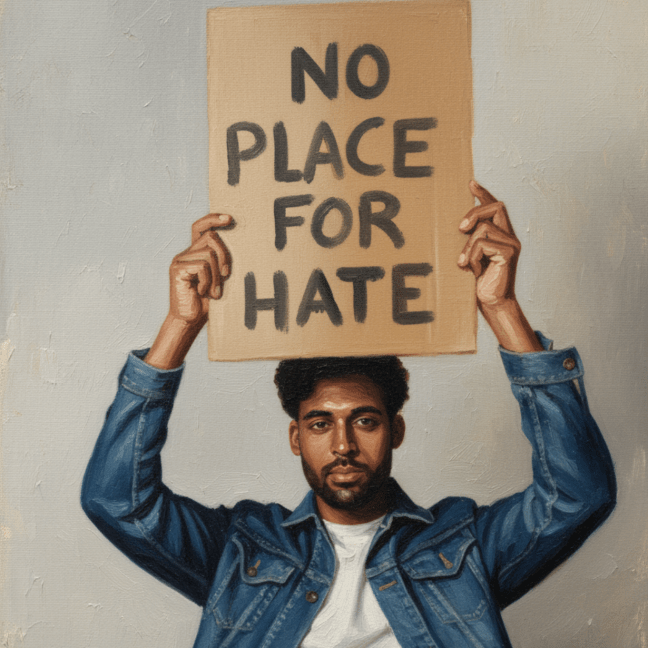
A Black man holds a sign that says: No place for hate

Earlier today, 28 May, seven men were arrested, after a racist, anti-Muslim right-wing group crashed an anti-racism protest outside a primary school in Coburg, Melbourne, Victoria. All except one are aged 25 to 33 years, and the other man is 18. One of the men carried three knives. Media reporting focuses on the “violent clash on the streets,” as if the two groups are neutral, or equally oppressive. We know the men perpetrating violence are white because their race is not mentioned. Islamophobia is mentioned as an aside, rather than the catalyst, and the anti-racism focus of the original rally is also not discussed. This illustrates how white supremacy works, by maintain the ideology that white people are superior to people of colour.

Continue reading White Supremacy and Islamophobia

Sociology of the Anti-Vaccination Movement

The state of Victoria in Australia is facing a measles outbreak due to parents in relatively progressive suburbs choosing not to vaccinate their children. The anti-vaccination movement has its roots in Western societies in the myth that vaccines cause autism. The science demonstrating that there is no link between autism and vaccines is peer-reviewed and well-established. The original paper that made the assertion that such a link existed was retracted by the original publisher, The Lancet, due to fraud by Andrew Wakefield and his team. Given that the myths of vaccines have been thoroughly debunked, what is behind the anti-vaxxer movement? I start by discussing the scientific evidence about the fraud that inspired the anti-vaxxer movement before providing a broad sketch of the public who don’t believe in vaccination. Sociology of the Anti-Vaccination Movement Continue reading Sociology of the Anti-Vaccination Movement

Whiteness as Race Adjudicator

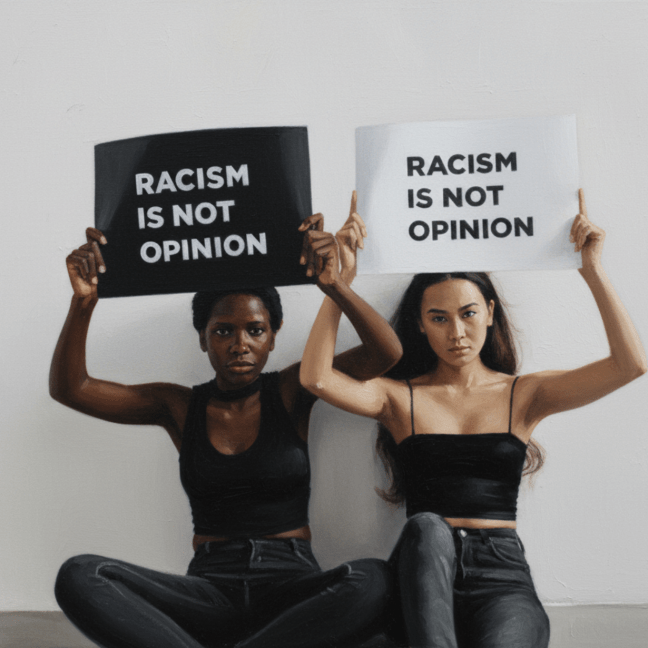
A Black and Asian woman sit on the ground, each holding signs saying: Racism is not opinion

“People look at us without really seeing us. Instead, they simply see our race… the onus isn’t just on us inching past our fear of embarrassing a white person. It’s on white people to learn to make distinguishing faces a priority. Whether they realise it or not, the repeated misidentification broadcasts its own message: I’m Asian, indistinct and not worth remembering.”

Iris Kuo, journalist

“Mistaking” people of colour because “you all look alike” is not just a faux pax. It is racism at work.

In her opinion article for the Washington Post, Kuo recounts examples of herself, friends, and colleagues being mistaken for other Asian people who look nothing alike. It happens at work, and in other social interactions with white people.

“All my life I’ve been mistaken for other people of my race. It’s a degrading and thoughtless error that boils away my identity and simplifies me as one thing: ‘that Asian.'”

She notes she is expected to laugh this off, but it happens so frequently that it has a negative impact. Kuo recognises this happens to other people of colour, who are expected to let the moment pass, so as not to “embarrass” white people. She notes that when people of colour do speak up, the interaction is minimised or ignored. For example, when she complained about multiple incidents of a colleague mistaking her for other Asian people, the manager excused the problem, by saying: “I don’t think anyone here’s got a mean bone in their body.”

When white people get called out for racism, they usually moralise the issue, deflecting to a question of manners, naiveté, or an innocent mistake. They refuse to recognise this as racism, because white people think racism in terms of:

  • Extreme bigotry: racial slurs, yelling, violence
  • Conscious hatred: a personal flaw of an isolated individual
  • Moral failing: being called a racist is seen as a personal character flaw, and a label that is more hurtful than racism itself
  • Adjudicated through whiteness: white ideology defines what is, and is not, racism, according to the values, experiences, and discretion of individual white people, rather than a structural system of inequality

These examples are known as microaggressions – the brief and subtle daily insults that denigrate people of colour. It occurs because whiteness allows white people to take their own race for granted as a universal experience, without acknowledging their biases and prejudice. Microaggressions happen because white people reinforce racial categories, reducing other groups to a monolith “other,” while seeing themselves and other white people as individuals worthy of special attention, decency and respect.

Microaggressions reinforce racial power, because they are a routine reminder to people of colour that they are being racialised (reduced to their racial difference, and therefore lesser than white people).

This also shows how while people “do” race – by categorising “others” into racial categories, and reinforcing the racial hierarchy, that some groups have more power than others to define social reality. If they didn’t “mean to offend” or “didn’t mean any harm” then racial harm is nullified. Race becomes a problem for people of colour to manage, in ways that do not disrupt white people’s dominance.

Read Kuo’s article.

How to stop the sexual harassment of women in science: reboot the system

Two white women scientists are working on machines in a lab

This article was first published in  The Conversation, on January 29, 2016.

The culture in astronomy, and in science more broadly, needs a major reboot following revelations early this year of another case of harassment against women by a senior male academic.

The journal Science revealed earlier this month that the latest case involved Christian Ott, a professor of theoretical astrophysics at Caltech university, in the United States.

Frustrated that Ott was not fired and only placed on unpaid leave for a year, the two female students who raised the allegations took their story to the popular online news outlet Buzzfeed.

Also this month, US Congresswoman Jackie Speier raised the case of Professor Tim Slater, who had been investigated for various sexual harassment incidents that began after he was hired by the University of Arizona in August 2001. Slater went on to the University of Wyoming.

Slater spoke to the news website Mashable and said he had received sexual harassment training as an outcome of the investigation.

But Congresswoman Speier questioned why the investigation into Slater’s sexual harassment was sealed “while he went on with his career”, even though women who were victims lost years of study and career progress due to his conduct.

Read more on The Conversation.

Sexism Does Not Justify Racism

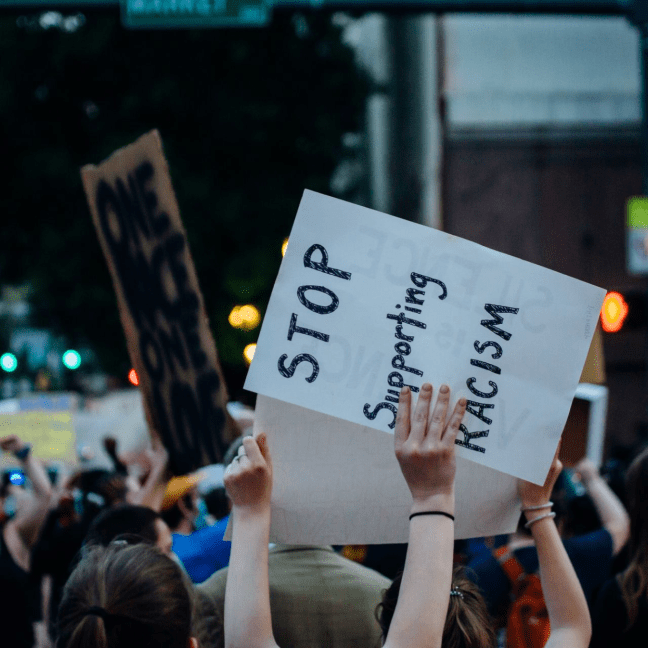
A crowd of protesters hold sign. White women's hands hold up a sign that says: Stop supporting racism

TW: Rape. Today in White people justify racism: two examples of how sexism is used as racist scaremongering.

West Indies cricketer, Chris Gayle, who is Black, was sexist during an interview with an Australian woman journalist, Mel McLaughlin, who is White. Gayle issued a non-apology, saying he was joking. Sexist jokes are not “jokes;” it is sexism. Gayle’s behaviour is unprofessional and profoundly damaging given his prominent position, and also because women everywhere deserve to go to work without men objectifying them, regardless of their job or the stature of the person indulging gender inequity. It’s the second time Gayle has behaved this way to a woman journalist; in his homeland, feminist groups have called out his behaviour. This pattern is toxic. Gayle has been fined $10,000 for his comments. Good! This is an appropriate response; a better response would be to require that he additionally undertake gender equity training.

Continue reading Sexism Does Not Justify Racism

Everyday Racism in Japan and the USA

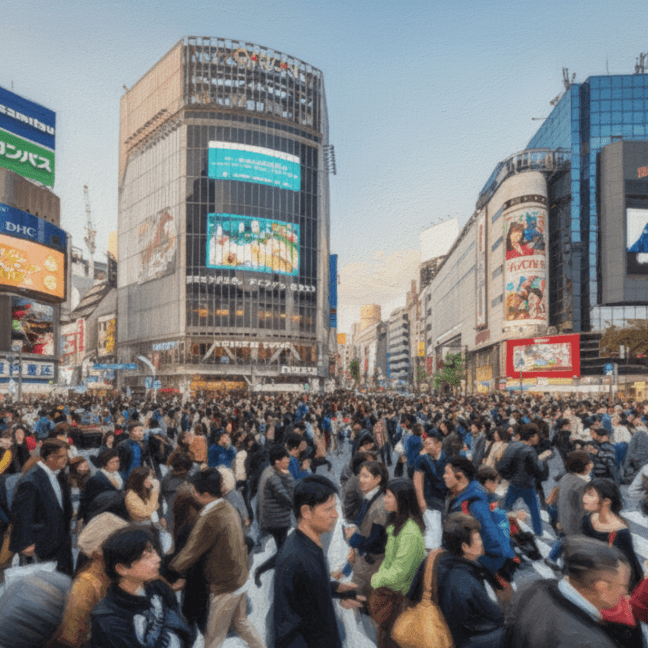
People cross a densely crowded street in a Japanese city

“Over the course of my life, mostly from white people back in the States, I’ve been told I look like a number of black people, from Eddie Murphy to Martin Luther King, so I was aware that other races’ perception of my appearance had a tendency to be warped. Often the people making these observations were unaware they were picking at the scabs of festering wounds of dehumanisation. Nor did they seem aware that their ideas could veer into stereotyping very easily. So, at least for me, this “name-calling” became a sort of indicator of a person’s ignorance or insensitivity level..”

Continue reading Everyday Racism in Japan and the USA