Police Violence in Australia

Oil painting style image of a group of protesters in front of New South Wales Court. Two of them stand on seats and wear the Aboriginal flag. The title reads, "Police violence in Australia"

It is still Reconciliation Week, and Australia is undergoing two major court cases where police have shot dead young Aboriginal people. Yet non-Indigenous people remain wilfully oblivious. We are collectively spending more energy in feeling morally superior to other countries, rather than acting towards national change. Specifically, Australian media lead with stories of “violent unrest,” “violent protests,” and “mayhem” in the USA, instead of focusing on police violence against Black victims and protesters, and providing insightful analysis on similarities to Aboriginal deaths in custody in the Australian context.

Australian social media and public commentary are preoccupied with either dismissing current events as unique to other societies (“only in America”), or posting aghast (rightfully) over police brutality overseas. We do this despite not engaging with long-running campaigns led by Aboriginal and Torres Strait Islander communities. It’s not that we should disengage from world events; #BlackLivesMatter is an important movement that resonates globally and deserves attention. The issue is the disproportionate focus on the USA by Australians. This maintains our perception that police brutality is an American quirk and allows non-Indigenous Australians to ignore local racial justice movements led by Aboriginal and Torres Strait Islander people.

This post will illustrate how non-Indigenous Australians other national racism, as if it is the abhorrent opposite of our national culture. This is easier than taking the steps we need to address police brutality and racial injustice right here and now.

Continue reading Police Violence in Australia

Reconciliation and the ongoing impact of colonialism

Oil painting style image showing protesters carrying the Aboriginal flag

I live on the land of the Gadigal people of the Eora Nation. ‘Eora’ means ‘here’ or ‘from this place.’ Twenty-nine clans belong to the Eora Nation (of what is now known as Sydney), each with their distinct culture, languages, songlines and practices. Sovereignty was never ceded. This land always was, is, and forever will be, Aboriginal land.

Yesterday was National Sorry Day and today marks the beginning of Reconciliation Week. The meanings and actions of these national events are different for Aboriginal and Torres Strait Islander people, and non-Indigenous people. Here are some reflections for those of us who are settlers, and what we can do to better listen and walk in solidarity with First Nations.

Continue reading Reconciliation and the ongoing impact of colonialism

Gender, Race and Ableism in ‘Joker’

Arthur is in full Joker make-up. His face is painted white with crass red lips overdrawn over half his face. He has large red eyebrows painted high on his forehead. His eyes are framed by two blue triangles. He smiles and raises his eyebrown as he exhales

Let’s talk about representations of gender, race and ableism in Joker and how to situate a critical reading in the local Australian context. I saw the film last night in Newtown, Sydney, where the mostly White audience erupted in rapturous clapping. We’ll explore this reaction.

Spoilers ahead. (N.B.: Read this as a gif-free version in PDF)

Arthur is shirtless, with his back to the audience. He is watching Thomas Wayne, a White man in a suit, speaking on television‘Joker’ presents a racialised and gendered view of class. Thomas Wayne (Gotham’s White male, super rich aspiring Mayor, played by Brett Cullen) is the antagonist. Wayne refers to protesters with contempt (jokers) and he punches Arthur (before his reincarnation as The Joker, played by Joaquin Phoenix) while he’s emotionally vulnerable. Whiteness prevails in this exchange, because the conflict between the two men is not really about class, as the film attempts to position. Their tension is about masculine power.

Continue reading Gender, Race and Ableism in ‘Joker’

Whitewashing Race Studies

In the lower half is a white background, with the spines of two white books on the right handside. At the top is the title: whitewashing race studies

How does a White male student with no expertise in critical race studies, with little sociological training, publish a peer reviewed article in one of the most prestigious journals in our field? How is this possible when the paper misrepresents the Black Lives Matter movement and intersectionality theory? How does this paper make it through peer review to publication in less than six months? ‘Black Lives Matter at Five: Limits and Possibilities,’ by Adam Szetela, was submitted to Ethnic and Racial Studies on 24 January 2019, accepted for publication on 21 June 2019 and published online on 18 July. The expediency of the peer review process, given the content of the article, warrants strong evaluation.

I express my gratitude to Dr Shantel Gabrieal Buggs, who brought this to public attention, and who led a robust discussion on Twitter with sociologists and scholars from other fields. I’m using this and other examples as a case study of whiteness in academic publishing.

Continue reading Whitewashing Race Studies

Understanding Racism in Social Context

Race is a social construction. This means that biological or phenotypic traits are classified in ways that reinforce inequalities benefiting majority groups. Hence “race” is understood differently across nations, depending on history and culture. White people have a tendency to see racism in subjective and relativist views: White Canadians think that racism is less of an issue in their country than in the USA; White people in Aotearoa New Zealand think racism in Australia is far worse than in their own backyard; and Australians think racism in Australia has “gotten better,” and that we are better off than the USA. These comparisons are one way in which White supremacy is maintained locally. Individual observations about so-called “worse” racism in other countries only serves to maintain racial injustice. Let’s now see how this plays out in everyday discussions of racism.

Continue reading Understanding Racism in Social Context

Enacting Whiteness When Tagging People of Colour

I’ve written about why white people should reflect on the deeper motivations whenever they feel a need to tag Aboriginal and Torres Strait Islander people, and other people of colour, in conversations on race and racism. Tagging people of colour into racist exchanges introduces further discrimination and abuse into that person’s life. I show this through an example of online abuse I received after one of my white followers tagged me into conversations involving someone who had previously harassed me.

Continue reading Enacting Whiteness When Tagging People of Colour

Invasion Day 2019

This past weekend was the Australia Day long weekend. The holiday marks the genocide and dispossession of Aboriginal and Torres Strait Islander people. This day will never be inclusive or live up to ideals of multiculturalism, as it is a Day of Mourning for First Nations people. We need to not just change the date but also #ChangeTheNation. This is time for truth-telling of our national history, a Voice to Parliament and Makarrata (treaty), as outlined in the Uluru Statement From the Heart.

On 26 January, beginning at 11am, we marched at the Invasion Day rally from Hyde Park South to the Yabun Festival. The rally starts with speeches, smoking ceremony and dance commentating survival. Remembering the Waterloo Creek massacre.

Continue reading Invasion Day 2019

Whiteness, Racism, and Power

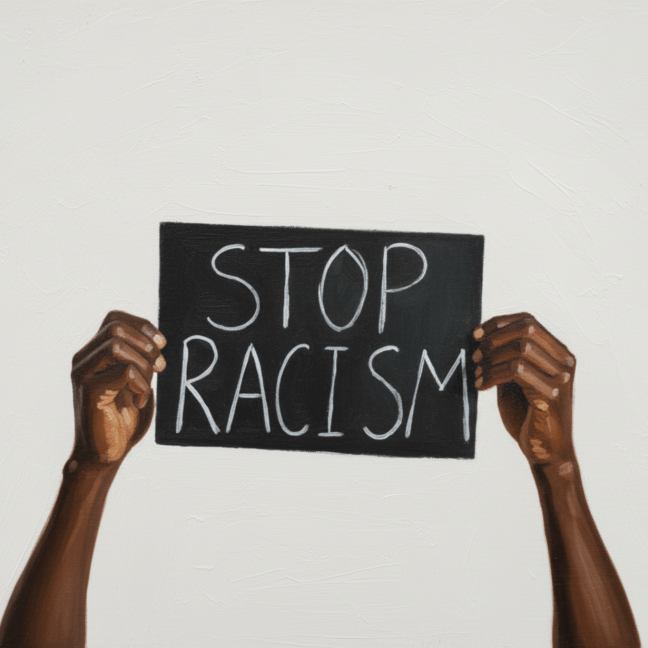
Two hands hold up a sign that says: STOP RACISM

Here’s a typical example of how white people exercise and maintain racism. TV personality, Kerri-Anne Kennerly, flies into a rage about Saturday’s Invasion Day protests, led by Aboriginal people, seeking to change the date of Australia Day and establish systemic reform that includes a Voice to Parliament and Makarrata (treaty). Kennerly taps the table angrily, ‘Has anyone of them been out to the Outback where children, babies, 5 year olds are being raped. Their mothers are being raped. Their sisters are being raped. They get no education. What have you done? Zippo.’

Continue reading Whiteness, Racism, and Power

Sociology of the Day of the Dead

Latin girl wears a painted face for Dia De Los Muertos

This video by Eddie G provides an engaging Mexican-American introduction to El Día de los Muertos (the Day of the Dead). Eddie G captures how one community celebrates the dead, as just one step in the “pyramid of life.” In describing the symbolism of the colours of a symbolic altar, one woman says:

[In Spanish] “The yellow is the beginning of life. The red is the momentum of the blood. Green represents settling down, starting a family, working, and helping the community. Blue represents the sky. The elders reminiscing and talking about their memories. That’s all we have left. The top is white. That’s death. “

The Day of the Dead has grown in popularity in the United States and in other places outside Mexico. Non-Mexicans may be attracted to the colourful costumes, the skulls, face-painting and the “cool” allure of death. Yet the significance of this spiritual festival is more than just about death. It is a symbol of post-colonial struggles and a celebration of life. Continue reading Sociology of the Day of the Dead