Interview: How to Deal with Microaggressions

Image of a Brown woman in the background with white paint smeared over her eye area

I was interviewed by SBS News on microaggressions. Below is an excerpt featuring my comments.

“When people point out the impact of microaggression they also hear ‘I didn’t mean it like that’ or ‘can’t you take a joke?’” says Dr Zuleyka Zevallos, an applied sociologist who has studied microaggressions in Australia. She says confrontation isn’t the best way out of these situations.

“There’s a lot of psychological stress when you’ve been injured by their comments and then they tell you what you experience is invalid.”

The best way is get the other person to be reflective. “Questions stop the other person because they have to think, rather than be defensive.”

“And you shouldn’t expect a minority to always speak for themselves, it’s on all of us to tackle together.”

Another effective way is to express disappointment if it was done by someone you know well.

“We know from research most people hold a positive view of themselves,” says Dr Zuleyka [sic].

“When you say “I always thought you were a reasonable person” or “I can’t believe I’m hearing this for you” it turns the mirror around.”

Read more on SBS News.

Learn more on racial microaggressions on my blog.

Thelma

Young white woman wearing glasses hides behind a bucket of popcorn

Let me tell you about Thelma, screening at the Scandinavian Film Festival. A young woman, the titular Thelma, has led a sheltered and conservative Christian upbringing in the country. She rocks up to university having never really partied, including no alcohol or drugs, and without experience with dating. While she has a strong bond with her parents, especially her dad – with whom she shares all her deepest thoughts – she is very lonely in her new environment. That is until she meets the vivacious Anja.

Continue reading Thelma

Indigenous Women’s Leadership

This past week, Australia celebrated NAIDOC Week (8-15 July), a time to recognise the leadership, culture and achievements of Aboriginal and Torres Strait Islander people. Originally standing for National Aborigines and Islanders Day Observance Committee, NAIDOC Week has historically reflected the ongoing resistance to genocide, assimilation and land dispossession, famously culminating in the annual Day of Mourning in 1938 (a protest against Australia Day on 26 January). The NAIDOC committee emerged in 1956, and has in recent decades coordinated local and national events and awards to promote Indigenous excellence. This year’s theme is Because of Her We Canpromoting the multiple leadership roles of Indigenous women for their families and communities, as they push for social justice and human rights at the local community and national levels.

I share with you two events I attended that highlight the role of Aboriginal and Torres Strait Islander women in academia, journalism, business, law and social policy. Continue reading Indigenous Women’s Leadership

How to Increase Voluntary Participation in Programs Using Behavioural Insights

Reducing reoffending is a state priority in New South Wales. New sentencing reforms will increase referrals to behaviour change programs or other support services for people who are at high-risk of reoffending. Yet non-mandatory programs can often have low participation rates, particularly when programs are new.

We set out to better understand the social context affecting voluntary participation in programs for people at-risk of reoffending. Here’s how we used behavioural science to promote better service delivery for this vulnerable cohort.

Continue reading How to Increase Voluntary Participation in Programs Using Behavioural Insights

Applying Behavioural Insights to Emergency Decision-Making

Flood-related fatalities have been an ongoing problem in Australia since the early 1900s. Deaths during floods rank second only to heat waves in natural disaster fatalities. Approximately 159 people died from flooding in Australia during the last 15 years, with half (53%) due to driving through floodwater. NSW, together with QLD, represent 74% of flood fatalities. Rural and regional areas in NSW are especially at-risk.

Driving through flood water is a pressing issue, and has been a persistent problem behaviour that has been tough to shift.

The following reflects how the Behavioural Insights Unit (BIU) worked through this behavioural issue, and brainstormed problems, during a recent masterclass with NSW State Emergency Service (NSW SES).

Continue reading Applying Behavioural Insights to Emergency Decision-Making

Harmony and Anti-Racism

Crowd gathers at a multiculturalism event, including women in hijab and children playing drums

This is the speech I gave at an internal corporate event for Harmony Day. This day is actually the International Day for the Elimination of Racial Discrimination. The former is framed as a celebration of multiculturalism, the latter is a call for anti-racist action and social change. Myself and the other speakers took our cue from the latter.

Today I’m going to give you a sociological context for racial diversity in Australia, and how to promote racial harmony in our communities and our workplace. Continue reading Harmony and Anti-Racism

Women in Tech

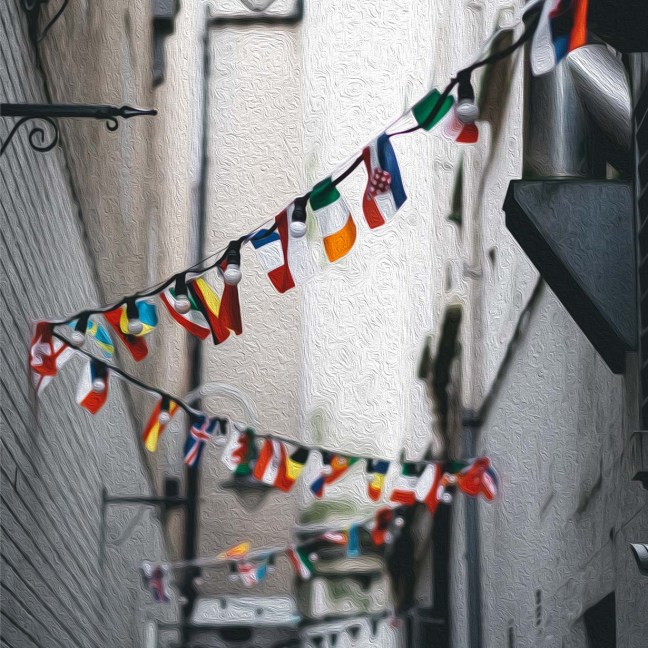
Flags from around the world hang high above an alleyway

Earlier this year, I spoke at Readify as part of their International Women’s Day events held around the country.  This is what I said.

I would like to acknowledge and pay respect to the traditional custodians of the land on which we meet; the Gadigal people of the Eora Nation. It is upon their ancestral lands on which we meet. I pay my respects to any elders, past, present and emerging. As we celebrate the courage and resilience of women and gender minorities on this International Women’s Day, may we also pay respect to the traditional gender balance, leadership and innovation of Aboriginal people, embedded forever within their Custodianship of Country.

Today I’m going to start of by setting the scene with a quick snapshot of women in the tech sector, which I’m sure you’re all well aware of. I’m going to focus a little more on the solutions that come from the empirical evidence about what works in lifting up women in the workplace. I won’t talk too long, so we can have a bit more a discussion about what initiatives have worked well here or in other places where you’ve worked, or if there’s anything else you want to dive into. Continue reading Women in Tech

New Frontiers in Behavioural Insights

I was live tweeting throughout the Behavioural Exchange conference, which was held in Sydney. It brings together policy-makers, practitioners and academics working in behavioural insights – the use of behavioural and social sciences to improve decision-making using evidence-based enhancements to services, programs and policies.

Day 1

Keynote by Cass Sunstein

Issues with behavioural science ‘nudges‘ (social enticements or environmental cues to optimise desired choices, especially with respect to social policy). To force people to choose when they don’t want to make a decision impacts their dignity.  This isn’t the intention of nudging.

Continue reading New Frontiers in Behavioural Insights

Dark Emu by Bangarra Dance Theatre

Two dancers reach up while jumping and twisting their arms

Guess who had front row tickets to Dark Emu by Bangarra Dance Theatre?

Based on Bruce Pascoe’s wonderful and important research into Australia’s pre-history – the agrarian and aquaculture innovation by Aboriginal and Torres Strait Islander people people prior to invasion.

Continue reading Dark Emu by Bangarra Dance Theatre