White Supremacy and Islamophobia

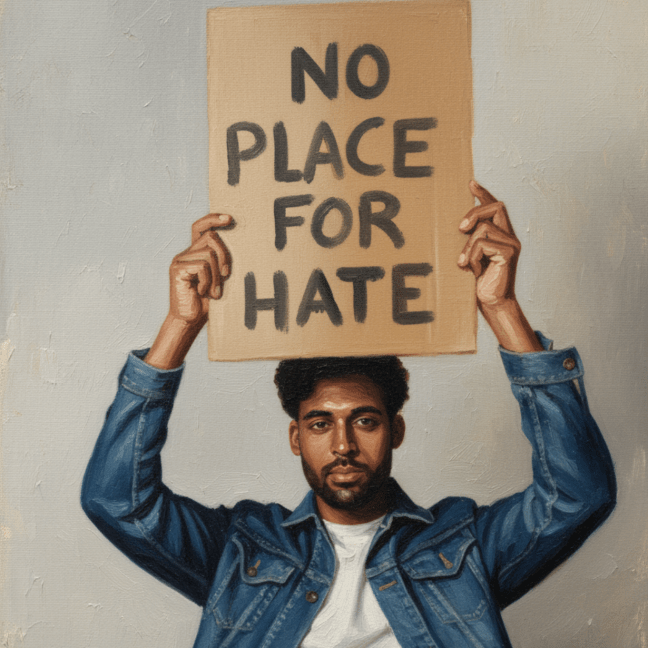
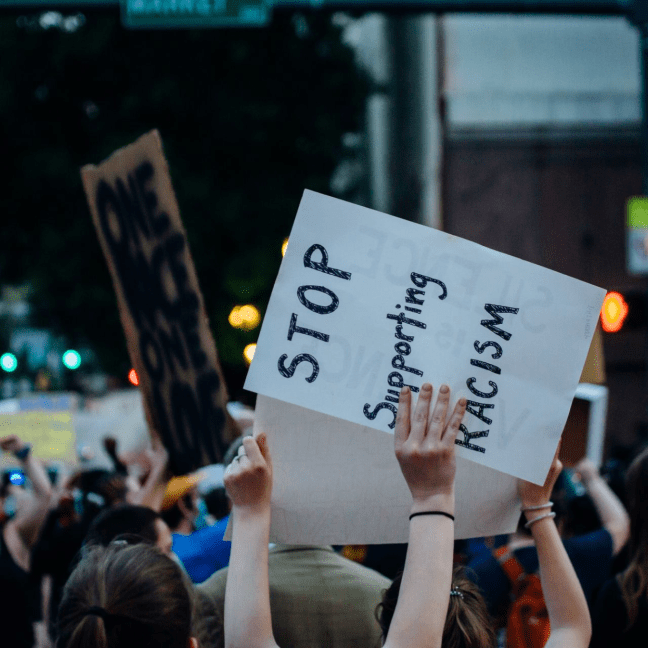
A Black man holds a sign that says: No place for hate

Earlier today, 28 May, seven men were arrested, after a racist, anti-Muslim right-wing group crashed an anti-racism protest outside a primary school in Coburg, Melbourne, Victoria. All except one are aged 25 to 33 years, and the other man is 18. One of the men carried three knives. Media reporting focuses on the “violent clash on the streets,” as if the two groups are neutral, or equally oppressive. We know the men perpetrating violence are white because their race is not mentioned. Islamophobia is mentioned as an aside, rather than the catalyst, and the anti-racism focus of the original rally is also not discussed. This illustrates how white supremacy works, by maintain the ideology that white people are superior to people of colour.

Continue reading White Supremacy and Islamophobia

Whiteness as Race Adjudicator

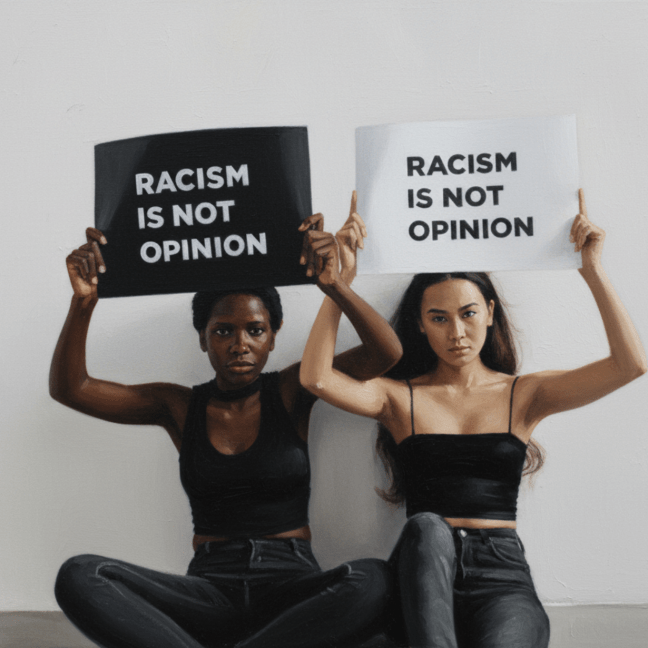
A Black and Asian woman sit on the ground, each holding signs saying: Racism is not opinion

“People look at us without really seeing us. Instead, they simply see our race… the onus isn’t just on us inching past our fear of embarrassing a white person. It’s on white people to learn to make distinguishing faces a priority. Whether they realise it or not, the repeated misidentification broadcasts its own message: I’m Asian, indistinct and not worth remembering.”

Iris Kuo, journalist

“Mistaking” people of colour because “you all look alike” is not just a faux pax. It is racism at work.

In her opinion article for the Washington Post, Kuo recounts examples of herself, friends, and colleagues being mistaken for other Asian people who look nothing alike. It happens at work, and in other social interactions with white people.

“All my life I’ve been mistaken for other people of my race. It’s a degrading and thoughtless error that boils away my identity and simplifies me as one thing: ‘that Asian.'”

She notes she is expected to laugh this off, but it happens so frequently that it has a negative impact. Kuo recognises this happens to other people of colour, who are expected to let the moment pass, so as not to “embarrass” white people. She notes that when people of colour do speak up, the interaction is minimised or ignored. For example, when she complained about multiple incidents of a colleague mistaking her for other Asian people, the manager excused the problem, by saying: “I don’t think anyone here’s got a mean bone in their body.”

When white people get called out for racism, they usually moralise the issue, deflecting to a question of manners, naiveté, or an innocent mistake. They refuse to recognise this as racism, because white people think racism in terms of:

  • Extreme bigotry: racial slurs, yelling, violence
  • Conscious hatred: a personal flaw of an isolated individual
  • Moral failing: being called a racist is seen as a personal character flaw, and a label that is more hurtful than racism itself
  • Adjudicated through whiteness: white ideology defines what is, and is not, racism, according to the values, experiences, and discretion of individual white people, rather than a structural system of inequality

These examples are known as microaggressions – the brief and subtle daily insults that denigrate people of colour. It occurs because whiteness allows white people to take their own race for granted as a universal experience, without acknowledging their biases and prejudice. Microaggressions happen because white people reinforce racial categories, reducing other groups to a monolith “other,” while seeing themselves and other white people as individuals worthy of special attention, decency and respect.

Microaggressions reinforce racial power, because they are a routine reminder to people of colour that they are being racialised (reduced to their racial difference, and therefore lesser than white people).

This also shows how while people “do” race – by categorising “others” into racial categories, and reinforcing the racial hierarchy, that some groups have more power than others to define social reality. If they didn’t “mean to offend” or “didn’t mean any harm” then racial harm is nullified. Race becomes a problem for people of colour to manage, in ways that do not disrupt white people’s dominance.

Read Kuo’s article.

Everyday Racism in Japan and the USA

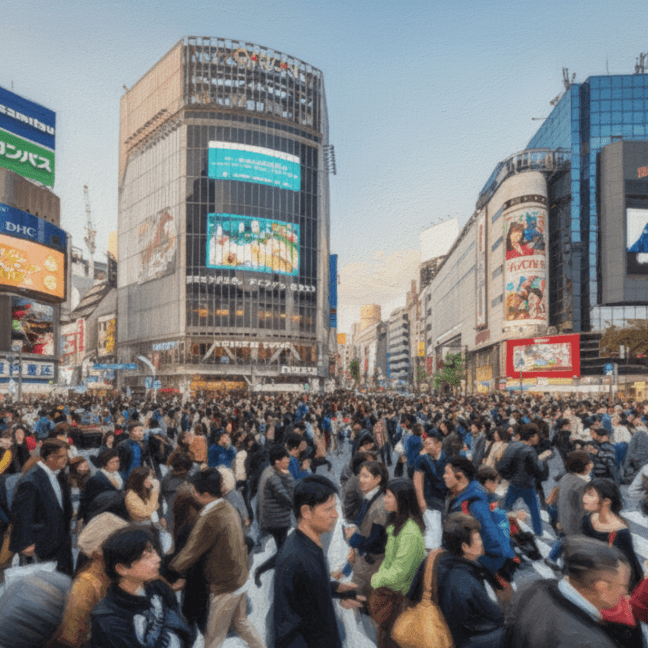
People cross a densely crowded street in a Japanese city

“Over the course of my life, mostly from white people back in the States, I’ve been told I look like a number of black people, from Eddie Murphy to Martin Luther King, so I was aware that other races’ perception of my appearance had a tendency to be warped. Often the people making these observations were unaware they were picking at the scabs of festering wounds of dehumanisation. Nor did they seem aware that their ideas could veer into stereotyping very easily. So, at least for me, this “name-calling” became a sort of indicator of a person’s ignorance or insensitivity level..”

Continue reading Everyday Racism in Japan and the USA

Rethinking the Narrative of Mars Colonisation

Rethinking the Narrative of Mars ColonisationBiologist Dr D. N. Lee has been doing an amazing job educating on how enthusiastic narratives of “colonising” Mars are problematic. On her Twitter, Lee notes that the dominant ways of talking about colonisation add to the marginalisation of under-represented minorities in Science, Technology, Engineering and Mathematics (STEM). If we want to make science more inclusive, we need to better understand how the stories we tell about STEM may exclude and damage under-represented groups we are trying to support.

Continue reading Rethinking the Narrative of Mars Colonisation

Migrants in Australia

Migrants in Australia

Australia is home to the oldest continuous culture in the world, that of Indigenous Australians, and our society also houses one of the highest migrant populations in the world. Australia encompasses over 300 migrant ancestries, with migrants and their children making up half of our population. I’ve just launched a new video series called Vibrant Lives, which explores some of these diverse cultures and the various meanings of multiculturalism in Australia. I’ll focus on different minority groups, as well as covering community events, religious festivals, art exhibitions and community organisations around Melbourne. This post provides some sociological context for my first video on migrant-Australians.

Continue reading Migrants in Australia

Share the Spirit: Survival Day 2015

The 26th of January is Australia Day and a national holiday. Various events happen all over Melbourne, but some of these recognise that this day raises important issues about Indigenous culture in Australia. Protests over colonialism have been ongoing since Europeans settled in Australia in 1788. On the 26th of January 1938, 150 years after the decimation of Indigenous people began, William Cooper (leader with the Australian Aboriginal League) together with Jack Patten and William Ferguson (the Aboriginal Progressive Association) declared the first “Day of Mourning,” a day recognising the history of colonial violence and dispossession. Survival Day events represent the resilience and contribution of Aboriginal and Torres Strait Islander people, who collectively make up the world’s oldest, continuous culture.

I attended the Share the Spirit festival, hosted by Songlines Music. This event has been running at the Treasury Garden since 2002. Together with similar events in Sydney, Perth, Adelaide and elsewhere, they are amongst the biggest Indigenous cultural events in Australia. Continue reading Share the Spirit: Survival Day 2015

Sexism on Wikipedia: Why the #YesAllWomen Edits Matter

#YesAllWomen
#YesAllWomen

The Wikipedia page for #YesAllWomen, a record of an anti-sexism online protest movement, is being edited to make it “less misandrist.” This Wiki page documents the Twitter hashtag that is being used internationally by women to share their experiences of sexual harassment, abuse and discrimination following the Isla Vista mass shooting in America. Some men are using this tag to listen and support women, but predictably, others are abusing it to hurt women and argue that the hashtag is “sexist against men.” The Wiki edits matter because Wikipedia has a massive problem with sexism. These edits reflect the very issues of gender violence, intimidation and power that the #YesAllWomen hashtag is trying to address. Continue reading Sexism on Wikipedia: Why the #YesAllWomen Edits Matter

Two Out of Five Migrants Experience Racism

A massive crowd of walking people dressed in coats and scarves

An Australian study by philosophy Professor Andrew Markus finds that 40% of migrants from non-English speaking backgrounds have been subject to racism. This is an increase of 19% from six years a go. The groups who reported highest level of abuse include: people from Malaysia (45%), India and Sri Lanka (42%), Singapore (41%), Indonesia (39%), and China and Hong Kong (39%). The national average for experiences of racism was 12%.

Continue reading Two Out of Five Migrants Experience Racism