“Over the course of my life, mostly from white people back in the States, I’ve been told I look like a number of black people, from Eddie Murphy to Martin Luther King, so I was aware that other races’ perception of my appearance had a tendency to be warped. Often the people making these observations were unaware they were picking at the scabs of festering wounds of dehumanisation. Nor did they seem aware that their ideas could veer into stereotyping very easily. So, at least for me, this “name-calling” became a sort of indicator of a person’s ignorance or insensitivity level..”
The Australian Government is actively sustaining cultural violence against Indigenous Australians. The Abbott Government is trying to force 150 Aboriginal Australian communities off their lands in Western Australia. This would displace up to 12,000 Aboriginal Australians, effectively making them refugees in their own ancestral lands. This comes after months of ongoing campaigns to address:
The removal of 15,000 Indigenous children: The Grandmothers Against Removals group have been fighting for the return of Aboriginal children who live in so-called “out of home care,” away from their families. This practice goes back to early colonialism, where Indigenous children were removed from their communities and forced to give up their culture.
The Indigenous Advancement Strategy: The Government announced that $860 million of Commonwealth funding would be cut from already under-resourced Indigenous programs.
The denial of basic services to remote Indigenous communities: as shown in the Utopia Homelands in the Northern Territory, an Indigenous community that lived without clean water for two months in late 2014.
Biologist Dr D. N. Lee has been doing an amazing job educating on how enthusiastic narratives of “colonising” Mars are problematic. On her Twitter, Lee notes that the dominant ways of talking about colonisation add to the marginalisation of under-represented minorities in Science, Technology, Engineering and Mathematics (STEM). If we want to make science more inclusive, we need to better understand how the stories we tell about STEM may exclude and damage under-represented groups we are trying to support.
Australia is home to the oldest continuous culture in the world, that of Indigenous Australians, and our society also houses one of the highest migrant populations in the world. Australia encompasses over 300 migrant ancestries, with migrants and their children making up half of our population. I’ve just launched a new video series called Vibrant Lives, which explores some of these diverse cultures and the various meanings of multiculturalism in Australia. I’ll focus on different minority groups, as well as covering community events, religious festivals, art exhibitions and community organisations around Melbourne. This post provides some sociological context for my first video on migrant-Australians.
The Australian Government is proposing to remove legal protections against racial abuse. This will make it easier for overt racial discrimination to flourish.
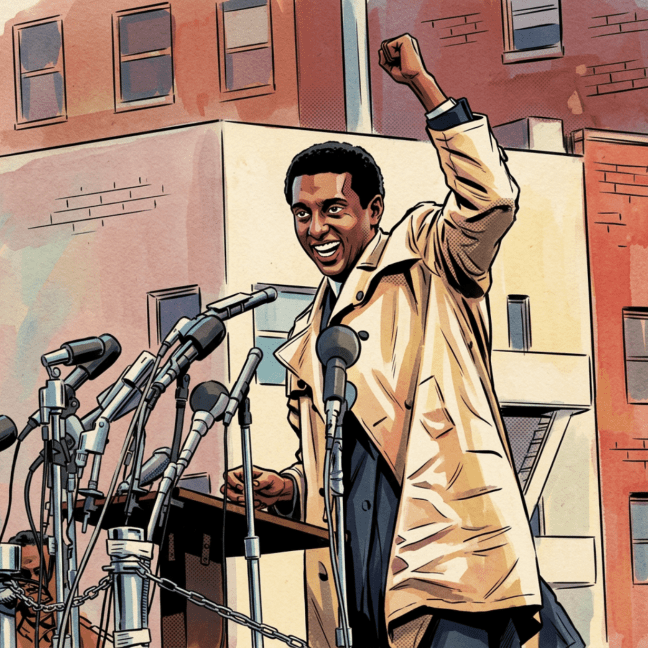
“Some groups in this country, talking all sorts of nonsense, will make you think that white supremacy is a sickness, is a ‘this,’ is a ‘that.’ White supremacy, as far as we’re concerned, just means we’re powerless. That’s all. White supremacy is not an attitude, it’s not a sickness, it’s a question of power. If a white man wants to lynch me, that’s his problem. If he has the power to lynch me, that’s my problem. But as long as I have the power to stop the white man from lynching me, him wanting to lynch me is his problem, and it can remain his problem forever. So the only reason the white man can lynch me is because I am powerless.”
Kwame Ture (previously known as Stokely Carmichael)
An Australian study by philosophy Professor Andrew Markus finds that 40% of migrants from non-English speaking backgrounds have been subject to racism. This is an increase of 19% from six years a go. The groups who reported highest level of abuse include: people from Malaysia (45%), India and Sri Lanka (42%), Singapore (41%), Indonesia (39%), and China and Hong Kong (39%). The national average for experiences of racism was 12%.
In honour of Nelson Mandela’s life, let’s take a critical look at the sociology of Mandela’s leadership. This is as an opportunity to better understand how Mandela’s social experiences inspired his search for social justice.
Davide Morsellia and Stefano Passini draw on social psychology and sociology in order to compare the social and political influences on three world leaders of civil rights movements in three different societies: Nelson Mandela in South Africa, Mahatma Gandhi in India and Martin Luther King Jr in America. The researchers argue that these three world leaders engaged in “prosocial moral disobedience.” That is, they actively went against authority despite the personal persecution that followed. They did so not simply due to personal qualities, but as a direct result of their socialisation. This post will show that Mandela’s moral development and personal attitudes were affected by his social context.
Bangladeshi Australian comic Aamer Rahman humorously shows the problem with the idea of “reverse racism.” Sociological research bysociologist Eduardo Bonilla-Silva and colleagues backs up the idea behind his comedy, by showing the paradoxical beliefs held by white people who think they have been the victims of reverse racism: first, that racism is no longer a problem; second, that minorities get special privileges that are unfair, and which disadvantage white people.
WARNING: Aboriginal and Torres Strait Islander readers are warned that the content on this page may contain images and references to deceased persons. (Why this warning?)
The Council of Australian Governments has conducted a national review of Indigenous socio-economic outcomes. Its recent report finds that while some measures are improving, there is still a large gap between Indigenous and non-Indigenous Australians. This post provides a snapshot of the findings with a focus on education and responses by the state. One of the solutions being offered to improve educational outcomes amongst Indigenous youth is to send them to boarding schools. I discuss this in relation to Australia’s colonial history and the Government’s paternalistic views on Indigenous welfare.
I review other approaches to Indigenous education, which focus on working to students’ strengths in order to improve outcomes. This means making curriculum more focused on applied skills, vocational training within remote communities, and ensuring knowledge is culturally relevant. At the same time, educational efforts must avoid “pigeon holing” Indigenous students and teachers. Instead, education needs to make leadership and career pathways more accessible, and ensure that Indigenous insights are being fed back into the education system.
Finally, my post explores how sociological teaching and activism needs to change in reflection of the history of Indigenous educational practices.