
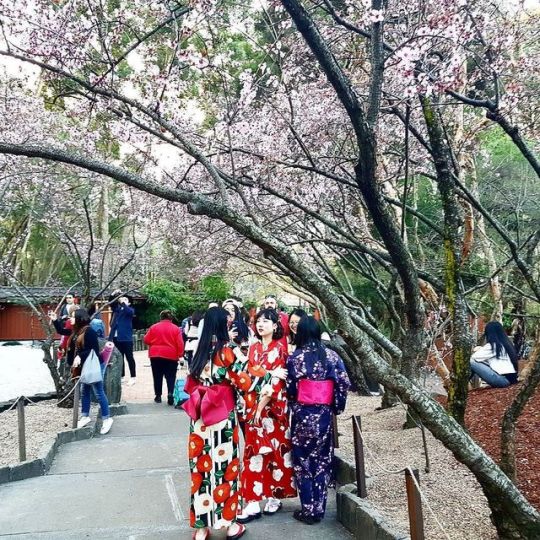
The Soran Odori-tai Dancers from the local Japanese community group, at the Haldon Street Festival.
Jenny Munro
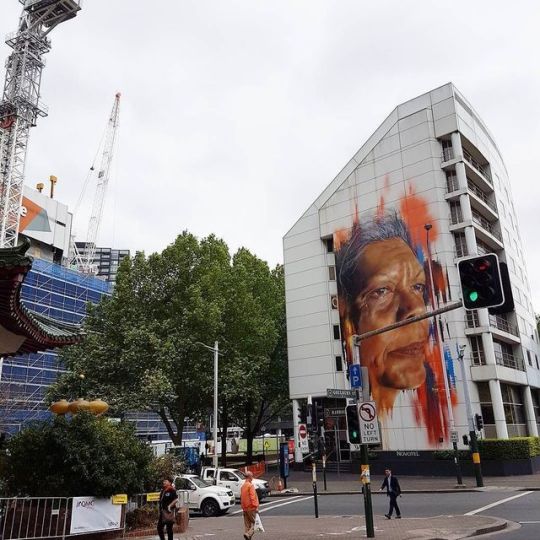
Jenny Munro, is a Wiradjuri Elder who established various health and community programs in the iconic inner city suburb of Redfern.
Continue reading Jenny MunroColonial Sugar

“Colonial Sugar,” Tracey Moffatt and Jasmine Togo-Brisby, exhibition at the City Gallery Wellington. From 1863 to 1904, the Queensland government in Australia enslaved at least 62,000 people from the Pacific to fuel production in its prosperous sugarcane plantations. Continue reading Colonial Sugar
Being Chinese in Aotearoa
Being Chinese in Aotearoa: A Photographic Journey. This is a stunning and informative history of migration. It documents difficulties and triumphs in the face of ongoing racism. Highly recommend visiting if you’re in New Zealand Aotearoa.
Continue reading Being Chinese in AotearoaJapanese Culture on Gadigal Country, Sydney
Above are the Sakura Kids Cheerleading, at the ‘Mini-Matsuri’ Japanese Festival in Chatswood, Cammeraygal Country.
Below, is the Cherry Blossom Festival in Auburn, Darug Country.
Love Is… Australian Wedding Fashion
The Love Is… Australian Wedding Fashion exhibition at the Powerhouse Museum was very interesting. I enjoyed it immensely, and would recommend it. Today’s post reflects on its representation of race and nationhood.
Continue reading Love Is… Australian Wedding FashionMervyn Bishop
Mervyn Bishop, a Murray man, was the first Aboriginal person to work at a major metro daily newspaper, joining the Sydney Morning Herald in 1962. In 1971 he was named Australian Press Photographer of the Year. He would go on to cover major events, including the anti-war protests of the 1960s, the Bicentennial in 1988, and Aboriginal community life in remote regions of Australia. Continue reading Mervyn Bishop
Sociology of Waiting in Line
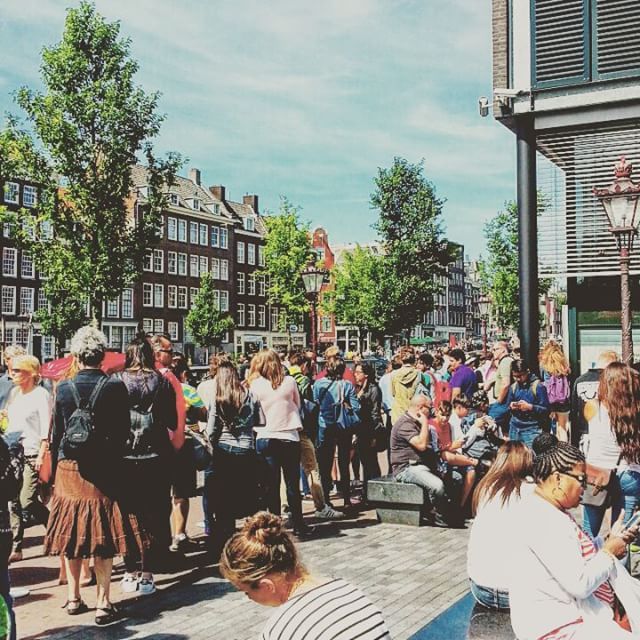
When I visited the Anne Frank House, I lined up for the better part of three hours. The experience was well worth it. The house, converted into a museum, is narrow and dense with people. There is rich information about Anne, her family, her religiosity, and of course there is much education about the Holocaust. Visitors can see the fragile pages of her original journals, video interviews with her father, friends and others who have been impacted by her bravery.
Mardi Gras Fair Day at Newtown, Sydney
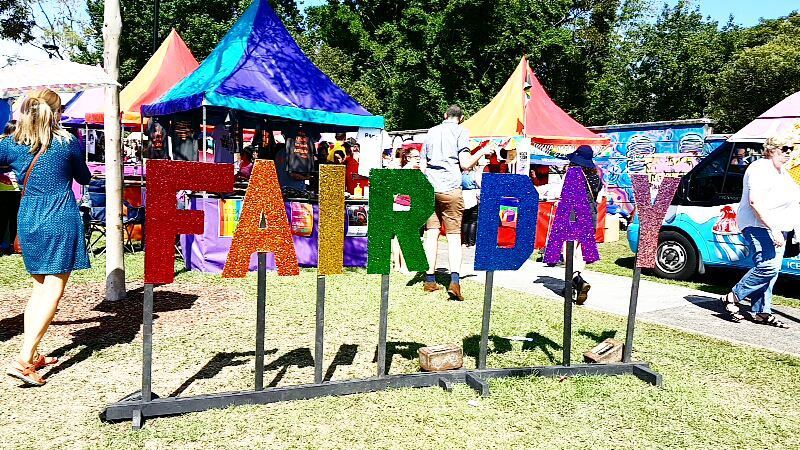
Over the weekend, in Newtown, the annual Mardi Gras Fair Day presents a family-friendly event, with hundreds of stalls, food, live music, Sports Village, DoggyWood, and many other gorgeous places to rest.
Continue reading Mardi Gras Fair Day at Newtown, SydneyWomen’s March Sydney

On the 21 of January 2017, I joined up to 10,000 Sydney-siders at the Women’s March, and 2.5 million people globally. I initially had reservations about the March. As I recounted last week, the march started as an idea by a woman activist in Hawaii and it was soon taken over by White women from Pantsuit Nation, a group that has no commitment to anti-racism. Bob Bland, a White woman from Washington, wanted to rectify the direction of the event and soon invited three women of colour to shape the Washington March: Tamika Mallory; Linda Sarsour; and Carmen Perez. The Women’s March Washington had a special focus on intersectionality; addressing how gender inequality is impacted by racism and other forms of discrimination such as homophobia, transphobia, ableism (the discrimination of people with disabilities), and more. The Washington March was the model for the other local and international marches. As more White women became involved in discussions at the national and international levels, this mission was drowned out. Women of colour were made to feel excluded from planning groups whenever the issue of intersectionality was raised.
So when the Sydney March was announced I first felt trepidation. As the final line up of speakers was announced, it became clearer that the Sydney organisers were making the event more consciously supportive of intersectionality. The organisers regularly focused their social media posts on inclusion, thereby reaffirming their commitment to diversity and inclusion. There were some limitations as I’ll discuss later. For example, transgender women seemed to lack representation amongst speakers at the event and best practice for the inclusion of women with disabilities may have been improved.
For me, the big draw card was Aboriginal activist, Jenny Munro, who has dedicated her life to advancing the human rights of Aboriginal people. Her activism and life’s work has a strong focus on Aboriginal sovereignty, children and housing. She leads the Redfern Tent Embassy and is a living legend. She did not disappoint; but I’ll get to that!
The day led to many useful discussions on diversity and how to disrupt patriarchy. I shared highlights of my day on Twitter and I bring these to you in this post as well as additional photos and video I wasn’t able to share on the day. The quotes are not strictly verbatim – treat them more as field notes to flesh out my visual sociology. I will also address the ongoing global conversations about the Women’s Marches and in particular, the critiques about the exclusion of women of colour, transgender women, sex workers and women with disabilities from various overseas events, with a focus on the USA. I’ll draw some qualified lessons on intersectionality from the USA to Australia and I wrap up with a discussion of why intersectionality is important.
This one minute video includes some of the footage I shot at the Sydney Women’s March and draws out the key lessons on intersectionality.
(Click to jump down to the video transcript.)

