Pandemic, race and moral panic

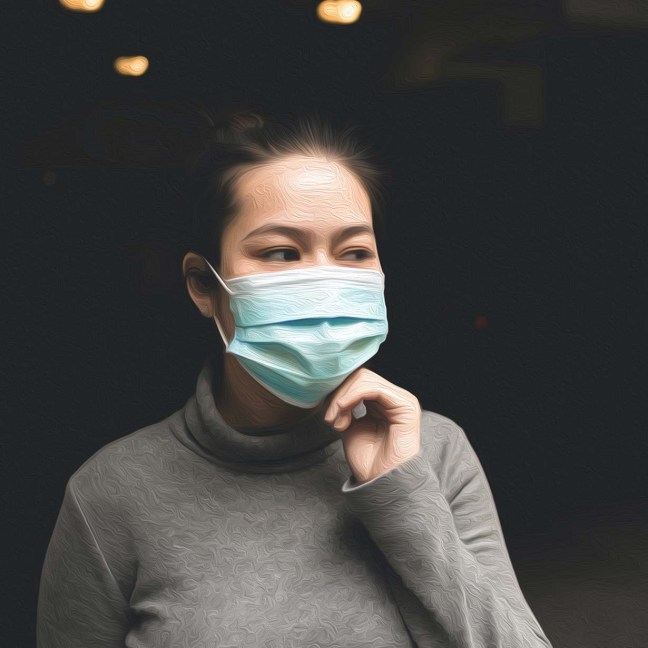
An Asian woman wears a surgical mask. She's touching her hand to the bottom of her chin as she looks off to the side

Since the Coronavirus COVID-19 pandemic reached Australia in January 2020, I’ve been working on a couple of COVID-19 research posts for you. I was ready to post one of these on Monday, but I have decided to first address a race and public health response that is presently unfolding.(1)

In the afternoon of 4 July 2020, Victorian Premier, Daniel Andrews, gave a press conference announcing that two more postcodes are being added to COVID-19 lockdown (making 12 in total) (McMillan & Mannix, 2020). The new postcodes under Stage-3 lockdown are 3031 Flemington and 3051 North Melbourne.

Additionally, the Victorian Government is effectively criminalising the poor: nine public housing towers are being put into complete lockdown. The Premier said: “There’s no reason to leave for five days, effective immediately.” This affects 1,345 public housing units, and approximately 3,000 residents.

Public housing lockdown is made under Public Order laws. Residents will be under police-enforced lockdown for a minimum of five days, and up to 14 days, to enable “everyone to be tested.”

How do we know this public housing order is about criminalising the poor, and driven by race? The discourse that the Premier used to legitimise this decision echoes historical moral panics and paternalistic policies that are harmful.

Let’s take a look at the moral panics over the pandemic in Australia, and how race and class are affecting the policing of “voluntary” testing.

I support continued social distancing, self-isolation for myself and others who can afford to work from home, quarantine for people who are infected so they can get the care they need without infecting others, and widespread testing for affected regions. These outcomes are best achieved through targeted public communication campaigns that address the misconceptions of the pandemic, the benefits of testing for different groups, making clear the support available for people who test positive, and addressing the structural barriers that limit people’s ability to comply with public health measures.

Continue reading Pandemic, race and moral panic

Land Rights and the Legacy of Mabo Day

I write this as a reflection at the end of Mabo Day, marking the end of Reconciliation Week. This day commemorates the 3 June 1992 High Court ruling that recognises Native Title – land rights of the Meriam people of the Mer Islands of the Torres Strait, which opened land rights for First Nations across Australia.

On 20 May 1982, Eddie Mabo, Sam and David Passi, Celuia Mapo Salee, and James Rice lodged their land claim. The case took a decade to finalise and addressed multiple legal injustices, including the myth of terra nullius (that Australian land was unowned before colonisation), recognition of Native Title and cultural definitions of land rights, and establishing the Native Title Act.

Today’s post covers the ongoing impact and challenges flowing from the Mabo case, and the sociological issues it raises. In paricular, non-Indigenous people’s narrow awarenes about the cultural significance of land.

Eddie Mabo on the left; a black and white photograph of him in a suit. On the right is a quote from Mabo: "Oh yes, everybody knows it's Mabo land and my sister is looking after it. And as long as I want that land, it will be there for me when I go back."
Oh yes, everybody knows it’s Mabo land and my sister is looking after it. And as long as I want that land, it will be there for me when I go back.
Continue reading Land Rights and the Legacy of Mabo Day

Police Violence in Australia

Oil painting style image of a group of protesters in front of New South Wales Court. Two of them stand on seats and wear the Aboriginal flag. The title reads, "Police violence in Australia"

It is still Reconciliation Week, and Australia is undergoing two major court cases where police have shot dead young Aboriginal people. Yet non-Indigenous people remain wilfully oblivious. We are collectively spending more energy in feeling morally superior to other countries, rather than acting towards national change. Specifically, Australian media lead with stories of “violent unrest,” “violent protests,” and “mayhem” in the USA, instead of focusing on police violence against Black victims and protesters, and providing insightful analysis on similarities to Aboriginal deaths in custody in the Australian context.

Australian social media and public commentary are preoccupied with either dismissing current events as unique to other societies (“only in America”), or posting aghast (rightfully) over police brutality overseas. We do this despite not engaging with long-running campaigns led by Aboriginal and Torres Strait Islander communities. It’s not that we should disengage from world events; #BlackLivesMatter is an important movement that resonates globally and deserves attention. The issue is the disproportionate focus on the USA by Australians. This maintains our perception that police brutality is an American quirk and allows non-Indigenous Australians to ignore local racial justice movements led by Aboriginal and Torres Strait Islander people.

This post will illustrate how non-Indigenous Australians other national racism, as if it is the abhorrent opposite of our national culture. This is easier than taking the steps we need to address police brutality and racial injustice right here and now.

Continue reading Police Violence in Australia

Reconciliation and the ongoing impact of colonialism

Oil painting style image showing protesters carrying the Aboriginal flag

I live on the land of the Gadigal people of the Eora Nation. ‘Eora’ means ‘here’ or ‘from this place.’ Twenty-nine clans belong to the Eora Nation (of what is now known as Sydney), each with their distinct culture, languages, songlines and practices. Sovereignty was never ceded. This land always was, is, and forever will be, Aboriginal land.

Yesterday was National Sorry Day and today marks the beginning of Reconciliation Week. The meanings and actions of these national events are different for Aboriginal and Torres Strait Islander people, and non-Indigenous people. Here are some reflections for those of us who are settlers, and what we can do to better listen and walk in solidarity with First Nations.

Continue reading Reconciliation and the ongoing impact of colonialism

Institutional Action on Sexual Harassment

Drawing of an Asian woman standing by the side of a glass building. Her face is obscured

Trigger warning: this post discusses tactics used by sexual harassers to evade justice and the impact on survivors.

Today is International Women’s Day. International Women’s Day is a day of protest that began with women’s workplace rights (United Nations Women Australia 2019). Today’s post covers the lack of accountability by institutions to uphold women’s safety at work.

Continue reading Institutional Action on Sexual Harassment

Intersectionality in academia and research

Bottom two-thirds is a drawing of indistinct figures seated on the ground in a large building, beside windows. Title of the resource is at the top: Intersectionality, equity, diversity, inclusion and access

I’ve just published my new resource, Intersectionality, Equity, Diversity, Inclusion, and Access. There are five individual chapters which are intended to work together. The information is a comprehensive, though not exhaustive, introduction into the barriers and solutions to discrimination in academia and research organisations. The issues are restricted to career trajectory from postgraduate years to senior faculty for educators and researchers.

Each section includes a discussion of the theoretical and empirical literature, with practical, evidence-based solutions listed in text boxes, capturing my long-standing career in equity and diversity program management, education and research.

This resource is split into five pages, for the purposes of improving reading experience; however, all five sections are intended to paint a holistic picture for social change. (If you prefer, read this resource as one PDF). 

Continue reading Intersectionality in academia and research

Gender, Race and Ableism in ‘Joker’

Arthur is in full Joker make-up. His face is painted white with crass red lips overdrawn over half his face. He has large red eyebrows painted high on his forehead. His eyes are framed by two blue triangles. He smiles and raises his eyebrown as he exhales

Let’s talk about representations of gender, race and ableism in Joker and how to situate a critical reading in the local Australian context. I saw the film last night in Newtown, Sydney, where the mostly White audience erupted in rapturous clapping. We’ll explore this reaction.

Spoilers ahead. (N.B.: Read this as a gif-free version in PDF)

Arthur is shirtless, with his back to the audience. He is watching Thomas Wayne, a White man in a suit, speaking on television‘Joker’ presents a racialised and gendered view of class. Thomas Wayne (Gotham’s White male, super rich aspiring Mayor, played by Brett Cullen) is the antagonist. Wayne refers to protesters with contempt (jokers) and he punches Arthur (before his reincarnation as The Joker, played by Joaquin Phoenix) while he’s emotionally vulnerable. Whiteness prevails in this exchange, because the conflict between the two men is not really about class, as the film attempts to position. Their tension is about masculine power.
Continue reading Gender, Race and Ableism in ‘Joker’

Whitewashing Race Studies

In the lower half is a white background, with the spines of two white books on the right handside. At the top is the title: whitewashing race studies

How does a White male student with no expertise in critical race studies, with little sociological training, publish a peer reviewed article in one of the most prestigious journals in our field? How is this possible when the paper misrepresents the Black Lives Matter movement and intersectionality theory? How does this paper make it through peer review to publication in less than six months? ‘Black Lives Matter at Five: Limits and Possibilities,’ by Adam Szetela, was submitted to Ethnic and Racial Studies on 24 January 2019, accepted for publication on 21 June 2019 and published online on 18 July. The expediency of the peer review process, given the content of the article, warrants strong evaluation.

I express my gratitude to Dr Shantel Gabrieal Buggs, who brought this to public attention, and who led a robust discussion on Twitter with sociologists and scholars from other fields. I’m using this and other examples as a case study of whiteness in academic publishing.

Continue reading Whitewashing Race Studies

Racial and Gender Justice for Aboriginal Women in Prison

A room full of majority women watch a mix of Aboriginal and non-Indigenous women panellists at the Sydney Law School

On Thursday 23 May 2019, I attended at the Sydney University Law School Beyond Punishment Seminar Series: Aboriginal Women in the Criminal Justice Network. The speakers discussed data on Aboriginal and Torres Strait Islander women in prison, and programs to support them in the state of New South Wales (NSW). ‘Aboriginal’ women in the context of the talks and the discussion below also encompasses Torres Strait Islander women.*

Before I tell you more about the talks, I’ll set the scene, looking solely at the adult prison context affecting Aboriginal women being targeted by the criminal justice system.

Over-incarceration is an issue best examined through a lens of intersectionality, a term originally exploring the limitations of dominant definitions of discrimination under industrial law (Crenshaw 1989: 150). Legal outcomes of Aboriginal women are simultaneously impacted by race, gender, class and other systemic inequalities. Lack of legal resources available to Aboriginal women to navigate the legal system is born of concurrent racial justice and gender inequalities. Economic disadvantage, poor access to therapeutic and other health services, and housing insecurity are preconditions of offending; these are class and racial justice issues. Sexual violence and poverty of Aboriginal mothers are typical of imprisoned women’s backgrounds at a rate that is much higher than male prisoners (Stathopoulos and Quadara 2014). Again, these are both racial and gendered issues, which are interconnected with colonial violence and intergenerational trauma.

I am writing on 26 May; National Sorry Day. This day commemorates the truth-telling of the Bringing Them Home report, the documentation of the Stolen Generations. Around 100,000 Aboriginal and Torres Strait Islander children were forcibly taken from their families under our racist social policy. The first institution built to ‘civilise’ Aboriginal children through the use of violence was in Parramatta, New South Wales (Marlow 2016). From 1910 to 1970, across the nation, Aboriginal children were forced to forget their culture, language and spirituality. They were placed into neglect by Christian-run missions and into White foster care (AHRC 1997). Today, the state continues to forcibly remove Aboriginal children from their families at four times the rate as non-Indigenous kids (Zevallos 2017). New forced adoption laws in New South Wales mean children placed in care will be forcibly adopted (Zevallos 2019). For Aboriginal women in prison, this will almost certainly mean losing legal rights to see their children. Fracturing families through the imprisonment of mothers is another way in which colonial violence continues in the present-day.

Forced removal of Aboriginal children leads to cultural disconnection, exposure to child abuse, an increased likelihood of entering the criminal justice system, and trauma for mothers. These are gender, race and class dynamics unique to Aboriginal women, their families and communities. Continue reading Racial and Gender Justice for Aboriginal Women in Prison

Understanding Racism in Social Context

Race is a social construction. This means that biological or phenotypic traits are classified in ways that reinforce inequalities benefiting majority groups. Hence “race” is understood differently across nations, depending on history and culture. White people have a tendency to see racism in subjective and relativist views: White Canadians think that racism is less of an issue in their country than in the USA; White people in Aotearoa New Zealand think racism in Australia is far worse than in their own backyard; and Australians think racism in Australia has “gotten better,” and that we are better off than the USA. These comparisons are one way in which White supremacy is maintained locally. Individual observations about so-called “worse” racism in other countries only serves to maintain racial injustice. Let’s now see how this plays out in everyday discussions of racism.

Continue reading Understanding Racism in Social Context