Hollywood Racism: The Magical Negro Trope

By Zuleyka Zevallos

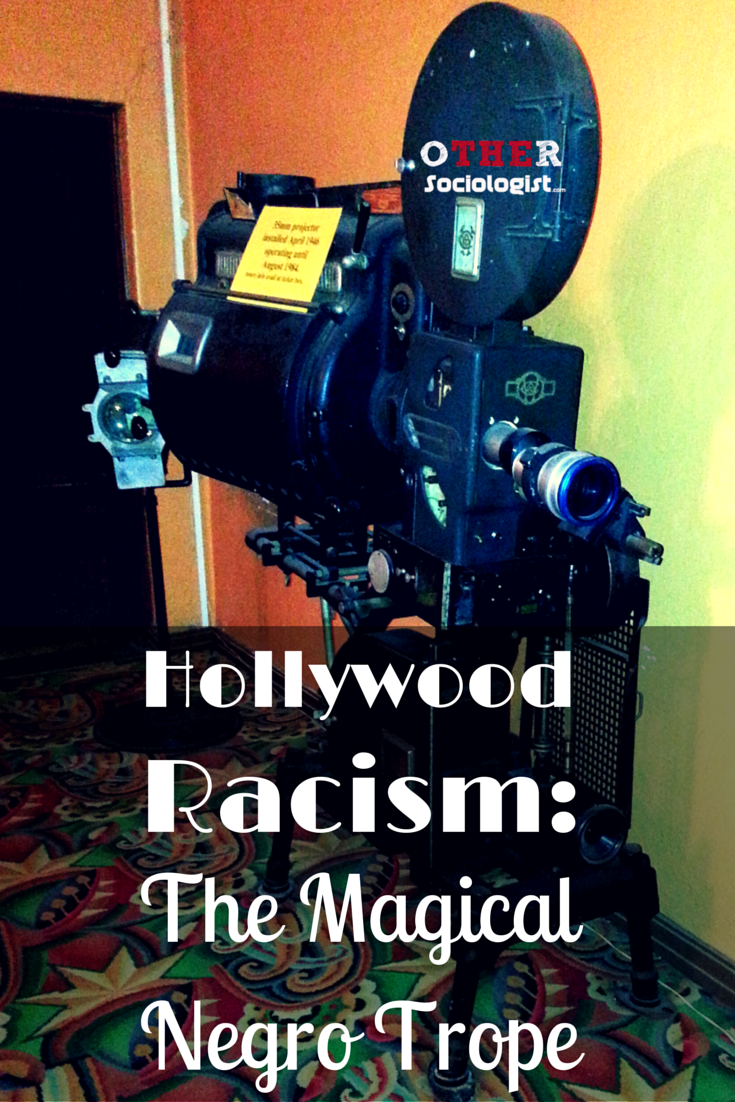
Adam Serwer reports in Mother Jones that George Lucas’ latest film, Red Tails had trouble getting made, partly because the “studios weren’t willing to finance a film without a white protagonist as an anchor”.  Lucas’ claim can be put into wider historical context by examining the entrenched racist practices of big Hollywood studios. In particular, the idea of the “magical negro trope” puts things into perspective. This term refers to the way valiant Black characters in movies exist only as a narrative device to teach the white protagonist how to be a better person. This post explores variations of the “magical negro” and the gendered dimensions of these characters.

Hollywood Racism: The Magical Negro Trope

Continue reading Hollywood Racism: The Magical Negro Trope

Anime and the Social Construction of Race

Jubei from Ninja Scroll

A common misconception about anime cartoons amongst uninitiated audiences in majority-English-speaking countries is that anime characters are drawn to look ‘white’ rather than ‘Asian’. These terms are not factual nor are they fixed categories – they are social constructions. That is, the meaning attached to race, whether ‘white’, ‘Black’, ‘Asian’ and so on, and the groups classified under these labels, change from one society to another, depending upon culture, time and place.

Continue reading Anime and the Social Construction of Race

Beauty, Biology and Discrimination

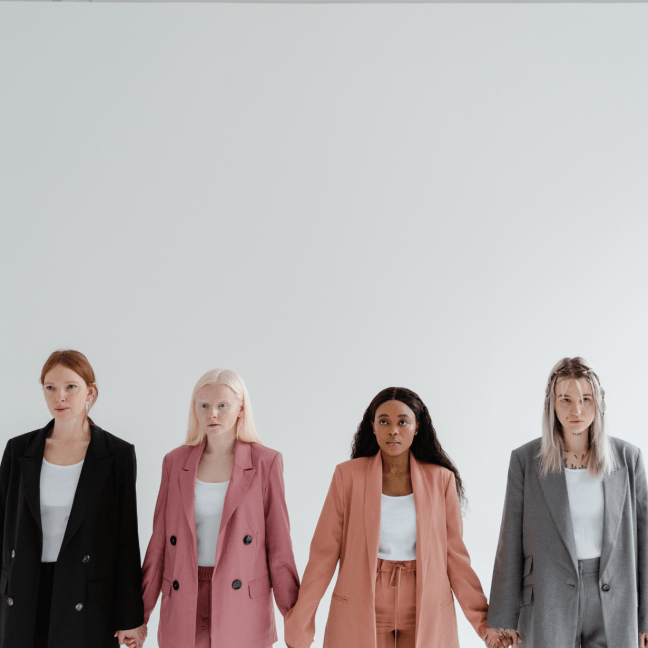
Four young women wear suits and hold hands, one of them is very fair, one woman is Black, and the other two are white women, one of them covered in neck and chest tattoos

Several recent articles recreate the idea that beauty aesthetics are based on biological imperatives. The premise of this argument is false – beauty, sex, gender, and the social consequences of their related biological processes are not pre-determined. This line of thinking lumps the complexity of human experience and sexual expression into a uniform category and it provides the false impression that nothing can be done to change human behaviour. Sociology can help unpack how and why so-called “common sense” ideas about beauty become established as commonplace knowledge. Contrary to what mainstream culture may have us believe, beauty ideals can be challenged and transformed. Beauty-based discrimination is not natural, and nor is it unavoidable.

Continue reading Beauty, Biology and Discrimination

Erotic Capital and the Sociology of Beauty

A young Black woman does the make up for another Black woman who looks unsure, while two while women sput on make up on either side of them

Catherine Hakim’s latest book, “Honey Money: The Power of Erotic Capital” argues that women should use their sex appeal to get ahead in life. The book continues to generate press in the UKUSA and in Australian, such as in The Australian and The Sydney Morning Herald.  The latter alludes to the fact that Hakim’s work distorts French sociologist Pierre Bourdieu’s notion of cultural capital. Hakim’s theory replicates taken-for-granted ideas about sex and gender. Sociology is useful only when it takes apart everyday ideas to help people better understand the social origins, and cultural consequences, of behaviour; in this case, sexuality, desire, and what is considered ‘attractive’.

Continue reading Erotic Capital and the Sociology of Beauty

Impact of the September 11 Attacks on Australian-Muslims

Image credit: Sailor Coruscant 2010 Im not even sure Flickr

This is the second post in a three-part series reviewing the media and research released in commemoration of the 10-year September 11 Anniversary. Without doubt, the ongoing trauma and health issues faced by the survivors of the September 11 attacks have high ongoing social costs for American society. This article focuses on the impact that the September 11 attacks had on the lives of Australian-Muslims. I was inspired by a SBS Radio vox pop with Muslim and Sikh Australians, which I will go on to analyse.[i] The people interviewed talked about how they managed the increased racism and stigma they have faced since 2001. Ten years after the attacks, studies show that a high proportion of Australians perceive Muslims as ‘outsiders’ who do not fit in with Australian society.[ii] My analysis shows that living with racism requires a lot of ‘emotion work’, particularly because Muslims mostly deal with racist encounters on a one-on-one basis.

Continue reading Impact of the September 11 Attacks on Australian-Muslims