Stop Forced Adoptions

Protesters gather out the front of the Parliament of New South Wales. A lage Aboriginal flag hangs over the gates. An Aboriginal man is signing translation in Auslan. There are camera crews and photographers.

Today marks the 11th anniversary of former Prime Minister Kevin Rudd’s Apology to the Stolen Generations. From 1910 to 1970, up to one third of all Aboriginal and Torres Strait Islander children (100,000 children) were forcibly removed from their families and sent away from their communities. They were classified according to their skin colour and put into Christian missionaries where they suffered abuse and neglect, or they were placed with White foster families who did not understand their needs. These children were forced to forget their language, culture and spirituality, and in many cases they were not told of their Indigenous heritage.

The Bringing Them Home report of 1997 gathered evidence of the impact this cultural genocide had on Indigenous Australians, showing that it led to intergenerational trauma, poor health, and socio-economic issues. The report made 54 important recommendations to end the cycle of violence against Indigenous Australians.

Twenty years later, Indigenous children are being removed from their families up to four times the rate.

Join the Grandmothers Against Removals, protesting forced adoptions law in NSW. Their ethos is that: ‘The best care for kids is community.’ Below are my live-tweeted comments, beginning at the Archibald Fountain in Sydney.

Continue reading Stop Forced Adoptions

Whiteness, Racism, and Power

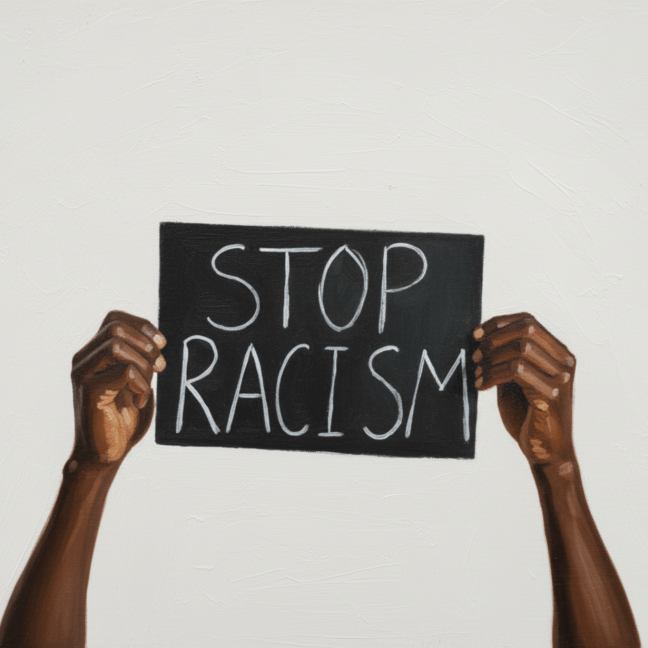
Two hands hold up a sign that says: STOP RACISM

Here’s a typical example of how white people exercise and maintain racism. TV personality, Kerri-Anne Kennerly, flies into a rage about Saturday’s Invasion Day protests, led by Aboriginal people, seeking to change the date of Australia Day and establish systemic reform that includes a Voice to Parliament and Makarrata (treaty). Kennerly taps the table angrily, ‘Has anyone of them been out to the Outback where children, babies, 5 year olds are being raped. Their mothers are being raped. Their sisters are being raped. They get no education. What have you done? Zippo.’

Continue reading Whiteness, Racism, and Power

Sociology of Indian-Australians and the Diwali Festival

I’ve been away for work for awhile now, and hope to bring you more on this soon. For now, I thought I’d share with you a post I had planned to  publish weeks ago, but haven’t been able to finish until now. Let’s talk about the sociology of Indian people in Australia, with a case study of the Hindu festival of Diwali in Melbourne.

Indian migration to Australia has a long history, dating back to the 19th Century,  with early records showing the British brought Indian servants (noting this may have included forced servitude). At the time of colonial Australia’s first Census, there were 1,800 Indian people in Australia. Today, Indian-Australians represent our fourth largest migrant group and they are also the biggest growing migrant group next to China, with their population doubling in the past decade, according to the Australian Bureau of Statistics.

In the most recent Census of 2016, over 455,000 Australians were born in India, corresponding to 1.9% of our population, though this does not include the second-generation (their children born in Australia).  Together with Nepalese-Australians, Indian people make up 76% of the Hindu population in Australia (noting that Hindu people make up only 1.9% of our national population).

Indian families gather at Diwali: Indian Festival of Light Oct 2014. Federation Square, Melbourne, Australia
Diwali: Indian Festival of Light, Federation Square

Continue reading Sociology of Indian-Australians and the Diwali Festival

Interview: Queer People of Colour, Racism and Dating

A Black man hugs a White man from the back with another man hugging them from the side

I was interviewed on Triple J ‘s ‘The Hook Up‘ program (listen from 1:12:49) about sexual racism in queer communities.

Nat Tencic: We’re talking about racism and the experiences of queer people of colour in dating. And to answer some of those more big picture questions, like why are we seeing this internal minority struggle, we’re joined right now by sociologist, Dr Zuleyka Zevallos. She specialises in issues of gender and sexuality, culture, discrimination and diversity. Dr Zevallos, welcome and thank you for joining us.

Zuleyka: Hi. Thanks for having me.

Nat: I think that first big picture question is something that really interests me: why do we see this happening in the queer community? Why when you’re already discriminated against do you see that next level of discrimination come through so loudly?

Zuleyka: I think for some people it seems counterintuitive because, obviously, queer communitites are facing discrimination along sexual lines. But at the same time, all of us live in the same society that is dominated by whiteness. We have a long history of discrimation against Indigenous communities and against migrant people, especially migrant people of colour. When we look at it in a social context, LGBTQIA communities are surrounded by the same social influences when it comes to race, [same] as straight people.

Continue reading Interview: Queer People of Colour, Racism and Dating

Racist Scaremongering as Social and Political Control

On the 8 August 2018, only four days after I published my last post on the social construction of migrant youth deviance in public spaces (Zevallos 2018a), there was an incident whipping up racist fear of ‘Sudanese gangs’ in the area where I went to school as a youngster. I had flown home for a workshop and then visited my family. They told me how the local gossip grapevine and local media were misreporting the event. Initial word-of-mouth said that between 200 to 300 Sudanese youth gathered at Watergardens Shopping Centre and were starting trouble, throwing rocks at police. While Nine News (2018) reported 20 to 30 kids vandalised property, ABC News (2018) reported up to 50 young people had come for a fight ‘over girlfriends.’ Riot police confronted the youth, and blocked the area. The next day, my family saw police on horses patrolling the Coles supermarket carpark (!).

All of this to stop Black children from gathering together in a public place.

In a week where we saw Nazi language used in the Australian Parliament, let’s delve into the use of scaremongering as a social control mechanism that reinforces political strategy.

https://twitter.com/OtherSociology/status/1031027911514513408

Continue reading Racist Scaremongering as Social and Political Control

The Social Construction of Migrant Youth Deviance in Public Spaces

Silhouette of figures wearing baseball caps with the sunset in the background

This cartoon below by Charles Barsotti is a good illustration of the social construction of group deviance in public spaces. This cartoon points out how some social groupings can be given negative labels, such as a “cult.” The beliefs or the practices of particular socio-economic groups can are treated with suspicion by a dominant group where they do not conform to society’s norms, values, behaviour or appearance. Non-conformity can lead to the creation of stereotypes; that is, labels that simplify specific qualities of some people as typical of the group they belong to (hence the cartoon, where one wolf says to another, “We’re a pack, not a cult.”).

In most circumstances crowds that “blend in” and meet society’s standards of “acceptability” escape the stigma of social deviance. Cases where “ordinary” groups might be negatively labelled by authorities might occur during times of civil unrest, such as during political protests, or due to other political cycles, such as the lead up to an election.

Racial minority youth are often labelled as deviant simply for being in public. In the case of Aboriginal youth, even something as routine as being in a shopping centre is mired by harassment by security (Perry 2018: Powell 2018). In another example, Muslim girls have been forced to leave a school excursion at a public exhibition centre because other visitors felt “uncomfortable” (Foster 2017).

https://twitter.com/OtherSociology/status/870554192343060480

Let’s take a look at this problem of stereotyping racial minority youth in public spaces, focusing specifically today on migrant minorities. We’ll examine how labelling these youth as “deviant” keeps society from paying attention to pressing social problems, such as structural inequality and interpersonal gender violence.

Continue reading The Social Construction of Migrant Youth Deviance in Public Spaces

Interview: How to Deal with Microaggressions

Image of a Brown woman in the background with white paint smeared over her eye area

I was interviewed by SBS News on microaggressions. Below is an excerpt featuring my comments.

“When people point out the impact of microaggression they also hear ‘I didn’t mean it like that’ or ‘can’t you take a joke?’” says Dr Zuleyka Zevallos, an applied sociologist who has studied microaggressions in Australia. She says confrontation isn’t the best way out of these situations.

“There’s a lot of psychological stress when you’ve been injured by their comments and then they tell you what you experience is invalid.”

The best way is get the other person to be reflective. “Questions stop the other person because they have to think, rather than be defensive.”

“And you shouldn’t expect a minority to always speak for themselves, it’s on all of us to tackle together.”

Another effective way is to express disappointment if it was done by someone you know well.

“We know from research most people hold a positive view of themselves,” says Dr Zuleyka [sic].

“When you say “I always thought you were a reasonable person” or “I can’t believe I’m hearing this for you” it turns the mirror around.”

Read more on SBS News.

Learn more on racial microaggressions on my blog.