Artificial Intelligence at Work

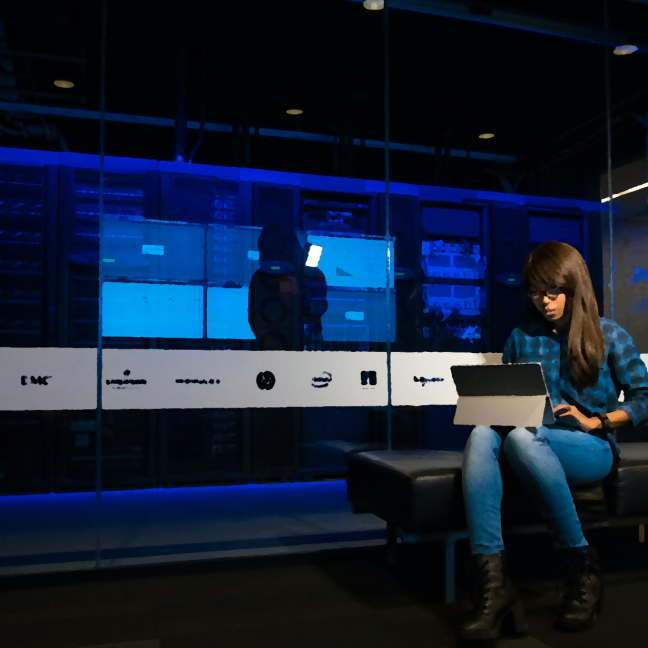
A woman of colour sits in a darkened computer lab, working on her laptop

Despite dire predictions, researchers forecast that few industries will lose a substantial number of jobs due to artificial intelligence (AI). Instead, AI is more likely to alter the way humans work. The AI industry may also create new roles, but this may amplify inequality. In this third post in my Sociology of AI series, I explore the perceived impact of AI on jobs, and the stratification that may follow increased automation of the labour market. I analyse evolving policy directions, including a new report by Jobs and Skills Australia, on AI-related job losses. I then review sociological understandings of AI and work, and recent examples of job redundancies. I analyse a much-publicised study by Microsoft, which claims AI can replace 40 professions, including translators, historians, artists, and customer service workers. This case study shows that AI companies distort evidence to overstate the functions, utility, and accuracy of AI technology. I argue that AI discourse hinges on eliminating competition from human professionals. Sociology uncovers the ways in which scientific models and customer data are used to make unethical and spurious claims.

Continue reading Artificial Intelligence at Work

Artificial Intelligence and the Economy

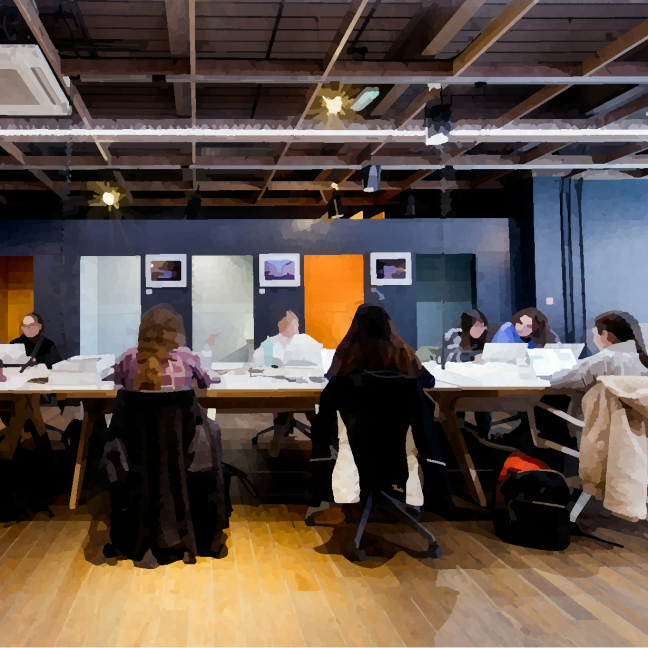
Drawing of a group of women working on laptops in an open plan office

In this second post in my Sociology of AI series, I show that AI companies position automation as being superior to human labour. I review the Australian Government’s recent announcement that is considering changing the law to allow AI to mine copyrighted works. I will show that the economic model used to justify this decision lacks robust testing. I analyse the ways in which AI discourse is ‘manufacturing consent’ to control the labour market. I argue that AI discourse establishes economic power by marketing technological supremacy, using science selectively, eliminating competition, and suppressing issues that undermine AI domination.

Continue reading Artificial Intelligence and the Economy

Sociology of Artificial Intelligence

White 3D model of a person's head

This is the first in a series of posts exploring the sociology of artificial intelligence (AI). I cover definitions of AI, before exploring sociological issues of public awareness, ethics, and regulation. I discuss how AI models replicate race, class, and social inequality. I show why First Peoples’ leadership must be central to the development AI policies. I discuss how sociology can address structural change and ethical use of AI. The rest of this series will examine how AI may transform work, and how AI companies are using customer data to grow their market dominance and policy influence.

Continue reading Sociology of Artificial Intelligence

Applied Sociology and Cyber Security

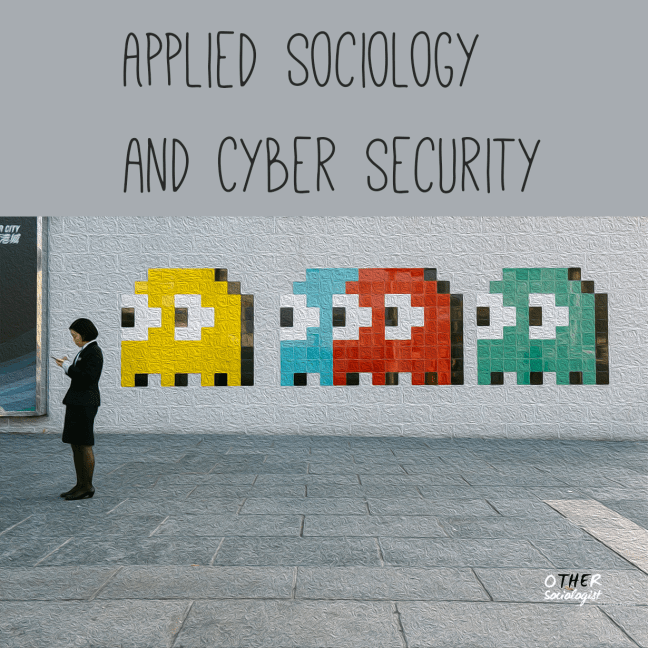
A woman is reading her phone in front of space invaders street art on a wall. Title reads "Applied sociology and cyber security"

I led a project where our team created an online cyber security training game. We used behavioural science to develop the game. I hired an intern who did a wonderful job building the prototype. Our team then contracted a great agency to work with us to enhance the game. Having an applied sociologist at the helm meant that accessibility and game design was developed with inclusion from inception.

Continue reading Applied Sociology and Cyber Security

Women in Tech

Flags from around the world hang high above an alleyway

Earlier this year, I spoke at Readify as part of their International Women’s Day events held around the country.  This is what I said.

I would like to acknowledge and pay respect to the traditional custodians of the land on which we meet; the Gadigal people of the Eora Nation. It is upon their ancestral lands on which we meet. I pay my respects to any elders, past, present and emerging. As we celebrate the courage and resilience of women and gender minorities on this International Women’s Day, may we also pay respect to the traditional gender balance, leadership and innovation of Aboriginal people, embedded forever within their Custodianship of Country.

Today I’m going to start of by setting the scene with a quick snapshot of women in the tech sector, which I’m sure you’re all well aware of. I’m going to focus a little more on the solutions that come from the empirical evidence about what works in lifting up women in the workplace. I won’t talk too long, so we can have a bit more a discussion about what initiatives have worked well here or in other places where you’ve worked, or if there’s anything else you want to dive into. Continue reading Women in Tech

Tech Inclusion

On 13 February 2018, I participated in the Tech Inclusion Melbourne conference. Bill Nicholson, Wurundjeri elder gave the Welcome to Country (below). He talked about using treaty to build economic capacity and sovereignty amongst Aboriginal and Torres Strait Islander people.

My overview of the conference starts with the panel discussion that I took part in. I then reflect on the other presentations. (Note: click on images for further detail)

Continue reading Tech Inclusion

Sexism on Wikipedia: Why the #YesAllWomen Edits Matter

#YesAllWomen
#YesAllWomen

The Wikipedia page for #YesAllWomen, a record of an anti-sexism online protest movement, is being edited to make it “less misandrist.” This Wiki page documents the Twitter hashtag that is being used internationally by women to share their experiences of sexual harassment, abuse and discrimination following the Isla Vista mass shooting in America. Some men are using this tag to listen and support women, but predictably, others are abusing it to hurt women and argue that the hashtag is “sexist against men.” The Wiki edits matter because Wikipedia has a massive problem with sexism. These edits reflect the very issues of gender violence, intimidation and power that the #YesAllWomen hashtag is trying to address. Continue reading Sexism on Wikipedia: Why the #YesAllWomen Edits Matter

Google’s Glass Ceiling: A Case Study of Why Organisations Lose Innovative Women

Google's Glass CeilingBy Zuleyka Zevallos

Last month, The New York Times gave a disheartening insight into Google’s Executive hiring practices. Google is predominantly staffed with young men,* and they have trouble hiring and retaining women. Google turned to its “famous algorithms” to work out why this was the case, developing spreadsheets to help address the matter. In Google Executive land, it seems, engineers and computer scientists are characterised as “guys” who are proactive in advancing their careers, while women are seen as failed “business” people who don’t ask for promotions. Google has taken some measures to address their hiring practices, but its Executives seem to accept that their gender imbalance (30% women to 70% men) is unlikely to change much. While I focus on Google as a case study, my analysis deconstructs the flaws in the gender logic that large companies have about workplace inequality. Studies find that it is not the fact that women do not ask for promotions that impede their career progression; nor is it simply the decision to exit the workplace to have children. Instead, empirical data show that when employers are faced with equally qualified and experienced candidates who put in the same amount of work and who have the same outcomes, they are more likely to hire, promote and remunerate men over women. I argue that there is a resistance in workplaces to understand how their organisational practices are structured in ways that impede women from thriving professionally.

Gender imbalance and inequality are not inevitable. These are the outcome of daily interactions, organisational practices, policies, and unexamined norms and values. Sociology can help workplaces address gender inequalities by taking an organisational approach to gender. Such a framework makes gender biases visible and involves everyone in addressing inequality – not just women, but people of all genders, as well as the Executives who hold ultimate power in organisational change. Continue reading Google’s Glass Ceiling: A Case Study of Why Organisations Lose Innovative Women

The Wrap Up: Media Coverage of the 10th Anniversary of the September 11 Attacks

Image Credit: 9/11Memorial.org

This is the third and final post in a series covering the lead up to the 10th anniversary of the September 11 attacks. This one focuses on news coverage; technology and social media issues; and media discourses about the so-called ‘Decade 9/11’ and ‘Gen 9/11’.

Continue reading The Wrap Up: Media Coverage of the 10th Anniversary of the September 11 Attacks