I attended Dialogue of the Titans with Prof Megan Davis and Former High Court Justice Michael Kirby.
Continue reading Dialogue of the TitansDialogue of the Titans

I attended Dialogue of the Titans with Prof Megan Davis and Former High Court Justice Michael Kirby.
Continue reading Dialogue of the Titans
My Weekends With A Sociologist series is going to start coming to you more frequently and completely out of sequence. I will share with you my visual sociology adventures from different places, at different points in time, showing you what has captivated my sociological imagination most recently, through to what has lingered with me over time. The purpose of this series is to showcase what it is to see the world through a sociological lens. (For visually impaired readers, descriptions in the alt.) So let’s get started!
What better way to restart our journey, than with the enduring legacy of a strong Aboriginal woman, Barangaroo.
Beginning in the first week of January, Sydney annually hosts the Sydney Festival, with various sites around town housing performances, public art and sculptures, including many interactive installations. The best this year was the artwork, Four Thousand Fish, curated by Emily McDaniel, artist from the Kalari Clan of the Wiradjuri nation in Central New South Wales. The artwork blends sea song, visual story telling, sound, lighting, sculptures, landscape photography, music and of course, a beautiful nawi (bark canoe).
Held at the Cutaway in Barangaroo, every weekend this past January, the site was transformed into a public art sculpture that was set ablaze nightly at dusk. I attended an event hosted by the beloved street photographer, Legojacker (formerly from Melbourne, they had moved to Canberra in recent months).
Barangarro is named after the mighty Cammeraygal woman of the Eora nation, who defied colonialism in Gadigal, her homeland (also known as Sydney).

On 13 February 2018, I participated in the Tech Inclusion Melbourne conference. Bill Nicholson, Wurundjeri elder gave the Welcome to Country (below). He talked about using treaty to build economic capacity and sovereignty amongst Aboriginal and Torres Strait Islander people.


My overview of the conference starts with the panel discussion that I took part in. I then reflect on the other presentations. (Note: click on images for further detail)

The 26 January is a public holiday nationally known as Australia Day, however, for decades, Aboriginal and Torres Strait Islander people have protested against this day, as it commemorates genocide and dispossession. Last year’s Invasion Day rallies were attended by over 61,000 people around Australia. This year’s rally had around 80,000 people marching across all capital cities, including 60,000 people in Naarm (Melbourne) and between 15,000 to 20,000 people in Gadigal (Sydney).

This year marks 230 years since the British invaded Australia, leading to the decimation of Aboriginal and Torres Strait Islander people, with inequities continuing to this day. It is also the 80 year anniversary of the Day of Mourning protests, organised by the Australian Aboriginal Progressive League.
Today’s post reflects on the protests on the lands of the Gadigal people of the Eora Nation (Gadigal is the city now known as Sydney). I then provide a visual sociology of the culmination of the protest march, which ended at the Yabun Festival.
https://twitter.com/OtherSociology/status/956670694586073089
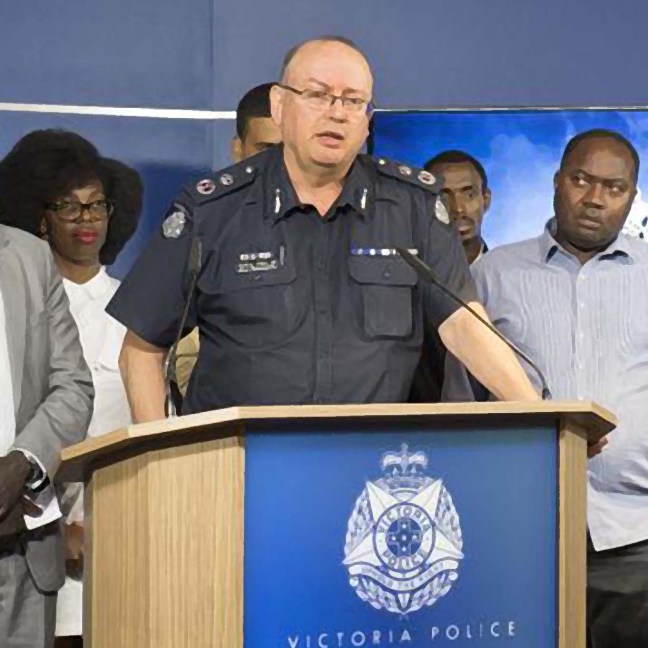
A news story about the newly established African-Australian community taskforce contributes to scaremongering. There’s increased policing of South Sudanese-Australian groups not because there’s a specific problem – data show that the majority of youth crime is committed by White youth.
Many South Sudanese Australians are positioned as a “threat,” meaning their achievements, knowledge and hard work is subsumed by political rhetoric and media hyperbole.
The motivation to criminalise African-Australians coincides with the election year.
There are many videos, accounts and police reports of people from various African backgrounds being attacked by White people for simply being Black, emboldened by politicians and the moral panic. Where’s the white crime taskforce? Continue reading Racist Moral Panic
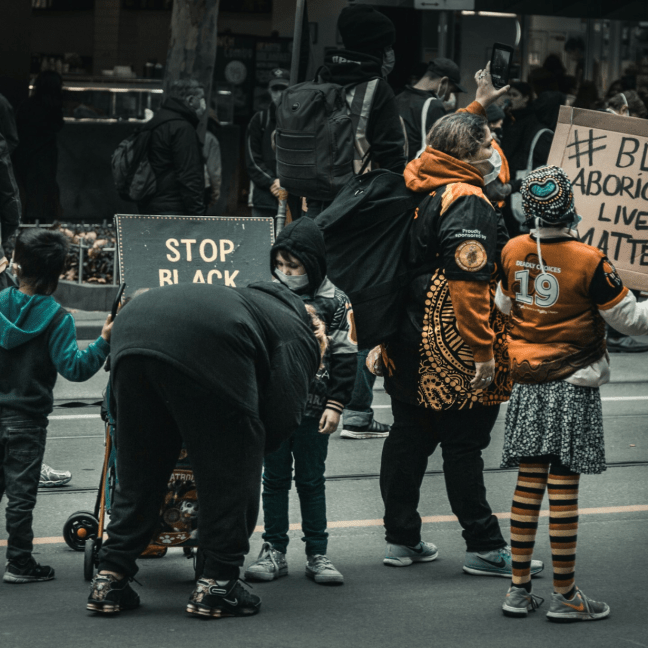
In July 2017, a young family tried to get a taxi after they marched for NAIDOC Week, a week of events recognising the cultures, languages and achievements of Aboriginal and Torres Strait Islander people, in Naarm (Melbourne). Five cab drivers refused to take them, making up the same excuse that they had just dropped someone off, or that they were waiting for another passenger, only to drive off alone. It is illegal to refuse a fare. The two drivers in the video shared below are non-Indigenous people of colour.
Continue reading Anti-Indigenous Racism by Other People of Colour
“Colonial Sugar,” Tracey Moffatt and Jasmine Togo-Brisby, exhibition at the City Gallery Wellington. From 1863 to 1904, the Queensland government in Australia enslaved at least 62,000 people from the Pacific to fuel production in its prosperous sugarcane plantations. Continue reading Colonial Sugar
The Love Is… Australian Wedding Fashion exhibition at the Powerhouse Museum was very interesting. I enjoyed it immensely, and would recommend it. Today’s post reflects on its representation of race and nationhood.
Continue reading Love Is… Australian Wedding FashionMervyn Bishop, a Murray man, was the first Aboriginal person to work at a major metro daily newspaper, joining the Sydney Morning Herald in 1962. In 1971 he was named Australian Press Photographer of the Year. He would go on to cover major events, including the anti-war protests of the 1960s, the Bicentennial in 1988, and Aboriginal community life in remote regions of Australia. Continue reading Mervyn Bishop

When White people try to dismiss Indigenous and other people of colour’s discussion of colonialism and its present-day impact by focusing on “tone,” that’s racism. Consider this exchange. I shared an article by Teila Watson , Birri Gubba Wiri and Kungalu/Gungalu Murri woman artist, who wrote about the impact of colonialism on Australia’s past, present and future. Originally published in The Guardian, Watson was unimpressed that the editors changed the title from White “Australia” Has a Black Future, to “Indigenous knowledge systems can help solve the problems of climate change.” So she chose to self-publish the longer version of her article with the original title on Medium.
A white woman reshared my tweet of this article, adding that she refuses to read the article due to the title, which she sees is “uncivil.”

 The Other Sociologist