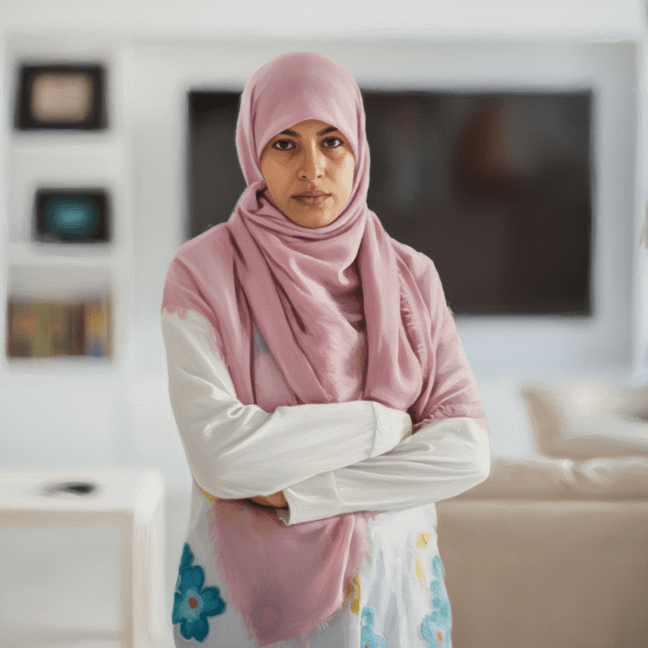
A new study shows women with “Muslim” names have to send 1.4 times as many job applications as women with Anglo-sounding names to be considered by employers, and women in hijab need to send 4.5 times as many applications.
This week, on 11 May 2017, a bill two-years-in-the-making to decriminalise abortion in the state of New South Wales, Australia, was defeated 14 to 25, meaning abortion remains a crime under the Criminal Act. Greens MP and Spokesperson for the Status of Women, Dr Mehreen Faruqi MLC, who led the campaign to decriminalise said: “This bill was not about promoting or not promoting abortion. It was about choice.”
Another separate bill to establish 150 metre safe zones to protect abortion clinics has been introduced by Labor MP Penny Sharpe. This bill works to eliminate harassment and intimidation by anti-choice lobbyists who film and degrade women who walk into clinics.
This law has been in place since the 1970s, but stems back to 1900. Counter to national myths of our egalitarianism, abortion laws unearth how gender inequality is maintained by White, conservative Christian patriarchal ideology that seeks to control women’s autonomy. Sociological studies show how medical professionals have long been at the vanguard of change, by shifting understandings of abortion from moral arguments, to a medical choice.
Christian lobby groups, who hold strong political power, push back against medical and community views, using emotional imagery to influence abortion laws. This has proven effective over time, and continues to hold back progress in New South Wales (and Queensland, another conservative stronghold). Despite this recent set-back, momentum towards progressive change continues. A better sociological understanding of religiously conservative ideology and tactics may hold the key towards the next legal breakthrough.
Rugby star Sam Thaiday (below) who is Torres Strait Islander, made a sexist and racist comment during The Footy Show, a very popular, long-running TV show that is dominated by White male athletes and comedians who are infamous for racism and sexism. While mainstream media picked up the story from Aboriginal and Torres Strait Islander women, these outlets did not credit them.
Whilst in London a couple of years a go, I came across a sign which reads, “Begin your dream today, emigrate to Australia!” (see below). A warm invitation indeed: unless of course you are an asylum seeker – in which case our Government will revoke this welcome and abscond its responsibility to the United Nations Convention Convention relating to the Status of Refugees.
Since 2001, the Australian government has passed several laws that allow the detention of asylum seekers in offshore centres located on the islands of Nauru and Manus. This was first established by excising islands from Australia’s territory; attempting to pay off people smugglers; and a series of other policy changes known as the “Pacific Solution.” In the first seven years of the scheme, over 1,600 people were held in detention. They arrived predominantly from Afghan, Iraqi and Sri Lankan backgrounds. While this program was initially wound back by 2008, it was reintroduced in 2010. Offshore detention reached its peak in 2014, with over 2,400 people held in detention centres, including 222 children. At the end of March 2016, almost 1,000 people remained in Manus and up to 1,200 people on Nauru.
In 2014, the Government offered migrants up to $10,000 to go back home to face certain persecution; a scheme that was resolutely condemned by human rights experts. The Government simultaneously cut legal aid to refugees, making it even harder for them to receive informed support.
The ensuing health damage suffered by asylum seekers is woefully inhumane. Australia’s humanitarian program has been criminally pared back, along with our collective morality. We must not accept this unfair system in the name of so-called “Australian values.”
Your bridge to Australia. Your bridge to Australia. Begin your dream today.
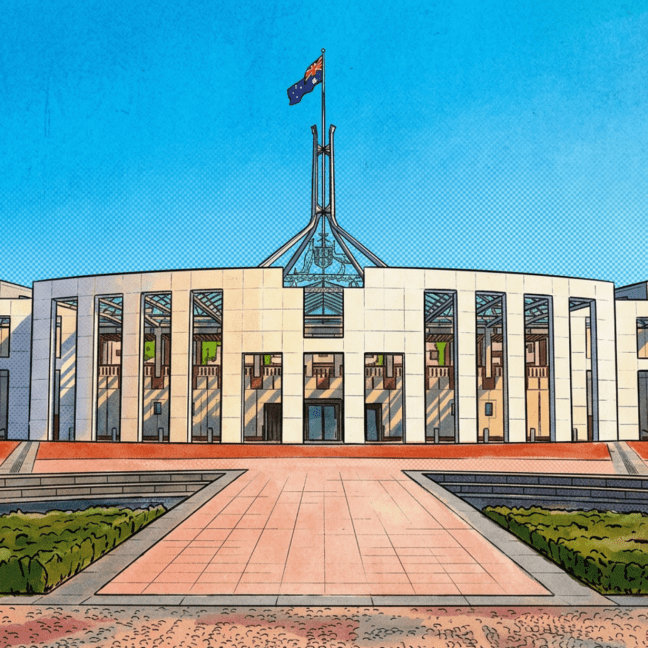
Politicians embody state power. They create laws and are elected to represent democracy, however, many of their decisions maintain racism and social inequality. In this sense, they personify institutional racism. A clear example is former Attorney-General George Brandis, who was one of the key drivers to amend 18C of the Racial Discrimination Act 1975. He worked alongside Prime Minister Malcolm Turnbull (considered a “moderate” Liberal politician), to weaken racial protections.
On Twitter, on 21 March 2017, celebrity chef Adam Liaw started a great conversation, by tweeting: “It’s #HarmonyDay so I want to be a bit frank about race.” Australia celebrates multiculturalism on Harmony Day annually, the same day as (the frankly more significant) International Day for the Elimination of Racial Discrimination. Liaw’s conversation was more aligned with this international event. Off the back of proposed changes to legal protections against racism, and two cases of racism in the arts and academia, it’s never been clearer, the importance of maintaining a sustained focus on proactively working to end racial discrimination.
“When we focus on the individual, or the individual instance of racism, we actually miss out on looking at society and how it continues to perpetuate these sorts of structures that discriminate against these groups of people… We seem very keen to pin it on individual people rather than actually re-imagining a society that exists and doesn’t elevate these sorts of dialogues.”
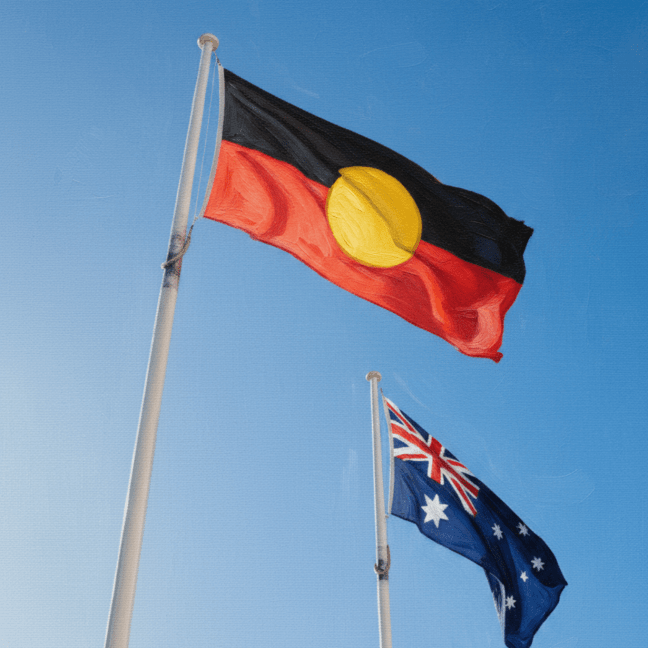
The 13 February 2017 was the ninth anniversary of the Australian Government’s formal apology for the Stolen Generations. From 1910 to 1970, up to one third of all Aboriginal and Torres Strait Islander children (100,000 children) were forcibly removed from their families and sent away from their communities. They were classified according to their skin colour and put into Christian missionaries where they suffered abuse and neglect, or they were placed with White foster families who did not understand their needs. These children were forced to forget their language, culture and spirituality, and in many cases they were not told of their Indigenous heritage.
The Bringing Them Home report of 1997 gathered evidence of the impact this cultural genocide had on Indigenous Australians, showing that it led to intergenerational trauma, poor health, and socio-economic issues. The report made 54 important recommendations to end the cycle of violence against Indigenous Australians.
Twenty years later, Indigenous children are being removed from their families up to four times the rate.
On the 21 of January 2017, I joined up to 10,000 Sydney-siders at the Women’s March, and 2.5 million people globally. I initially had reservations about the March. As I recounted last week, the march started as an idea by a woman activist in Hawaii and it was soon taken over by White women from Pantsuit Nation, a group that has no commitment to anti-racism. Bob Bland, a White woman from Washington, wanted to rectify the direction of the event and soon invited three women of colour to shape the Washington March: Tamika Mallory; Linda Sarsour; and Carmen Perez. The Women’s March Washington had a special focus on intersectionality; addressing how gender inequality is impacted by racism and other forms of discrimination such as homophobia, transphobia, ableism (the discrimination of people with disabilities), and more. The Washington March was the model for the other local and international marches. As more White women became involved in discussions at the national and international levels, this mission was drowned out. Women of colour were made to feel excluded from planning groups whenever the issue of intersectionality was raised.
So when the Sydney March was announced I first felt trepidation. As the final line up of speakers was announced, it became clearer that the Sydney organisers were making the event more consciously supportive of intersectionality. The organisers regularly focused their social media posts on inclusion, thereby reaffirming their commitment to diversity and inclusion. There were some limitations as I’ll discuss later. For example, transgender women seemed to lack representation amongst speakers at the event and best practice for the inclusion of women with disabilities may have been improved.
For me, the big draw card was Aboriginal activist, Jenny Munro, who has dedicated her life to advancing the human rights of Aboriginal people. Her activism and life’s work has a strong focus on Aboriginal sovereignty, children and housing. She leads the Redfern Tent Embassy and is a living legend. She did not disappoint; but I’ll get to that!
The day led to many useful discussions on diversity and how to disrupt patriarchy. I shared highlights of my day on Twitter and I bring these to you in this post as well as additional photos and video I wasn’t able to share on the day. The quotes are not strictly verbatim – treat them more as field notes to flesh out my visual sociology. I will also address the ongoing global conversations about the Women’s Marches and in particular, the critiques about the exclusion of women of colour, transgender women, sex workers and women with disabilities from various overseas events, with a focus on the USA. I’ll draw some qualified lessons on intersectionality from the USA to Australia and I wrap up with a discussion of why intersectionality is important.
This one minute video includes some of the footage I shot at the Sydney Women’s March and draws out the key lessons on intersectionality.
Djiringanj Dancers, a group of women cultural performers, singing about the “West Wind” at the Corroboree grounds, during the Yabun Festival.
The Yabun Festival is a celebration for Survival Day. The 26 of January is a national holiday that marks the day British ships arrived in Australia and began the genocide of Indigenous Australians. Survival Day is a day led by Indigenous Australians who affirm the resilience, creativity and excellence of First Australians. This year, the Invasion Day Protests, which aim to change the date and meaning of Australia Day, ended by protesters joining Yabun at the end of the march to enjoy music, stalls, cultural performances, speeches and more.