Artificial Intelligence at Work

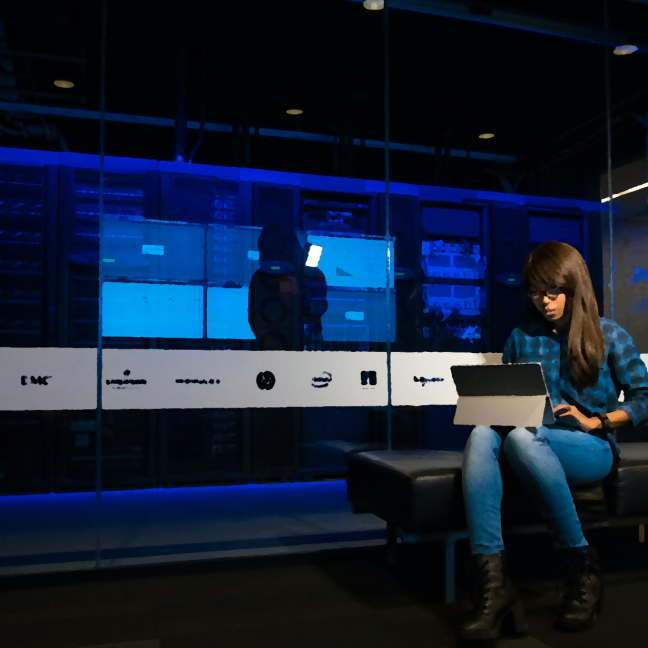
A woman of colour sits in a darkened computer lab, working on her laptop

Despite dire predictions, researchers forecast that few industries will lose a substantial number of jobs due to artificial intelligence (AI). Instead, AI is more likely to alter the way humans work. The AI industry may also create new roles, but this may amplify inequality. In this third post in my Sociology of AI series, I explore the perceived impact of AI on jobs, and the stratification that may follow increased automation of the labour market. I analyse evolving policy directions, including a new report by Jobs and Skills Australia, on AI-related job losses. I then review sociological understandings of AI and work, and recent examples of job redundancies. I analyse a much-publicised study by Microsoft, which claims AI can replace 40 professions, including translators, historians, artists, and customer service workers. This case study shows that AI companies distort evidence to overstate the functions, utility, and accuracy of AI technology. I argue that AI discourse hinges on eliminating competition from human professionals. Sociology uncovers the ways in which scientific models and customer data are used to make unethical and spurious claims.

Continue reading Artificial Intelligence at Work

Artificial Intelligence and the Economy

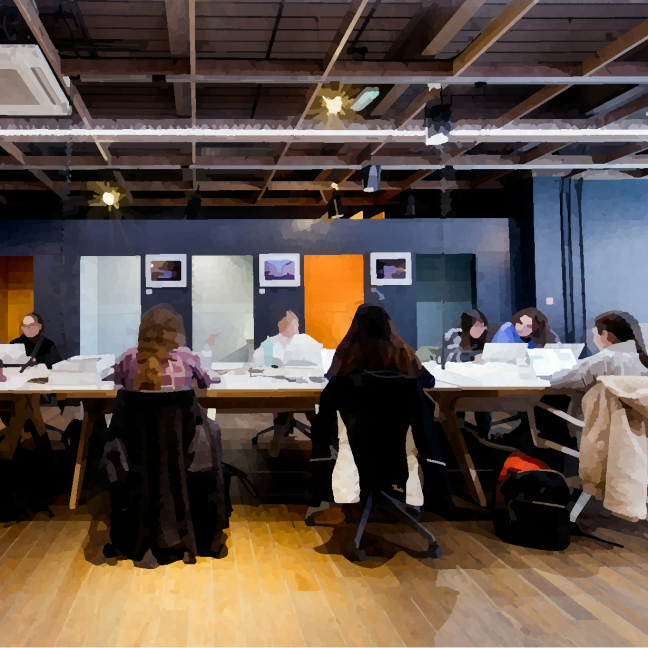
Drawing of a group of women working on laptops in an open plan office

In this second post in my Sociology of AI series, I show that AI companies position automation as being superior to human labour. I review the Australian Government’s recent announcement that is considering changing the law to allow AI to mine copyrighted works. I will show that the economic model used to justify this decision lacks robust testing. I analyse the ways in which AI discourse is ‘manufacturing consent’ to control the labour market. I argue that AI discourse establishes economic power by marketing technological supremacy, using science selectively, eliminating competition, and suppressing issues that undermine AI domination.

Continue reading Artificial Intelligence and the Economy

Sociology of Artificial Intelligence

White 3D model of a person's head

This is the first in a series of posts exploring the sociology of artificial intelligence (AI). I cover definitions of AI, before exploring sociological issues of public awareness, ethics, and regulation. I discuss how AI models replicate race, class, and social inequality. I show why First Peoples’ leadership must be central to the development AI policies. I discuss how sociology can address structural change and ethical use of AI. The rest of this series will examine how AI may transform work, and how AI companies are using customer data to grow their market dominance and policy influence.

Continue reading Sociology of Artificial Intelligence

Event: Risks of visibility in a forced spotlight

In the background, a person stands onstage bathed in light. People in the foreground watch in the forefront

I’ll be presenting my research on how institutions can protect public scholars from public abuse. Hosted by Cultures of Digital Hate, this online panel is free to attend.

Continue reading Event: Risks of visibility in a forced spotlight

Applied Sociology and Cyber Security

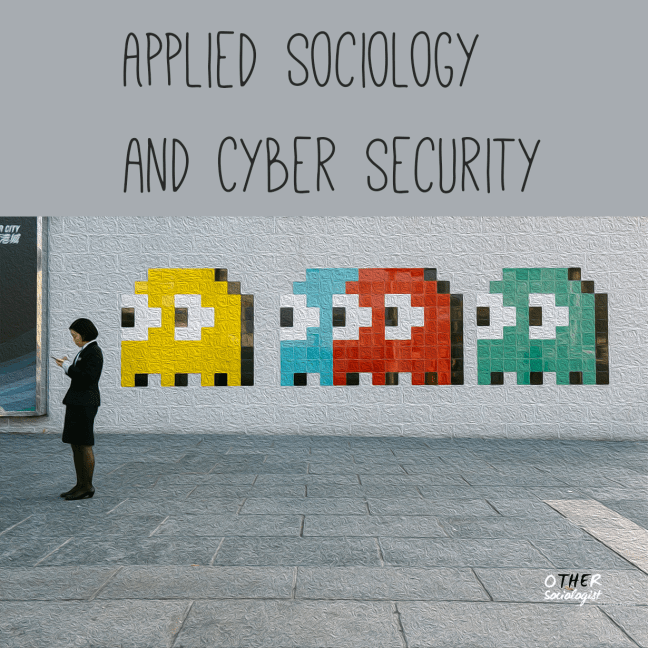
A woman is reading her phone in front of space invaders street art on a wall. Title reads "Applied sociology and cyber security"

I led a project where our team created an online cyber security training game. We used behavioural science to develop the game. I hired an intern who did a wonderful job building the prototype. Our team then contracted a great agency to work with us to enhance the game. Having an applied sociologist at the helm meant that accessibility and game design was developed with inclusion from inception.

Continue reading Applied Sociology and Cyber Security

Public Sociology and the Pandemic

Oil painting of a subway sign about COVID-19. It shows an imprint of two hands. The message reads: have you washed your hands?

It’s been a long while! Over the past couple of months, in my paid work, I’ve been co-leading a large randomised control trial in public health. Hoping we can publish results in the new year. Our team is also busy researching issues of technology and safety. In my personal research, Associate Professor Alana Lentin and I wrapped up series 1 of Race in Society. We covered media representations; the lockdown and ableism; intersectionality; policing; and economics. I’ll bring you write ups of other episodes soon, or head to our YouTube to watch the videos.

In case you missed it, here are two interviews I gave earlier in the year, on the sociology of COVID-19. Unfortunately, the topics of moral panics and misinformation remain relevant.

Continue reading Public Sociology and the Pandemic

Using sociology to think critically about Coronavirus COVID-19 studies

The lower two-thirds is an oil painting style photo of an older woman with grey hair. She has her back to us and is reading a piece of paper with a magnifying glass. The top third is the title to this post

I’ve been thinking a lot about the role of public sociology because of the Coronavirus (COVID-19) pandemic. What follows has been in the works for a couple of months. As previously promised, I’m now coming back to this because of the ongoing need to increase public awareness about the science of the pandemic.

Earlier in the year, I worked with some colleagues on an early literature review scoping policy responses to the pandemic, and I’ve provided feedback on evolving policy research. As an applied sociologist, my focus has been on how race, culture, disability, gender, and other socioeconomics impact how people understand and act on public health initiatives, as well as ethical considerations of COVID research “on the run.”

Since then, I’ve been keeping up with both the research and media coverage of public health responses. I’ve been providing summaries of unfolding information on my social media (primarily Facebook and Instagram stories, as well as Twitter). This started partly to address some of the misconceptions I was seeing amongst my friends and family and I’ve kept this up as it’s been the most efficient way to help people in my life better understand what the restrictions mean for them, or to correct confusing reports.

Unfortunately, there is a lot of misinformation. People are hungry for practical advice, but don’t know who to trust (they don’t know where to look for credible resources), or they feel overwhelmed with too many conflicting directions. This is known as information overload, and it leads to poor decision-making.

One of the patterns that has been especially concerning are people writing social media posts, op eds and even setting up consultancies to profiteer from COVID-19 without any health training or policy experience. This contributes to public distrust, conspiracy theories or poor discussion that is not based on evidence. People are choosing to confirm their pre-existing beliefs, rather than engaging critically with scientific information that challenges their perspective. This is known as confirmation bias. It stops people from considering new information and different points of view that might be helpful to their wellbeing.

Reading original scientific journal articles is not always possible as there is often a paywall. Plus, science papers are, by definition, published for the academic community. The language is technical, and the principles can be hard to follow for people who are not subject matter experts. This makes it more important for scientists who have access to write about science research in an accessible manner and to share findings through different communities.

While data on COVID-19 are evolving, and no one can claim to be a definitive COVID-19 expert, the best sources to trust are official sources, such as state Health Departments, epidemiologists, virologists, health practitioners who are providing front-line services (such as Aboriginal-controlled health organisations), and policy analysts who work on COVID-19 responses. Additionally, reliable news sites include the ABC News Australia live blog, Croakey and individual health researchers, such as epidemiologist Dr Zoe Hyde (University of Western Australia) on Twitter.

If you read about a study, how do you know if you can trust the conclusions? What’s the best approach if you wanted to write about a study’s findings for a broader audience, whether it’s your friends and family reading your Facebook feed, or an article in a major news site? Today’s post gives tips for how to read a study using critical thinking principles from sociology, and things to consider if you want to write about, or share, studies that you read about.

Continue reading Using sociology to think critically about Coronavirus COVID-19 studies

Institutional Action on Sexual Harassment

Drawing of an Asian woman standing by the side of a glass building. Her face is obscured

Trigger warning: this post discusses tactics used by sexual harassers to evade justice and the impact on survivors.

Today is International Women’s Day. International Women’s Day is a day of protest that began with women’s workplace rights (United Nations Women Australia 2019). Today’s post covers the lack of accountability by institutions to uphold women’s safety at work.

Continue reading Institutional Action on Sexual Harassment

Sociology of Spiders

A tiny spider on a centre of an orange wall, in a halo of light

A diminutive spider accompanied by its tiny shadow had me captivated as I pondered the sociology of spiders and fear.

Spiders inspire irrational fright, despite the fact that most spiders can’t harm humans. The small percentage that can are not usually found in our homes and they don’t specifically seek us out for attack. Yet even I overreact at the sight of a spider at home (or in my swag during a recent camping trip!).

Our collective fear of spiders in urban areas is culturally determined, and it far outweighs the risk posed. Spiders feature as focus and metaphor for different types of fears in Western societies. Even amongst educated people, spiders are a source of disgust and anxiety. Why might that be the case?

Continue reading Sociology of Spiders

Heterosexism in a Scientific Study of Lesbian Attraction

a White woman, shot only from the upper torso, holds candles arranged in the colours of the LGBTQIA or pride flag

An evolutionary psychology study that gained much media attention in May 2017 claims to show women’s sexual attraction to other women is the outcome of evolution, specifically for the pleasure of heterosexual men. The study was reported widely as ‘homosexual women evolved for men’s pleasure.’ Journalists have not read the study nor linked to it. The study is published in the journal Personality and Individual Differences. The study is led by Associate Professor Menelaos Apostolou. The team is based at the University of Nicosia, with apparently only one woman co-author.

Here, I show why the study is flawed and why the conclusions are premised on dangerous heterosexism. Heterosexism is the prejudiced belief that heterosexuality is ‘natural’ and ‘normal,’ and that heterosexuality uniformly structures all aspects of social life.  Heterosexism also presumes that gender is a binary (there are only two groups, men or women), and excludes the lived experiences of transgender people. Heterosexism brings to light the social construction of sexuality, and in this case, the values and social dynamics that impact on what is taken-for-granted about heterosexuality.

I focus my discussion on cisgender heterosexual and homosexual people as the authors of the study have presumed men and women can either be homosexual or heterosexual, to the exclusion of other gender and sexual identities. They have done this without explicitly saying so (it is a facet of heterosexism to reinforce binaries, because variations of sexuality disrupt the idea that heterosexuality is natural and normal). Experiences for transgender lesbians would vary, however, the authors presume a gender binary in thinking about lesbian desire.

With these cautions in mind, let’s dive into the study.

https://twitter.com/OtherSociology/status/868139704226635779

Continue reading Heterosexism in a Scientific Study of Lesbian Attraction