Career Planning in the Research Sector

Crowd of people at a Latin American festival in Melbourne

I’m sharing the resource I created for the Association of Iberian and Latin American Studies of Australasia (AILASA) Conference. I am leading a workshop on ‘Career Planning in the Research Sector.’ This presentation is intended for early career researchers who may be near completion of a postgraduate degree, or recently completed a Masters or PhD. Specifically, I look at how Latin American Studies scholars can market their skills, especially in current times following the bushfire disaster in late 2019 to early 2020, and the Coronavirus COVID-19 pandemic, which led to significant restrictions and socio-economic disruption from the end of March 2020 to the present day in July (and ongoing). The job market poses many challenges. The lessons here are applicable for other early career researchers.

You can flick through my slides below, or download my slides as a PDF. Further down, there are links to resources for how to look for work, preparing a CV and interview. Accessible descriptions of slides at the end.

Continue reading Career Planning in the Research Sector
Pandemic, race and moral panic

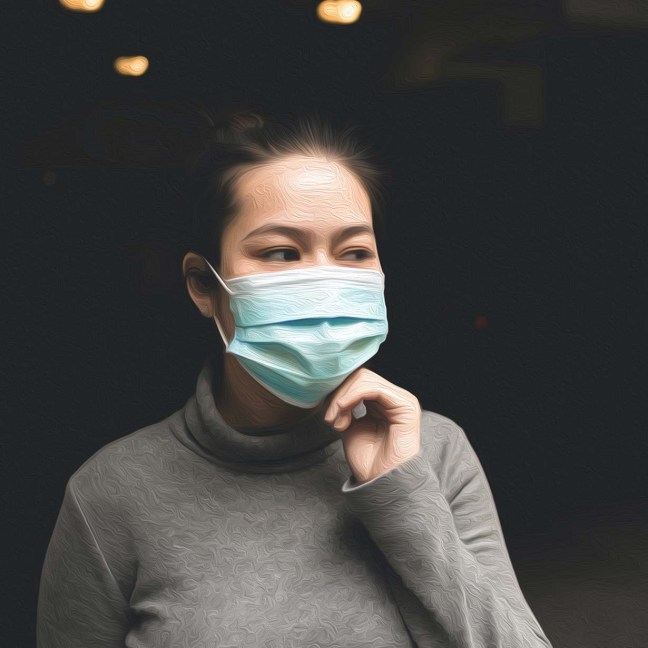
An Asian woman wears a surgical mask. She's touching her hand to the bottom of her chin as she looks off to the side

Since the Coronavirus COVID-19 pandemic reached Australia in January 2020, I’ve been working on a couple of COVID-19 research posts for you. I was ready to post one of these on Monday, but I have decided to first address a race and public health response that is presently unfolding.(1)

In the afternoon of 4 July 2020, Victorian Premier, Daniel Andrews, gave a press conference announcing that two more postcodes are being added to COVID-19 lockdown (making 12 in total) (McMillan & Mannix, 2020). The new postcodes under Stage-3 lockdown are 3031 Flemington and 3051 North Melbourne.

Additionally, the Victorian Government is effectively criminalising the poor: nine public housing towers are being put into complete lockdown. The Premier said: “There’s no reason to leave for five days, effective immediately.” This affects 1,345 public housing units, and approximately 3,000 residents.

Public housing lockdown is made under Public Order laws. Residents will be under police-enforced lockdown for a minimum of five days, and up to 14 days, to enable “everyone to be tested.”

How do we know this public housing order is about criminalising the poor, and driven by race? The discourse that the Premier used to legitimise this decision echoes historical moral panics and paternalistic policies that are harmful.

Let’s take a look at the moral panics over the pandemic in Australia, and how race and class are affecting the policing of “voluntary” testing.

I support continued social distancing, self-isolation for myself and others who can afford to work from home, quarantine for people who are infected so they can get the care they need without infecting others, and widespread testing for affected regions. These outcomes are best achieved through targeted public communication campaigns that address the misconceptions of the pandemic, the benefits of testing for different groups, making clear the support available for people who test positive, and addressing the structural barriers that limit people’s ability to comply with public health measures.

Continue reading Pandemic, race and moral panic

Reconciliation and the ongoing impact of colonialism

Oil painting style image showing protesters carrying the Aboriginal flag

I live on the land of the Gadigal people of the Eora Nation. ‘Eora’ means ‘here’ or ‘from this place.’ Twenty-nine clans belong to the Eora Nation (of what is now known as Sydney), each with their distinct culture, languages, songlines and practices. Sovereignty was never ceded. This land always was, is, and forever will be, Aboriginal land.

Yesterday was National Sorry Day and today marks the beginning of Reconciliation Week. The meanings and actions of these national events are different for Aboriginal and Torres Strait Islander people, and non-Indigenous people. Here are some reflections for those of us who are settlers, and what we can do to better listen and walk in solidarity with First Nations.

Continue reading Reconciliation and the ongoing impact of colonialism

Institutional Action on Sexual Harassment

Drawing of an Asian woman standing by the side of a glass building. Her face is obscured

Trigger warning: this post discusses tactics used by sexual harassers to evade justice and the impact on survivors.

Today is International Women’s Day. International Women’s Day is a day of protest that began with women’s workplace rights (United Nations Women Australia 2019). Today’s post covers the lack of accountability by institutions to uphold women’s safety at work.

Continue reading Institutional Action on Sexual Harassment

Intersectionality in academia and research

Bottom two-thirds is a drawing of indistinct figures seated on the ground in a large building, beside windows. Title of the resource is at the top: Intersectionality, equity, diversity, inclusion and access

I’ve just published my new resource, Intersectionality, Equity, Diversity, Inclusion, and Access. There are five individual chapters which are intended to work together. The information is a comprehensive, though not exhaustive, introduction into the barriers and solutions to discrimination in academia and research organisations. The issues are restricted to career trajectory from postgraduate years to senior faculty for educators and researchers.

Each section includes a discussion of the theoretical and empirical literature, with practical, evidence-based solutions listed in text boxes, capturing my long-standing career in equity and diversity program management, education and research.

This resource is split into five pages, for the purposes of improving reading experience; however, all five sections are intended to paint a holistic picture for social change. (If you prefer, read this resource as one PDF). 

Continue reading Intersectionality in academia and research

Whitewashing Race Studies

In the lower half is a white background, with the spines of two white books on the right handside. At the top is the title: whitewashing race studies

How does a White male student with no expertise in critical race studies, with little sociological training, publish a peer reviewed article in one of the most prestigious journals in our field? How is this possible when the paper misrepresents the Black Lives Matter movement and intersectionality theory? How does this paper make it through peer review to publication in less than six months? ‘Black Lives Matter at Five: Limits and Possibilities,’ by Adam Szetela, was submitted to Ethnic and Racial Studies on 24 January 2019, accepted for publication on 21 June 2019 and published online on 18 July. The expediency of the peer review process, given the content of the article, warrants strong evaluation.

I express my gratitude to Dr Shantel Gabrieal Buggs, who brought this to public attention, and who led a robust discussion on Twitter with sociologists and scholars from other fields. I’m using this and other examples as a case study of whiteness in academic publishing.

Continue reading Whitewashing Race Studies

Using Intersectionality in Collective Responses to Sexual Harassment

Trigger warning sexual harassment and assault: let’s talk about intersectionality, policy and practice in dealing with sexual harassment.

There seem to be endless cases of sexual harassment coming to light, but these are the tip of the iceberg. In Australia, 575 cases of harassment and rape have been reported in higher education in the past five years alone. Most cases go unpunished, while other institutional responses are sluggish or inadequate. For example,  of the 575 cases, only six perpetrators were expelled. In the University of New England, perpetrators were only fined $55 and received eight hours community service.

The issues are well-known, but equity advocates note that little institutional reform has happened. Continue reading Using Intersectionality in Collective Responses to Sexual Harassment

Interview: Talking Feminist Sociology

Drawing of several women dressed in historical STEM outfits

In case you missed this on my other social media, in January 2019, Lady Science published a podcast about my career and feminism.  I was interviewed in late 2018 by Leila McNeill, one of the editors-in-chief. Below is an excerpt where you can learn a little about my professional history. I discuss how racial minority sociologists are challenging knowledge production in our field. I show how the concept of otherness is feeding the overt political resurgence of White nationalism. Then I cover the importance of intersectionality in sociological practice.

My face is drawn Brown, with red lipstick and red lines shining out of my top of my head
Portrait of me commissioned from the feminist and artist, Tyler Feder

Leila: To kick off our series I’ll be talking with Zuleyka Zevallos, a sociologist from Australia, about the history of sociology, how the work of Indigenous and minority sociologists is changing the field, and how intersectional feminism influences her work. Leila: Without further ado, I’ll let Zuleyka introduce herself.

Z. Zevallos: Yep, so my name’s Zuleyka Zevallos. I’m a sociologist, and I’ve got a PhD in sociology. I started off doing research on the intersections of identity from migrant background women. I was really interested in how their experiences of gender, sexuality, ethnicity and also religion made their sense of identity, and how that also interconnected with their experiences of racism and multiculturalism, and how all of that affected their sense of belonging to their communities, as well as broader Australian society.

Z. Zevallos: After I finished my PhD I’ve been teaching the whole way through, and then I was an academic for a little while. I taught the sociology of gender and sexuality as well as leading courses on ethnicity and race. I also looked at the impact of technology on society…

Z. Zevallos: I spent the first few years working with an interdisciplinary social modelling team. That was a really great experience because it really taught me different applications of sociology, but also how to speak to scientists from the natural and physical sciences, from computer sciences, and how to blend their disciplines with mine.
Continue reading Interview: Talking Feminist Sociology

Sociology of Spiders

A tiny spider on a centre of an orange wall, in a halo of light

A diminutive spider accompanied by its tiny shadow had me captivated as I pondered the sociology of spiders and fear.

Spiders inspire irrational fright, despite the fact that most spiders can’t harm humans. The small percentage that can are not usually found in our homes and they don’t specifically seek us out for attack. Yet even I overreact at the sight of a spider at home (or in my swag during a recent camping trip!).

Our collective fear of spiders in urban areas is culturally determined, and it far outweighs the risk posed. Spiders feature as focus and metaphor for different types of fears in Western societies. Even amongst educated people, spiders are a source of disgust and anxiety. Why might that be the case?

Continue reading Sociology of Spiders

Invasion Day 2019

This past weekend was the Australia Day long weekend. The holiday marks the genocide and dispossession of Aboriginal and Torres Strait Islander people. This day will never be inclusive or live up to ideals of multiculturalism, as it is a Day of Mourning for First Nations people. We need to not just change the date but also #ChangeTheNation. This is time for truth-telling of our national history, a Voice to Parliament and Makarrata (treaty), as outlined in the Uluru Statement From the Heart.

On 26 January, beginning at 11am, we marched at the Invasion Day rally from Hyde Park South to the Yabun Festival. The rally starts with speeches, smoking ceremony and dance commentating survival. Remembering the Waterloo Creek massacre.

Continue reading Invasion Day 2019