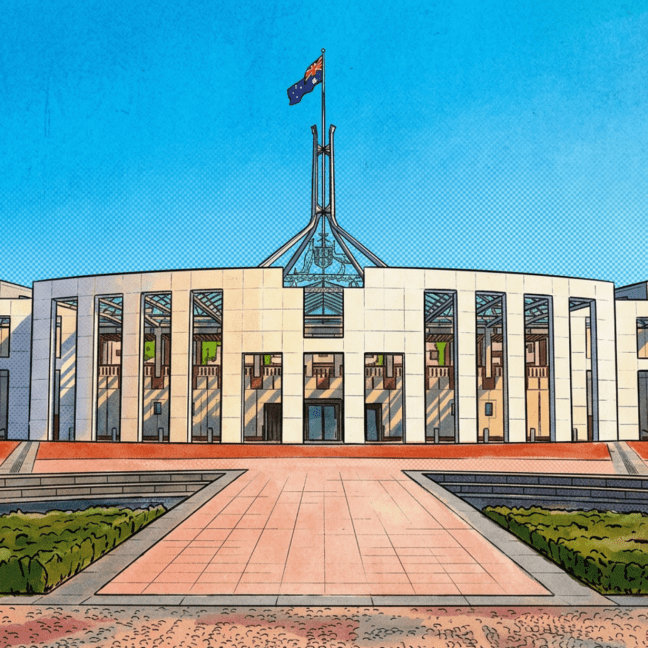
Politicians embody state power. They create laws and are elected to represent democracy, however, many of their decisions maintain racism and social inequality. In this sense, they personify institutional racism. A clear example is former Attorney-General George Brandis, who was one of the key drivers to amend 18C of the Racial Discrimination Act 1975. He worked alongside Prime Minister Malcolm Turnbull (considered a “moderate” Liberal politician), to weaken racial protections.
This article was first published on Latino Rebels on 14 March 2017.
Inspired by the impact of the Women’s March, March for Science (MfS) emerged from a series of social media conversations. The ScienceMarchDC Twitter account was set up on January 24, and a Facebook page three days later. Their follower base ballooned from a couple of hundred people to thousands. At the time of writing, the Twitter account has 337,000 followers, the public Facebook page has more than 393,000 likes, and the private Facebook community has over 840,000 members. There are currently 360 satellite marches being organized in various American states and in many cities around the world.
The MfS organizers go to great pains to separate science from politics, and science from scientists, as if practice and policies are independent from practitioners. For example co-chair and biology postdoctoral fellow Dr Jonathan Berman says: “Yes, this is a protest, but it’s not a political protest.” Another co-chair, science writer Dr Caroline Weinberg, recently told The Chronicle: “This isn’t about scientists. It’s about science.” These sentiments strangely echo other highly publicized opposition to the march, and are being replicated in some of the local marches. The idea that a protest can be “not political” and that science can be separated from scientists are both political ideas. These notions privilege the status quo in science, by centring the politics, identities and values of White scientists, especially White cisgender, able-bodied men, who are less affected by changes to the aforementioned social policies.
Even as the movement gained swift momentum, the leadership and mission were unclear in one key area: diversity.
Discussions over the march are important not just due to the planned demonstration. The debates matter because they reflect broader issues of diversity in science.
On Twitter, on 21 March 2017, celebrity chef Adam Liaw started a great conversation, by tweeting: “It’s #HarmonyDay so I want to be a bit frank about race.” Australia celebrates multiculturalism on Harmony Day annually, the same day as (the frankly more significant) International Day for the Elimination of Racial Discrimination. Liaw’s conversation was more aligned with this international event. Off the back of proposed changes to legal protections against racism, and two cases of racism in the arts and academia, it’s never been clearer, the importance of maintaining a sustained focus on proactively working to end racial discrimination.
I’ll be sharing with you some recent media interviews I’ve done on issues with diversity in the March for Science. The first is by STAT News.
Source: STAT News
“Australian-based sociologist Zuleyka Zevallos, in an email to STAT, pointed to what she called ‘racist dog-whistling’ by the Los Angeles march chapter in a Twitter post that was since deleted: ‘some scientists [are] concerned with the march turning into [a] political event and losing its focus. What do YOU pledge to do to keep it peaceful?” The leap from ‘political’ to ‘violent’ did not sit well with some minority science advocates.“
Last week, Zevallos published an article about the march’s various diversity problems — a move she made after ‘close to two months of equity missteps, and many scientists were fed up by having offered their volunteering, advice and resources, only to be ignored,’ she said.”
This article has many troubling aspects. From how diversity is discussed by one of the March for Science committee members (diversity “diminishes science”); to the revelation post-publication that one of the former committee members quoted (Morris) has a long history of White supremacist and sexist behaviour; to, it seems, possible unethical practices by the journalist (this piece was updated with additional quotes by committee members in response to being misquoted).
“When we focus on the individual, or the individual instance of racism, we actually miss out on looking at society and how it continues to perpetuate these sorts of structures that discriminate against these groups of people… We seem very keen to pin it on individual people rather than actually re-imagining a society that exists and doesn’t elevate these sorts of dialogues.”
The 13 February 2017 was the ninth anniversary of the Australian Government’s formal apology for the Stolen Generations. From 1910 to 1970, up to one third of all Aboriginal and Torres Strait Islander children (100,000 children) were forcibly removed from their families and sent away from their communities. They were classified according to their skin colour and put into Christian missionaries where they suffered abuse and neglect, or they were placed with White foster families who did not understand their needs. These children were forced to forget their language, culture and spirituality, and in many cases they were not told of their Indigenous heritage.
The Bringing Them Home report of 1997 gathered evidence of the impact this cultural genocide had on Indigenous Australians, showing that it led to intergenerational trauma, poor health, and socio-economic issues. The report made 54 important recommendations to end the cycle of violence against Indigenous Australians.
Twenty years later, Indigenous children are being removed from their families up to four times the rate.
On the 21 of January 2017, I joined up to 10,000 Sydney-siders at the Women’s March, and 2.5 million people globally. I initially had reservations about the March. As I recounted last week, the march started as an idea by a woman activist in Hawaii and it was soon taken over by White women from Pantsuit Nation, a group that has no commitment to anti-racism. Bob Bland, a White woman from Washington, wanted to rectify the direction of the event and soon invited three women of colour to shape the Washington March: Tamika Mallory; Linda Sarsour; and Carmen Perez. The Women’s March Washington had a special focus on intersectionality; addressing how gender inequality is impacted by racism and other forms of discrimination such as homophobia, transphobia, ableism (the discrimination of people with disabilities), and more. The Washington March was the model for the other local and international marches. As more White women became involved in discussions at the national and international levels, this mission was drowned out. Women of colour were made to feel excluded from planning groups whenever the issue of intersectionality was raised.
So when the Sydney March was announced I first felt trepidation. As the final line up of speakers was announced, it became clearer that the Sydney organisers were making the event more consciously supportive of intersectionality. The organisers regularly focused their social media posts on inclusion, thereby reaffirming their commitment to diversity and inclusion. There were some limitations as I’ll discuss later. For example, transgender women seemed to lack representation amongst speakers at the event and best practice for the inclusion of women with disabilities may have been improved.
For me, the big draw card was Aboriginal activist, Jenny Munro, who has dedicated her life to advancing the human rights of Aboriginal people. Her activism and life’s work has a strong focus on Aboriginal sovereignty, children and housing. She leads the Redfern Tent Embassy and is a living legend. She did not disappoint; but I’ll get to that!
The day led to many useful discussions on diversity and how to disrupt patriarchy. I shared highlights of my day on Twitter and I bring these to you in this post as well as additional photos and video I wasn’t able to share on the day. The quotes are not strictly verbatim – treat them more as field notes to flesh out my visual sociology. I will also address the ongoing global conversations about the Women’s Marches and in particular, the critiques about the exclusion of women of colour, transgender women, sex workers and women with disabilities from various overseas events, with a focus on the USA. I’ll draw some qualified lessons on intersectionality from the USA to Australia and I wrap up with a discussion of why intersectionality is important.
This one minute video includes some of the footage I shot at the Sydney Women’s March and draws out the key lessons on intersectionality.
Djiringanj Dancers, a group of women cultural performers, singing about the “West Wind” at the Corroboree grounds, during the Yabun Festival.
The Yabun Festival is a celebration for Survival Day. The 26 of January is a national holiday that marks the day British ships arrived in Australia and began the genocide of Indigenous Australians. Survival Day is a day led by Indigenous Australians who affirm the resilience, creativity and excellence of First Australians. This year, the Invasion Day Protests, which aim to change the date and meaning of Australia Day, ended by protesters joining Yabun at the end of the march to enjoy music, stalls, cultural performances, speeches and more.
No pride in genocide! I am in Sydney, land of the Gadigal people of the Eora Nation, who have looked after these lands for over 75,000 years. I pay my respects to elders past, present and emerging.
The 26 January is a painful day for Aboriginal and Torres Strait Islander people. It is a date commemorating the day British ships (”the First Fleet”) arrived on Aboriginal and Torres Strait Islander lands. It is a day that marks the decimation of First Australians; the dispossession of their land; the removal of children to be raised in Missions and in White foster homes with no ties or knowledge of their culture (“the Stolen Generation”); amongst many other human rights crimes. This history impacts Indigenous life chances in the present-day.
On the 26th, I joined 10,000 people in Sydney who marched in solidarity with Indigenous Australians to tell the Australian Government to change the date of Australia Day so that First Australians aren’t being excluded through a national holiday making genocide. Another 50,000 people marched in Melbourne, and tens of thousands more did the same in cities and town around Australia.
Below, you can read my tweets of the protest as it unfolded.
This is the first of a two-part reflection on the global Women’s March that occurred on 21 January 2017. It reflects the tensions between the initial goal of the Women’s March in Washington, which aimed to be inclusive of intersectionality, and the White women who wanted to attend the March, but objected to this aim.
Despite many positive outcomes, the issues discussed here that centre on whiteness continued to affect the attendance, experience and discussions of the marches after the event. This post examines the attitudes of White women as discussed in an article by The New York Times, which reflect the broader dissent expressed by white women who continue to oppose intersectional conversations about the Women’s March.
The issues here remain relevant not simply as women around the world reflect on the racism and exclusion they faced at the marches, but also because one of the co-organisers, Linda Sarsour, is currently facing racist backlash only days after the event.
The second part to this discussion is forthcoming and it will be a visual reflection of my attendance at the Sydney March.