
Racism in Latin America is deep and complicated by the way in which colonialism is internalised in national narratives. In Brazil, the official discourse is one of perfect multicultural, multiracial togetherness, however, the fact is that race is intertwined with class inequality. Black and Indigenous Brazilians are treated like second class citizens and their cultures are appropriated and fetishised by the majority groups and elites.
Continue reading Race and the Head Wrap in BrazilSociology of Abortion Politics

This week, on 11 May 2017, a bill two-years-in-the-making to decriminalise abortion in the state of New South Wales, Australia, was defeated 14 to 25, meaning abortion remains a crime under the Criminal Act. Greens MP and Spokesperson for the Status of Women, Dr Mehreen Faruqi MLC, who led the campaign to decriminalise said: “This bill was not about promoting or not promoting abortion. It was about choice.”
Another separate bill to establish 150 metre safe zones to protect abortion clinics has been introduced by Labor MP Penny Sharpe. This bill works to eliminate harassment and intimidation by anti-choice lobbyists who film and degrade women who walk into clinics.
In NSW, women can access abortions only with their doctor’s consent that there are “reasonable grounds” for the abortion, linked to physical and mental danger. Otherwise abortion is punishable by five years in jail.
This law has been in place since the 1970s, but stems back to 1900. Counter to national myths of our egalitarianism, abortion laws unearth how gender inequality is maintained by White, conservative Christian patriarchal ideology that seeks to control women’s autonomy. Sociological studies show how medical professionals have long been at the vanguard of change, by shifting understandings of abortion from moral arguments, to a medical choice.
Christian lobby groups, who hold strong political power, push back against medical and community views, using emotional imagery to influence abortion laws. This has proven effective over time, and continues to hold back progress in New South Wales (and Queensland, another conservative stronghold). Despite this recent set-back, momentum towards progressive change continues. A better sociological understanding of religiously conservative ideology and tactics may hold the key towards the next legal breakthrough.
Publication: Better Leadership through Diversity

Excerpt from my latest for The Humanist:
Here is where the March for Science, like so many other science activities, fell short.
In failing to take responsibility for diversity in a methodical and transparent manner, the March for Science leadership made four major errors. First, the organizers attempted to set up the march as “apolitical” without having thought about equity, inclusion, and accessibility. The organizers failed to connect with diversity experts and activist groups. Their diversity statement was first released due to criticism from underrepresented scientists (using the hashtag #marginsci, started by Dr. Stephani Page). In reaction to growing critique, the initial diversity statement would be revised another three times. Continue reading Publication: Better Leadership through Diversity
Racism and Sexism in the Media

Rugby star Sam Thaiday (below) who is Torres Strait Islander, made a sexist and racist comment during The Footy Show, a very popular, long-running TV show that is dominated by White male athletes and comedians who are infamous for racism and sexism. While mainstream media picked up the story from Aboriginal and Torres Strait Islander women, these outlets did not credit them.
Continue reading Racism and Sexism in the MediaAustralia’s Unfair and Inhumane Refugee Policies

Whilst in London a couple of years a go, I came across a sign which reads, “Begin your dream today, emigrate to Australia!” (see below). A warm invitation indeed: unless of course you are an asylum seeker – in which case our Government will revoke this welcome and abscond its responsibility to the United Nations Convention Convention relating to the Status of Refugees.
Since 2001, the Australian government has passed several laws that allow the detention of asylum seekers in offshore centres located on the islands of Nauru and Manus. This was first established by excising islands from Australia’s territory; attempting to pay off people smugglers; and a series of other policy changes known as the “Pacific Solution.” In the first seven years of the scheme, over 1,600 people were held in detention. They arrived predominantly from Afghan, Iraqi and Sri Lankan backgrounds. While this program was initially wound back by 2008, it was reintroduced in 2010. Offshore detention reached its peak in 2014, with over 2,400 people held in detention centres, including 222 children. At the end of March 2016, almost 1,000 people remained in Manus and up to 1,200 people on Nauru.
These actions contravene international law, with our “paltry commitment to the Refugee Convention” deemed one of the worst in the world. Detention makes little sense, given that 90% of cases are found to be “genuine refugees.” The majority of asylum seekers have been in detention for at least two years. Even after they were released into the community, they were initially not allowed to work.
In 2014, the Government offered migrants up to $10,000 to go back home to face certain persecution; a scheme that was resolutely condemned by human rights experts. The Government simultaneously cut legal aid to refugees, making it even harder for them to receive informed support.
The ensuing health damage suffered by asylum seekers is woefully inhumane. Australia’s humanitarian program has been criminally pared back, along with our collective morality. We must not accept this unfair system in the name of so-called “Australian values.”

Continue reading Australia’s Unfair and Inhumane Refugee Policies
Publication: Making the Most of Diversity Lessons
This article was first published on Women’s Policy Action Tank on 24 April 2017.
Despite its special focus on diversity, the evolution of the March for Science shows that diversity has been an afterthought. Science and academia continually places scientists from underrepresented groups in the position of arguing for our rights. The issues for the global March for Science, as well as the national marches in Australia, are fundamental to issues of diversity in STEM around the world. The march is a microcosm of the battle to create a more inclusive culture in STEM that truly values and promotes diversity.
Over the weekend, thousands participated in the March for Science, both in Australia and globally. Influenced by the Women’s March, the March for Science has struggled with reflecting the highly diverse scientific community. In today’s post, sociologist Zuleyka Zevallos provides a brief history of the controversies, explains why diversity in science is important, and provides practical suggestions for moving forward on stronger footing.

Continue reading Publication: Making the Most of Diversity Lessons
Interview: March for Science Sparks Broader Discourse About Science Activism
I was interviewed by Dr Heather Goldstone for Living Lab Radio, along with my colleague Dr Caleph Wilson:

“They [March for Science Los Angeles] Tweeted in February that they’d been hearing from scientists that there might be problems with violence in connection with their focus on diversity,” said Zuleyka Zevallos (@OtherSociologist), a sociologist at Swinburne University. “That’s a dangerous historical connection that they are making from having minorities attend a science event to having it lead to violence. There’s actually no correlation between the two.”
Zevallos walked away from the March, as did Caleph Wilson (@HeyDrWilson), a biomedical researcher and digital media manager for the National Science and Technology News Service. They took to Twitter, instead, helping build hashtags – #marginsci and #AltSciMarch – that have developed into a vibrant public discourse about diversity and equity in science.
“One of the things that the hashtags were able to do is allow people to have those conversations in a way that can be visible,” said Wilson. “We could see each other having these conversations, as well as we could point the March for Science to these conversations.” […]
Zevallos says there is a silver lining, though.
“I do think that there’s a positive momentum in that these conversations have been happening for a very long time,” Zevallos said. “Underrepresented minorities have been doing activism for decades. But I guess the hashtags, in particular, allowed these conversations to converge, and for different networks from different parts of the world to join their voices together.”
As March for Science organizers work to foster a more lasting science activism movement, Zevallos and Wilson hope that the conversations started by the March can be leveraged into more awareness and meaningful changes in the science community’s prevailing attitude toward diversity and inclusion.
Read more and listen to the interview on Living Lab Radio.
Interview: Why Memphis Has Two Marches for Science

I was interviewed by WIRED on the disunity caused by scientists who have tried to split the March for Science from social justice activism. The case study in this article is the appalling treatment of organisers in Memphis, USA. Scientists split from the Memphis March to form a separate rally in the same city. Both groups have scientists but the March has centrally been led by women of colour activists with more experience in social movements, and they incorporate a focus on inclusion of minority communities. This is symbolic in their decision to march to an historically Black university. Participation of minorities in science is not mutually exclusive to the goal of enhancing evidence-based science policies. I’ll point out what I said in my interview: scientists from underrepresented groups have always been part of, and learned from, social justice movements.
“Both groups feel that their work isn’t done—and with the perception that science is under attack in the US, they wish they could show a united front. But ‘that in itself is a false picture of science, because we are not united,’ says Zuleyka Zevallos, a sociologist at Swinburne University in Australia who has studied the online reaction to the March for Science’s shifting messaging. Saturday’s marches, rallies, and other events around the world will surely pull some science supporters together. But they’re just as likely to highlight the clash over science’s priorities. Should the science community focus on fighting back against a hostile administration? Or on improving itself from within?”
Read more on WIRED.
SciComm Cycle of the March for Science

Over the next couple of days, in the lead up to the March for Science, happening globally on 22 April 2017, I’ll be republishing a few of my articles and analyses of the March here on my blog.
On 13 April 2017, an article in Science Magazine featured the academic research planned about the March for Science, and interviews with one of the march co-chairs. The journalist reported that George Mason University was seeking email addresses of supporters for a planned study.

Scientists around the world who have been holding the march organisers accountable criticised the ethics of such a proposed study. This eventually led to the organisers requesting a correction from the journalist.
How did this major error happen?
Two days later, on 16 April, the March for Science was forced to issue a public apology after appropriating African American Vernacular English (AAVE) in a now-deleted tweet (below). This was heavily critiqued, especially by Black researchers, who pointed out the hypocrisy of using AAVE when Black scientists had been marginalised by the march, and received abuse for speaking out on inequalities within the march. Black scientists were also ignored when they encouraged the organisers to work with established social justice groups, including Black Lives Matter. Cultural appropriation of AAVE is doubly offensive in given these patterns of exclusion.
These are just two recent examples in a long line of problems. The organisers have established a damaging cycle of communication failures and weak apologies since the March for Science was first promoted.
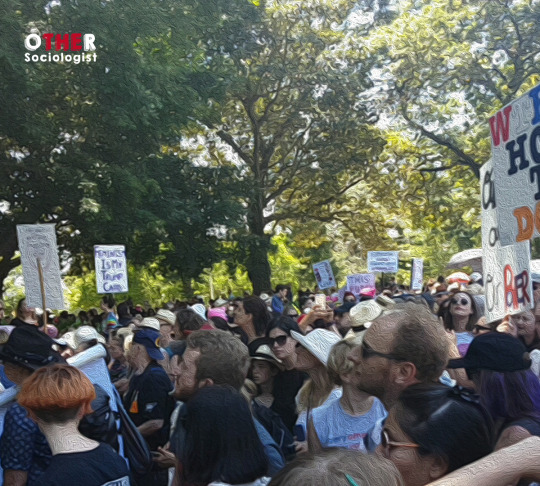
Interview: Scientists and Activists Look Beyond the March for Science
I was interviewed by the The New York Times on issues of equity and diversity in the March for Science:

“‘It set off alarm bells,’ said Zuleyka Zevallos an applied sociologist from Swinburne University of Technology in Australia. ‘How can we trust them to look after inclusion and accessibility if they are going to buckle under pressure?'”
The statements from the organisers in this article are easily disproved from public record. For example, the organisers resisted the idea that science is political, and they have created a series of sexist, racist and ablesit problems (discrimination against people with disabilities). They have completely ignored the needs and representation of LGBTQIA scientists. Most tellingly, several women have left the organising committee due to a toxic organisational culture.
As I’ve said from the beginning: the problems with the march reflect broader issues of discrimination in science and academia. This includes a lack of awareness about the structural barriers inhibiting the full participation and success of minorities and White women in research. The march is also plagued by ineffective leadership, policy and practice responses to diversity, which is another troubling hallmark of science. We must do better to ensure everyone can achieve their full potential in science.
Read more on The New York Times.
 The Other Sociologist