Artificial Intelligence at Work

A woman of colour sits in a darkened computer lab, working on her laptop

Despite dire predictions, researchers forecast that few industries will lose a substantial number of jobs due to artificial intelligence (AI). Instead, AI is more likely to alter the way humans work. The AI industry may also create new roles, but this may amplify inequality. In this third post in my Sociology of AI series, I explore the perceived impact of AI on jobs, and the stratification that may follow increased automation of the labour market. I analyse evolving policy directions, including a new report by Jobs and Skills Australia, on AI-related job losses. I then review sociological understandings of AI and work, and recent examples of job redundancies. I analyse a much-publicised study by Microsoft, which claims AI can replace 40 professions, including translators, historians, artists, and customer service workers. This case study shows that AI companies distort evidence to overstate the functions, utility, and accuracy of AI technology. I argue that AI discourse hinges on eliminating competition from human professionals. Sociology uncovers the ways in which scientific models and customer data are used to make unethical and spurious claims.

Continue reading Artificial Intelligence at Work

Artificial Intelligence and the Economy

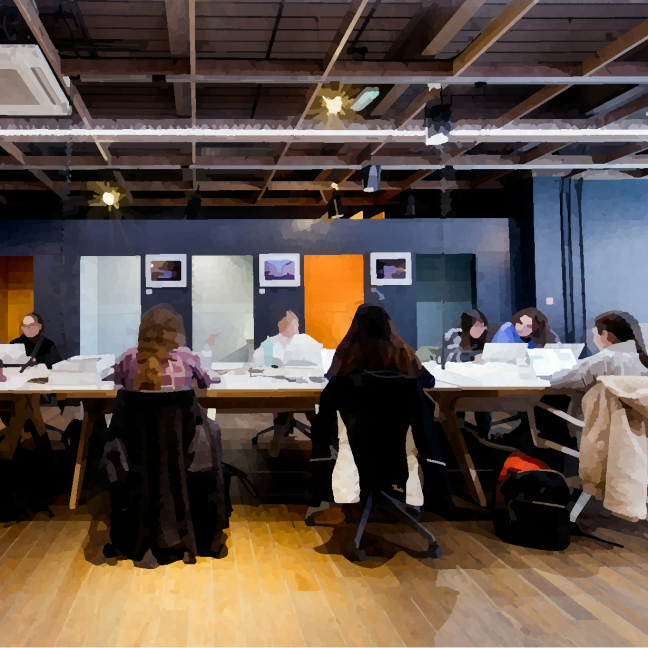
Drawing of a group of women working on laptops in an open plan office

In this second post in my Sociology of AI series, I show that AI companies position automation as being superior to human labour. I review the Australian Government’s recent announcement that is considering changing the law to allow AI to mine copyrighted works. I will show that the economic model used to justify this decision lacks robust testing. I analyse the ways in which AI discourse is ‘manufacturing consent’ to control the labour market. I argue that AI discourse establishes economic power by marketing technological supremacy, using science selectively, eliminating competition, and suppressing issues that undermine AI domination.

Continue reading Artificial Intelligence and the Economy

Sociology of Artificial Intelligence

White 3D model of a person's head

This is the first in a series of posts exploring the sociology of artificial intelligence (AI). I cover definitions of AI, before exploring sociological issues of public awareness, ethics, and regulation. I discuss how AI models replicate race, class, and social inequality. I show why First Peoples’ leadership must be central to the development AI policies. I discuss how sociology can address structural change and ethical use of AI. The rest of this series will examine how AI may transform work, and how AI companies are using customer data to grow their market dominance and policy influence.

Continue reading Sociology of Artificial Intelligence

Critical Race Studies and Racial Literacy

A Black woman in a jacket watches another Black woman talking

I have published two new book chapters. In ‘Critical Race Studies and Intersectionality Responses to COVID-19,’ I provide practical guidance for educators and researchers on how to apply insights from the webseries, Race in Society. The series featured First Peoples scholars and practitioners, and other people of colour researchers discussing issues of race and the pandemic. In ‘Race at Work Within Social Policy,’ I analyse how anti-racism and intersectionality work is co-opted and suppressed in social policy. Read about both chapters below, including where to order the books and upcoming events.

Continue reading Critical Race Studies and Racial Literacy

Event: Risks of visibility in a forced spotlight

In the background, a person stands onstage bathed in light. People in the foreground watch in the forefront

I’ll be presenting my research on how institutions can protect public scholars from public abuse. Hosted by Cultures of Digital Hate, this online panel is free to attend.

Continue reading Event: Risks of visibility in a forced spotlight

Career Progression and Accessibility

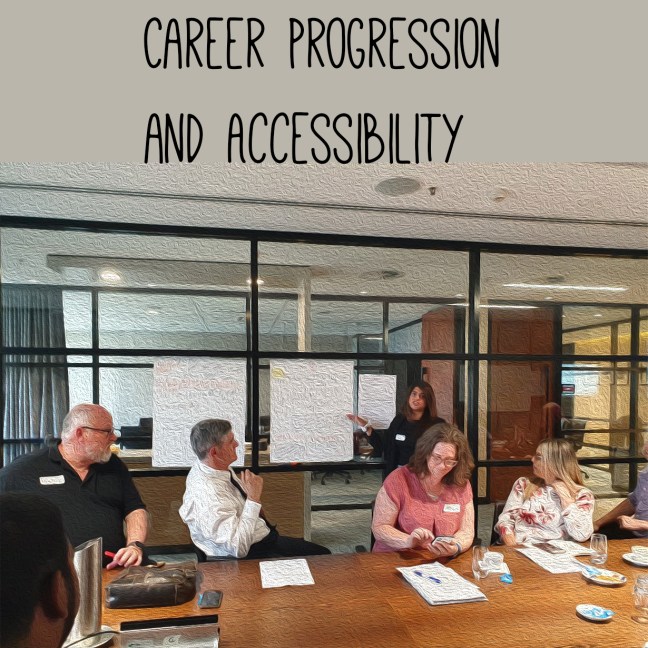
Three men and one woman sit at table. They watch another woman who is pointing to the group notes on a wall

Cross-posting research I’ve lead on increasing the promotion and retention of people with disability* within the New South Wales (NSW) public service. We undertook fieldwork to understand the behavioural barriers and solutions. We find that administrative hurdles and inadequate support are negatively impacting the career progression of people with disability. We can improve these outcomes by: 1) Using a feedback loop to increase professional development opportunities for staff with disability; 2) making it easier to implement workplace adjustments; and 3) providing managers with improved resources and training on disability inclusion.

Continue reading Career Progression and Accessibility

Race and Indigenous Language Rights in Peru

Quechuan woman carries goods on her back with a child walking beside her. They are on a mountain

On 27 August 2021, in his maiden speech to the Peruvian Congress, Guido Bellido, Prime Minister of Peru, was heckled by his fellow politicians, and reprimanded by the President of Congress for giving an extended welcome in Quechua and Aimara. Quechua is the language of the Quechuan people, the largest Indigenous group in Peru. Aimara is the second largest Indigenous group. Bellido is Quechuan. He was elected as the Cusco representative for Congress on 29 July 2021. Cusco is a Quechuan-majority region, where citizens have a legal right to Quechuan language services, and public servants must speak at least basic Quechua. As a public servant and Indigenous person elected to serve Cusco, Bellido had a legislated right to speak Quechuan.

Quechua and Aimara are both official national languages of the Republic of Peru, alongside Castellano (Español, or Spanish spoken in South America). Quechua has an ongoing influence on the evolution of Castellano in Peru. This includes every day words, grammar, conventions used for the third person, and regional variations of speech.1

Indigenous languages are the original mode of verbal communication in Peru. The events in Congress reflect the pervasive impact of race on politics and all other aspects of society.

To explore the functions of race in Peru, I begin with an examination of Bellido’s speech as a case study of race. I’ll then explore the history of race and language in Peru, before discussing why racial inequality persists despite the development of Constitutional right to language and ethnic (cultural) autonomy. I then deep dive into a racial profile of Quechuan people, using data from the most recent Census.

Continue reading Race and Indigenous Language Rights in Peru

How to Improve COVID-19 Mass Vaccination Experience

Infographic on COVID-19 Mass Vaccinaton Behavioural process. On the left, what it is currently: 2 month wait, routine sms, long delays, routine follow-up. On the right what could be improved: timely access, behavioural prompt, enhanced service

I present a visual ethnography of a mass vaccination site in Sydney, which took place from late-July to mid-August 2021. Ethnography is the study of people’s behaviour and organisations in their everyday setting. The aim of this analysis is to provide behavioural insights on how the mass vaccination process might be improved. Behavioural insights is the application of social and behavioural sciences to improve delivery of policy, programs, and services. I discuss some of the behavioural barriers in the mass vaccination process, especially things that could potentially contribute to people delaying coming back for their second dose. I also discuss how improved behavioural cues and messages could enhance the vaccination experience.

Continue reading How to Improve COVID-19 Mass Vaccination Experience

Race, Class and the Delta Outbreak

Entrance to a supermarket. Stickers on the ground say "please stand here." Workers are busy in the background

This post explores how race and class impact media discourses of public health during the COVID-19 pandemic. Media reports have selectively focused on migrants and working class people linked to specific infection chains. Race and class are absent from media narratives involving white, middle class, and wealthy people, even when these events account for high rates of infection and trangression of COVID-19 rules. This analysis shows how inequality is reproduced and normalised through institutions, such as the media.

Continue reading Race, Class and the Delta Outbreak