Ashaninca Hallucinations: Challenging Western Concepts of Medicinal Knowledge

By Zuleyka Zevallos

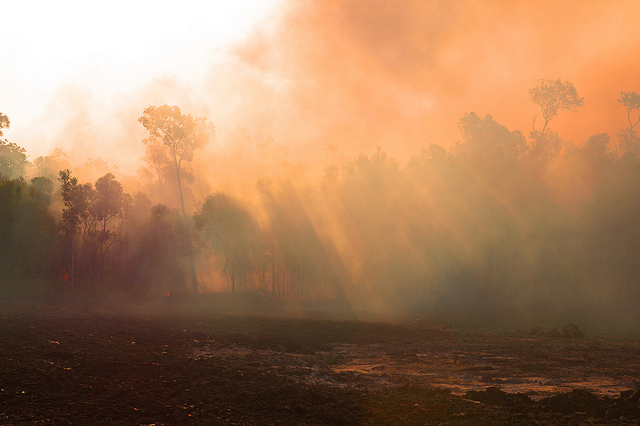
Last year, I read about anthropologist Jeremy Narby’s participant observation field research with the Ashaninca, an indigenous group living in the Peruvian Amazon. His research is detailed in the book, The Cosmic Serpent: DNA and the Origins of Knowledge, as well as the follow up,  Intelligence in NatureI’ve thought a lot about this research since. Narby’s research focuses on the way Western science constructs medical knowledge in ways that do not accommodate mystical experiences from Other cultures. Western medicine has come to adopt the Ashaninca’s knowledge of rare plants, as they have been proven to positively affect health. Nevertheless, Western scientists refuse to take into consideration how the Ashaninca gain this knowledge because it is derived through drug-induced hallucinations. This is in spite of the fact that these hallucinations come from the same plant ecosystem that Western science  is eager to plunder. How do we reconcile this knowledge divide? Narby argues that the Ashaninca’s understanding of plants and ‘alternative medicine’ must be understood in concert with their pathways to this knowledge. This includes the hallucinations which are used to commune with nature.

Ashaninca Hallucinations

Continue reading Ashaninca Hallucinations: Challenging Western Concepts of Medicinal Knowledge

Reframing “Black” Identity Politics in Australia

Anita Heiss’ book: Am I Black Enough For you?

By Zuleyka Zevallos

“No one can take away who we are. No one can take away our identity”. Prominent Australian writer and intellectual Anita Heiss recently made this comment on the program Living Black. She was speaking about her lawsuit win over Andrew Bolt, who was found guilty of racial vilification. In 2004, Bolt engaged in a series of racist comments attacking high-profile Indigenous Australians, essentially arguing they weren’t “black enough”, as Heiss puts it in her latest book. The Living Black video (below), recounts some of Bolt’s insidious comments, such as “Meet the white face of a new black race. The Political Aborigine… I certainly don’t accuse them of opportunism, even if full-blood Aborigines may wonder how such fair people can claim to be one of them and in some cases take black jobs”.

Bolt is a conservative commentator and notorious bigot who tries his hardest to single-handedly dismantle multicultural harmony via his newspaper column and TV appearances. Bolt glowers over Indigenous Australian leaders, patronising his readership about how he images Indigenous Australians might feel about “light-skinned” Aboriginals, without awareness of his white male privilege and the ongoing history of racist paternalism which dominate Indigenous affairs at the national level. Bolt casually makes reference to “full-blood Aborigines”, which is a socially constructed colonial concept used to institutionalise racist practices. The categorisation of “half-caste”, “full-blood” and other variations, has been used since European settlement to deny Indigenous Australians access to their human rights, social welfare and land ownership. As Heiss’ book argues, her court case win over Bolt was a symbolic triumph. The court rule in favour of racial vilification took away the power of identity labelling from white Westerners who impose racial categories upon Indigenous Australians. While this is only one case involving one infamous media personality, Heiss says that the future implications of this court case are likely to be profound: Continue reading Reframing “Black” Identity Politics in Australia

Noble Savages and Magical Pixie Conquests: Colonial Fantasies in Film

Via Wiki: Detail from Benjamin West’s The Death of General Wolfe (1771). This painting is an example of an idealised vision of the “noble savage” in North American art.

By Zuleyka Zevallos

I wanted to do a follow up on my post from a couple of months a go, on Hollywood racism. I analysed George Lucas’ claim that big Hollywood studios were reticent to back his film Red Tails because there were no white leading actors in the script. I used the idea of the Magical Negro Trope to explain how mainstream Hollywood films stereotype African-Americans as either thugs or benevolent, self-sacrificing figures who exist only to teach the white character a life-affirming lesson. I showed that this trope extends to other minorities who are people of colour, through the Noble Savage Trope. Today I want to focus on the sexualisation of Noble Savage trope. The Noble Savage is a term describing the over-simplified stereotype of Indigenous people on film. I will focus on gender and sexuality issues in big-budget Hollywood films depicting Indigenous and minority cultures during early colonial and “frontier” times.

Today I will draw a comparison between Avatar and other Hollywood films that depict Indigenous and minority women as savage conquests. Women in general are rarely cast in complex roles in big-budget Hollywood releases. They are usually romantic or sexual diversions to help portray the male lead in a sympathetic light. Minority women are even more simplified, especially in stories involving Indigenous cultures. Indigenous and women of colour exist largely as Magical Pixie Conquests:  they are painted as feisty, though ultimately submissive, pawns that help white male characters to dominate the “native tribe”. The fictionalised version of the “Pocahontas” story epitomises how Hollywood both fetishes Indigenous cultures and perpetuates patronising postcolonial fantasies.

Noble savages and magical pixie conquests

Continue reading Noble Savages and Magical Pixie Conquests: Colonial Fantasies in Film

Hollywood Racism: The Magical Negro Trope

By Zuleyka Zevallos

Adam Serwer reports in Mother Jones that George Lucas’ latest film, Red Tails had trouble getting made, partly because the “studios weren’t willing to finance a film without a white protagonist as an anchor”.  Lucas’ claim can be put into wider historical context by examining the entrenched racist practices of big Hollywood studios. In particular, the idea of the “magical negro trope” puts things into perspective. This term refers to the way valiant Black characters in movies exist only as a narrative device to teach the white protagonist how to be a better person. This post explores variations of the “magical negro” and the gendered dimensions of these characters.

Hollywood Racism: The Magical Negro Trope

Continue reading Hollywood Racism: The Magical Negro Trope

Anime and the Social Construction of Race

Jubei from Ninja Scroll

A common misconception about anime cartoons amongst uninitiated audiences in majority-English-speaking countries is that anime characters are drawn to look ‘white’ rather than ‘Asian’. These terms are not factual nor are they fixed categories – they are social constructions. That is, the meaning attached to race, whether ‘white’, ‘Black’, ‘Asian’ and so on, and the groups classified under these labels, change from one society to another, depending upon culture, time and place.

Continue reading Anime and the Social Construction of Race

Samoa Loses a Day: Sociology of Time

Samoa (Credit: sarah|rose, Flickr. CC)

The island nation of Samoa wants to improve its trade relations with Australia, New Zealand and China. As such, it is getting set to lose a day in order to align its time zone with its trade partners. Tomorrow, on what should have been Friday the 30th of December in Samoa, time on this island will jump ahead to Saturday the 31st of December.

I want to explore this shift in time in Samoa through the broader lens of the sociology of time. The theory of social construction states that the things that we take for granted as ordinary, mundane or commonsense are actually social ideas shaped by culture. The idea of temporal time is measured through our watches, calendars and other scientific instruments and technologies. As such, the passing of time is perceived as an unremarkable fact of life. The social meaning of time in different cultures varies. The idea of time as a fixed entity is actually a social illusion. I will show how history, social forces and life situations shape our ideas about time. I include a case study of ‘island time’ to show the variability of how time is understood and valued in island nations such as Samoa and Gabriola Island in British Columbia, Canada. I use the impending time change in Samoa to introduce the idea of ‘social time’, which is a useful way to understand how people in different cultures organise and think about time.

Continue reading Samoa Loses a Day: Sociology of Time

The Social Costs of Japan’s Nuclear Disaster

A waterway leads to the Fukushima power station in the background

Much of the world’s media was focused on the horrific disaster that followed the Fukushima Daiichi nuclear power station meltdowns that began on the 11th of March, 2011. An estimated 130,000 people were initially evacuated and 70,000 people presently remain displaced from their homes due to radiation.

In today’s post, I look at the social policy conditions that exacerbated the effects of the disaster. I focus on the ongoing sociological impact on Japan’s ‘nuclear refugees’. This includes social stigma faced by survivors, and increased risk of suicide among those have stayed near the ‘nuclear zone.’ I discuss how sociology might contribute towards sustainable planning.

Continue reading The Social Costs of Japan’s Nuclear Disaster

The Sociology of Unfollowing on Twitter

A new sociological study finds that unfollowing people on Twitter has little to do with frequency of interpersonal contact between two parties. Rather it has more to do with people who break specific social norms of Twitterverse etiquette. This got me thinking about the unique aspects of Twitter connections, as well as the ways in which unfollowing on Twitter might be similar to the way other social networks operate offline.

Comic of Indiana Jones running from rolling rock (from Temple of Doom). He holds a statue and says "Unfollow! Unfollow!" Text at the bottom reads: "Indy had been spending too much time on Twitter"
Agent X Comics (2009)
Continue reading The Sociology of Unfollowing on Twitter

The Wrap Up: Media Coverage of the 10th Anniversary of the September 11 Attacks

Image Credit: 9/11Memorial.org

This is the third and final post in a series covering the lead up to the 10th anniversary of the September 11 attacks. This one focuses on news coverage; technology and social media issues; and media discourses about the so-called ‘Decade 9/11’ and ‘Gen 9/11’.

Continue reading The Wrap Up: Media Coverage of the 10th Anniversary of the September 11 Attacks

Impact of the September 11 Attacks on Australian-Muslims

Image credit: Sailor Coruscant 2010 Im not even sure Flickr

This is the second post in a three-part series reviewing the media and research released in commemoration of the 10-year September 11 Anniversary. Without doubt, the ongoing trauma and health issues faced by the survivors of the September 11 attacks have high ongoing social costs for American society. This article focuses on the impact that the September 11 attacks had on the lives of Australian-Muslims. I was inspired by a SBS Radio vox pop with Muslim and Sikh Australians, which I will go on to analyse.[i] The people interviewed talked about how they managed the increased racism and stigma they have faced since 2001. Ten years after the attacks, studies show that a high proportion of Australians perceive Muslims as ‘outsiders’ who do not fit in with Australian society.[ii] My analysis shows that living with racism requires a lot of ‘emotion work’, particularly because Muslims mostly deal with racist encounters on a one-on-one basis.

Continue reading Impact of the September 11 Attacks on Australian-Muslims