Artificial Intelligence at Work

A woman of colour sits in a darkened computer lab, working on her laptop

Despite dire predictions, researchers forecast that few industries will lose a substantial number of jobs due to artificial intelligence (AI). Instead, AI is more likely to alter the way humans work. The AI industry may also create new roles, but this may amplify inequality. In this third post in my Sociology of AI series, I explore the perceived impact of AI on jobs, and the stratification that may follow increased automation of the labour market. I analyse evolving policy directions, including a new report by Jobs and Skills Australia, on AI-related job losses. I then review sociological understandings of AI and work, and recent examples of job redundancies. I analyse a much-publicised study by Microsoft, which claims AI can replace 40 professions, including translators, historians, artists, and customer service workers. This case study shows that AI companies distort evidence to overstate the functions, utility, and accuracy of AI technology. I argue that AI discourse hinges on eliminating competition from human professionals. Sociology uncovers the ways in which scientific models and customer data are used to make unethical and spurious claims.

Continue reading Artificial Intelligence at Work

Artificial Intelligence and the Economy

Drawing of a group of women working on laptops in an open plan office

In this second post in my Sociology of AI series, I show that AI companies position automation as being superior to human labour. I review the Australian Government’s recent announcement that is considering changing the law to allow AI to mine copyrighted works. I will show that the economic model used to justify this decision lacks robust testing. I analyse the ways in which AI discourse is ‘manufacturing consent’ to control the labour market. I argue that AI discourse establishes economic power by marketing technological supremacy, using science selectively, eliminating competition, and suppressing issues that undermine AI domination.

Continue reading Artificial Intelligence and the Economy

Sociology of Artificial Intelligence

White 3D model of a person's head

This is the first in a series of posts exploring the sociology of artificial intelligence (AI). I cover definitions of AI, before exploring sociological issues of public awareness, ethics, and regulation. I discuss how AI models replicate race, class, and social inequality. I show why First Peoples’ leadership must be central to the development AI policies. I discuss how sociology can address structural change and ethical use of AI. The rest of this series will examine how AI may transform work, and how AI companies are using customer data to grow their market dominance and policy influence.

Continue reading Sociology of Artificial Intelligence

Career Progression and Accessibility

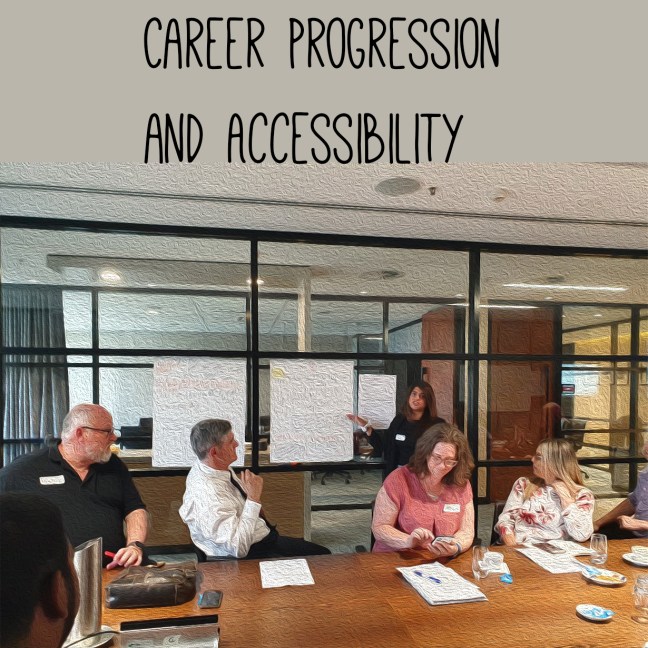
Three men and one woman sit at table. They watch another woman who is pointing to the group notes on a wall

Cross-posting research I’ve lead on increasing the promotion and retention of people with disability* within the New South Wales (NSW) public service. We undertook fieldwork to understand the behavioural barriers and solutions. We find that administrative hurdles and inadequate support are negatively impacting the career progression of people with disability. We can improve these outcomes by: 1) Using a feedback loop to increase professional development opportunities for staff with disability; 2) making it easier to implement workplace adjustments; and 3) providing managers with improved resources and training on disability inclusion.

Continue reading Career Progression and Accessibility

Indigenous Women’s Leadership

This past week, Australia celebrated NAIDOC Week (8-15 July), a time to recognise the leadership, culture and achievements of Aboriginal and Torres Strait Islander people. Originally standing for National Aborigines and Islanders Day Observance Committee, NAIDOC Week has historically reflected the ongoing resistance to genocide, assimilation and land dispossession, famously culminating in the annual Day of Mourning in 1938 (a protest against Australia Day on 26 January). The NAIDOC committee emerged in 1956, and has in recent decades coordinated local and national events and awards to promote Indigenous excellence. This year’s theme is Because of Her We Canpromoting the multiple leadership roles of Indigenous women for their families and communities, as they push for social justice and human rights at the local community and national levels.

I share with you two events I attended that highlight the role of Aboriginal and Torres Strait Islander women in academia, journalism, business, law and social policy. Continue reading Indigenous Women’s Leadership

New Frontiers in Behavioural Insights

I was live tweeting throughout the Behavioural Exchange conference, which was held in Sydney. It brings together policy-makers, practitioners and academics working in behavioural insights – the use of behavioural and social sciences to improve decision-making using evidence-based enhancements to services, programs and policies.

Day 1

Keynote by Cass Sunstein

Issues with behavioural science ‘nudges‘ (social enticements or environmental cues to optimise desired choices, especially with respect to social policy). To force people to choose when they don’t want to make a decision impacts their dignity.  This isn’t the intention of nudging.

Continue reading New Frontiers in Behavioural Insights

Behavioural Science for Education and Vocational Training

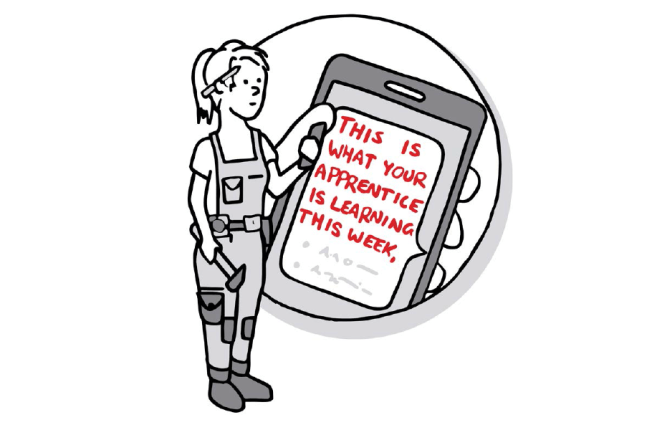
Drawing of a woman tradesperson holding a mobile phone. The text reads: this is what your apprentice is learning this week

Have you ever wondered why people behave in unexpected ways, often against their own interest? This is because many of our social institutions, including the law, education and economy are built around rules that don’t always take into account people’s social context and their motivations when making decisions. Convention in Western societies is that financial incentives and punitive measures (like fines) can incentivise people to do the right thing. Behavioural science research shows this is not always true. In fact, while money and sanctions work in some situations for some groups, most behaviours are not able to be easily changed through cash and penalties. (These can sometimes backfire!)

Behavioural science is the use of behavioural economics, psychology, anthropology, sociology and other social sciences for the purpose of improving behavioural outcomes. Behavioural insights is specifically the application of this science to improve effectiveness for decision-making, public services and policy. Here’s a case study of behavioural insights in action in education and vocational training.

Using fieldwork research and randomised control trials, the Behavioural Insights Unit (BIU) test low-cost behavioural science changes to issues affecting different groups in society.

For example, we know that 48% of apprentices in New South Wales cancel their contracts within the first year, and 77% will cancel within two years. That’s a tremendous personal cost to these students, which also translates to $91 million loss of the state’s economy in cancellations alone, and upwards of $348 million in related revenue. BIU’s research shows apprentices who cancel their employment contracts do so because they often feel they are subjected to tough working conditions for little pay (undertaking menial, repetitive tasks and long hours), receiving little guidance about their progress on the job.

Continue reading Behavioural Science for Education and Vocational Training

Interview: Sociology at Work

I was interviewed by Mendeley about my work in equity and diversity in research environments. It is the first of a two-part interview. The original article was published on 16 May 2017. The following is an excerpt.

Continue reading Interview: Sociology at Work

Publication: Ring a Bell? Charles Murray and the Resurgence of Scientific Racism

This article was first published on The Humanist on 15 May 2017. Below is an excerpt.

In his latest podcast episode titled “Forbidden Knowledge,” atheist author Sam Harris guides political scientist Charles Murray through an extensive defence of Murray’s widely debunked body of work, focusing mostly on The Bell Curve. Co-authored with psychologist Richard Herrnstein (who died around the time it was published in 1994), the book was universally critiqued as an example of modern-day scientific racism. Continue reading Publication: Ring a Bell? Charles Murray and the Resurgence of Scientific Racism

Interview: March for Science Sparks Broader Discourse About Science Activism

I was interviewed by Dr Heather Goldstone for Living Lab Radio, along with my colleague Dr Caleph Wilson:

Two dozen researchers from Woods Hole, MA, traveled to the flagship march in Washington, D.C.
Source: Heather Goldstone/ WCAI

“They [March for Science Los Angeles] Tweeted in February that they’d been hearing from scientists that there might be problems with violence in connection with their focus on diversity,” said Zuleyka Zevallos (@OtherSociologist), a sociologist at Swinburne University. “That’s a dangerous historical connection that they are making from having minorities attend a science event to having it lead to violence. There’s actually no correlation between the two.”

Zevallos walked away from the March, as did Caleph Wilson (@HeyDrWilson), a biomedical researcher and digital media manager for the National Science and Technology News Service. They took to Twitter, instead, helping build hashtags – #marginsci and #AltSciMarch – that have developed into a vibrant public discourse about diversity and equity in science.

“One of the things that the hashtags were able to do is allow people to have those conversations in a way that can be visible,” said Wilson. “We could see each other having these conversations, as well as we could point the March for Science to these conversations.” […]

Zevallos says there is a silver lining, though.

“I do think that there’s a positive momentum in that these conversations have been happening for a very long time,” Zevallos said. “Underrepresented minorities have been doing activism for decades. But I guess the hashtags, in particular, allowed these conversations to converge, and for different networks from different parts of the world to join their voices together.”

As March for Science organizers work to foster a more lasting science activism movement, Zevallos and Wilson hope that the conversations started by the March can be leveraged into more awareness and meaningful changes in the science community’s prevailing attitude toward diversity and inclusion.

Read more and listen to the interview on Living Lab Radio.